水墨画すいぼくが
suibokuga
ink painting in black and white, brought by Zen monks
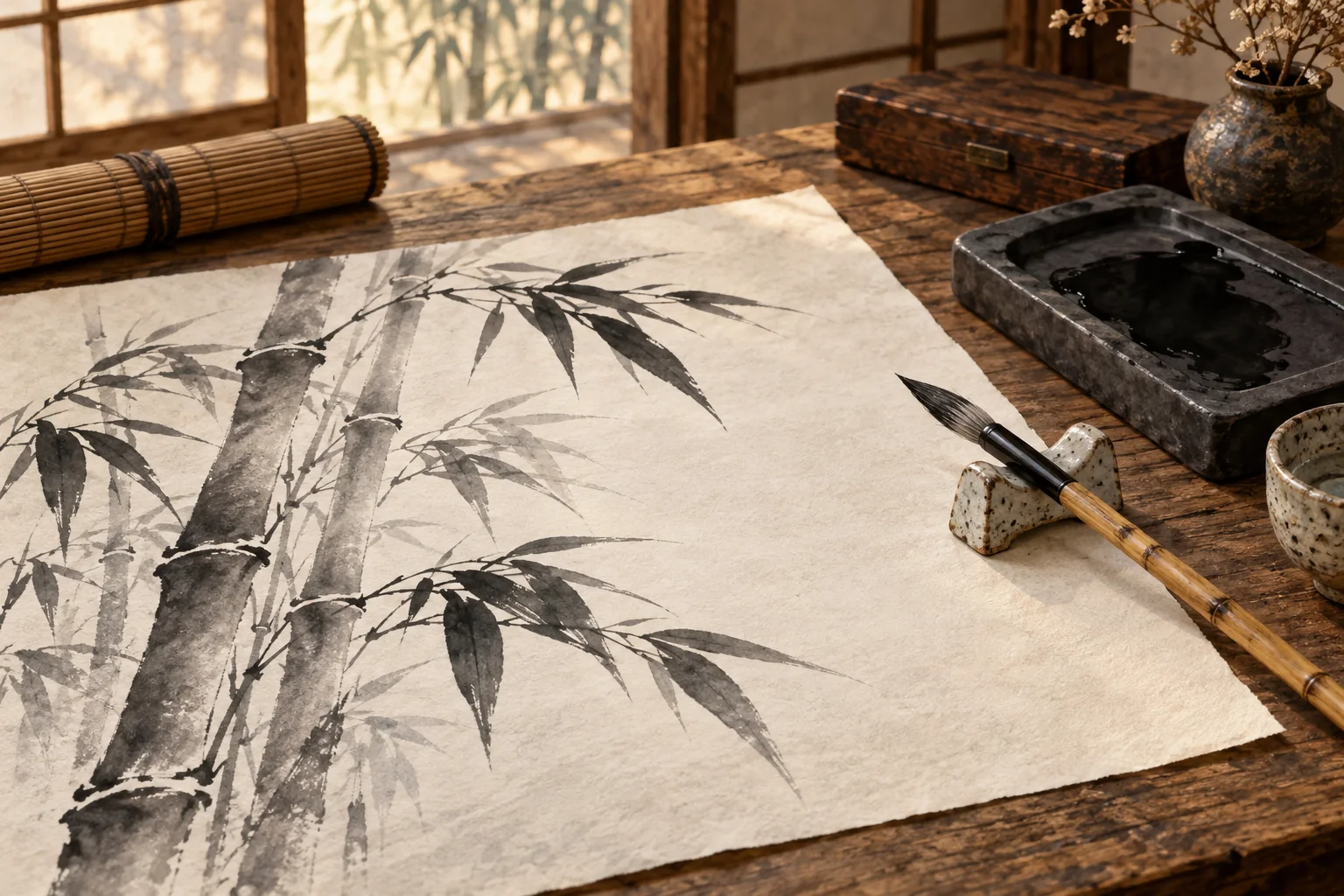
色を使わないのではなく、墨の濃淡を色として使う。描き直しはきかない。
一言で言うと
これだけ覚えれば最低限伝わる一文
Suibokuga, or ink painting, is done in black ink only, its shades replacing color, and no stroke can be corrected.
水墨画とは、墨だけで描く絵で、墨の濃淡が色の役を果たし、一度引いた線は直せないものです。
30秒で説明する
外国人に説明するときの標準サイズ
Ink painting came to Japan from Song and Yuan China with Zen monks in the medieval period and was practiced first in Zen temples. It uses one black ink, thinned to different strengths, on absorbent paper or silk. Because the paper takes the ink instantly, a stroke cannot be corrected or painted over, so the discipline is in deciding before the brush lands. Sesshu, a fifteenth-century monk, is the name most often given.
水墨画は、中世に禅僧によって宋・元の中国から伝わり、まず禅寺で描かれました。墨一色を、濃さを変えて使い、よく吸う紙や絹に描きます。紙が墨をすぐに吸うので、線は直せず、塗り重ねもできません。だから修練は、筆が触れる前に決めることにあります。十五世紀の禅僧、雪舟の名が最もよく挙がります。
スピーチ・英作文
通訳案内士の二次口述・大学入試の自由英作文に
Suibokuga is painting in black ink and nothing else, and the constraint is the whole point. The ink is ground on a stone and thinned with water, so the painter has a full range from a wet black to a gray so pale it barely marks, and those gradations do the work that color does elsewhere: distance, mist, the weight of a rock.
The paper is absorbent and takes the ink the instant the brush touches, which means no correction, no overpainting, no second attempt at a line. A bamboo stalk is one stroke and it is either right or it is not. The style came to Japan from Song and Yuan China, carried by Zen monks in the fourteenth and fifteenth centuries, and for a long time it was a temple art rather than a court one, which suits the discipline involved.
The painter Japanese people will name is Sesshu, a monk who went to China and came back, and whose landscapes are national treasures. The link to Zen is real but often overstated abroad: plenty of ink painting was professional work for patrons, not meditation.
水墨画は墨だけで描く絵で、その制約こそが本質です。墨は硯で磨り、水で薄めます。ですから画家の手には、濡れたような黒から、ほとんど跡の残らない淡い灰までの幅があり、その濃淡が、ほかの絵で色が担う仕事をします。遠さ、霞、岩の重さ。
紙はよく吸い、筆が触れた瞬間に墨を取るので、直せず、塗り重ねられず、線を引き直せません。竹の幹は一筆で、良いか悪いかのどちらかです。この様式は、十四、十五世紀に禅僧が宋・元の中国から持ち帰りました。長く宮廷ではなく寺の絵であり、この厳しさによく合っています。
日本人が名を挙げる画家は雪舟でしょう。中国に渡って帰った僧で、その山水は国宝になっています。禅との結びつきは事実ですが、海外ではしばしば言い過ぎられます。多くの水墨画は、瞑想ではなく注文に応えた仕事でした。
こう聞かれたら
外国人から実際にされる質問と、その答え方。
Is it the same as calligraphy?
書道と同じものですか。
The tools are the same — brush, ink stone, absorbent paper — and the training overlaps, but one writes characters and the other depicts. Many practitioners do both.
道具は同じです。筆、硯、よく吸う紙。修練も重なります。ただ一方は文字を書き、一方は物を描きます。両方をやる人は多いです。
Is it always black and white?
いつも白黒なのですか。
Mostly. Some works add a light wash of color, which is called tansai. Pure ink is the classical form.
ほとんどはそうです。薄く色を加えたものもあり、淡彩と呼びます。墨だけのものが古典の形です。
What should I look at in one?
どこを見ればよいのですか。
The empty space, and the order of the strokes. Unpainted paper stands for mist, water or sky, and you can often read which line was laid down first.
余白と、筆の順序です。塗られていない紙が霞や水や空を表しますし、どの線が先に置かれたか読み取れることも多いです。
誤解されやすい
MYTHInk painting is Japanese in origin.
水墨画は日本で始まったものだ、と思われがちです。
FACTIt developed in China and came to Japan with Zen monks in the medieval period. Japan then took it in its own directions.
中国で発達し、中世に禅僧とともに日本へ伝わりました。そのあと日本が独自に展開させたものです。
そのまま使えるフレーズ
- It's painted in black ink alone.墨だけで描きます。
- The shades of ink do the work of color.墨の濃淡が色の役をします。
- You can't correct a stroke once it's down.一度引いた線は直せません。
- The blank paper is mist or water.白い余白が霞や水になります。
- Zen monks brought it from China.禅僧が中国から持ち帰りました。
説明に使う語句
- ink stick and stone墨と硯
- gradation of ink濃淡
- blank space余白
- landscape山水
- brushwork筆致
動画で見る
YouTube より豆知識
雪舟(1420〜1506)は備中に生まれた禅僧で、1467年に明に渡り、帰国後に山水画を大成したとされる。『秋冬山水図』など六件の作品が国宝に指定されており、一人の画家としては多い。水墨画は室町時代の禅寺で描かれ、のちに狩野派が金碧障壁画と並べて用いた。墨の濃淡を五段階に分ける「墨に五彩あり」という中国由来の言い方がある。
