絵巻えまき
emaki
the painted handscroll you unroll section by section
右から左へ、両手で少しずつ開いて読む。動く絵の祖先。
一言で言うと
これだけ覚えれば最低限伝わる一文
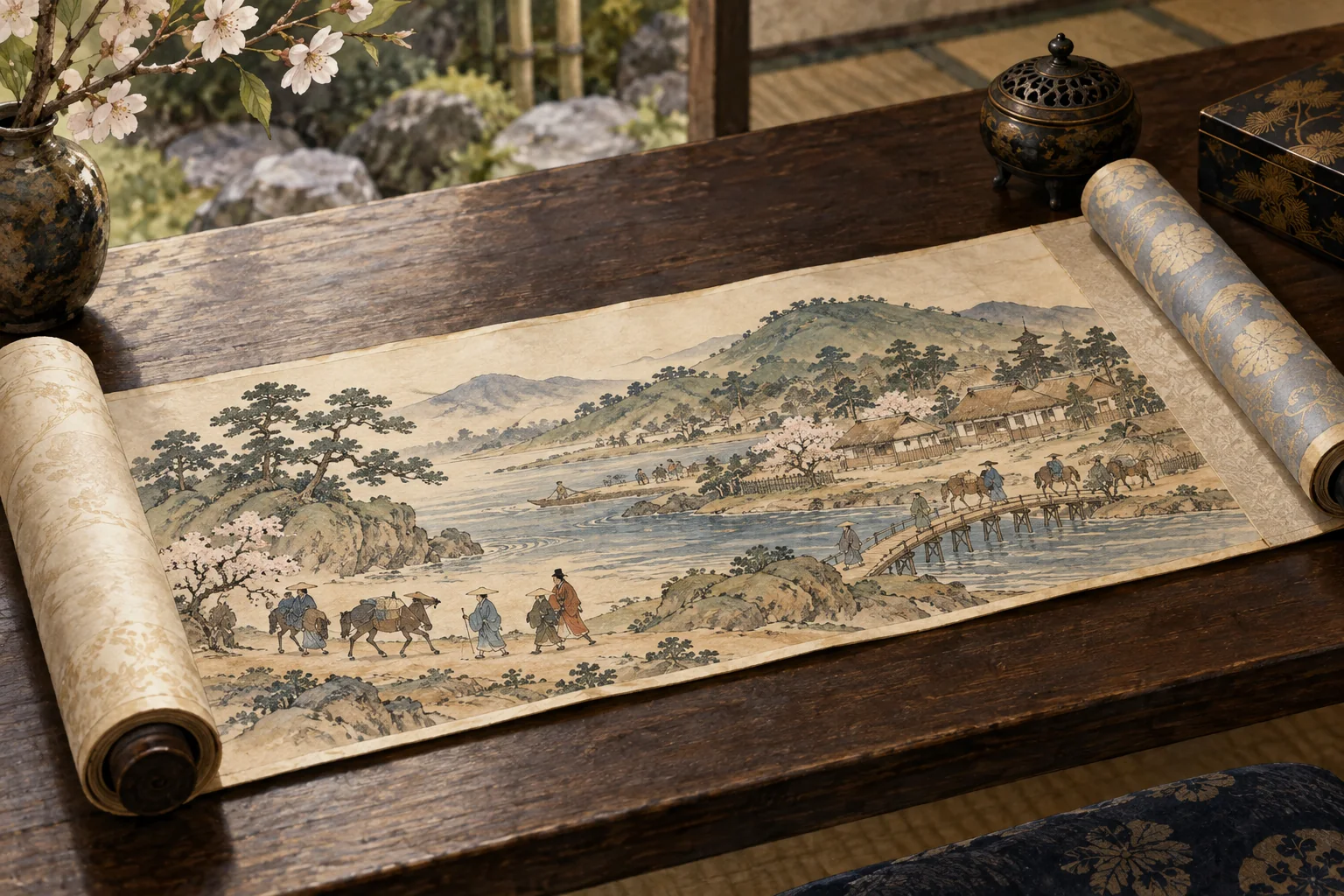
An emaki is a long painted scroll, unrolled a little at a time so the story moves as you read.
絵巻は長い巻物の絵で、少しずつ開いていくと物語が動いて見えるように作られています。
30秒で説明する
外国人に説明するときの標準サイズ
An emaki is a horizontal scroll, sometimes more than ten meters long, with pictures and text alternating. You hold it in both hands and unroll a section at a time from right to left, which means the artist controlled exactly what you saw and in what order. Some are among Japan's most famous artworks, including one of animals behaving like people.
絵巻は横に長い巻物で、十メートルを超えるものもあり、絵と詞書が交互に置かれます。両手で持ち、右から左へ少しずつ開いていきます。つまり描き手は、見る人が何をどの順で目にするかを、そのまま決めていたことになります。日本を代表する作品もあり、そのなかには、人のようにふるまう動物を描いたものがあります。
スピーチ・英作文
通訳案内士の二次口述・大学入試の自由英作文に
A handscroll is not a picture you stand in front of; it is a picture you operate. You hold it in both hands, unroll about sixty centimeters with the left hand while rolling up with the right, and move through it from right to left.
The artist knew that, so scenes are composed to reveal in sequence: a wall slides away and the room beyond appears, a figure runs and then is shown again further along the same continuous landscape, which is a technique for showing time passing inside one picture. The most famous examples are from the twelfth and thirteenth centuries.
The Tale of Genji scrolls use blocks of color and roofless interiors seen from above. Another, kept at a temple in Kyoto, shows frogs, rabbits and monkeys wrestling and holding ceremonies, drawn in ink with tremendous economy, and it is frequently described as an ancestor of manga, which is a claim worth enjoying without taking too literally.
絵巻は、前に立って眺める絵ではありません。手で操作する絵です。両手で持ち、左手で六十センチほど開きながら右手で巻き取り、右から左へ進んでいきます。描き手はそれを知っていますから、場面は順に現れるように組まれています。壁が退いて奥の部屋が見える。
走る人物が、途切れない同じ風景の先にもう一度描かれる。一枚の絵の中で時間が流れることを示す技法です。名高い作例は十二世紀から十三世紀のものです。源氏物語の絵巻は、色の面と、屋根を取り払って上から見下ろす構図を使います。
京都の寺に伝わるもう一つの絵巻には、蛙や兎や猿が相撲を取り、法会を営む姿が、驚くほど簡潔な墨の線で描かれています。漫画の祖先としてよく紹介されますが、そう言い切らずに楽しむのがよいでしょう。
こう聞かれたら
外国人から実際にされる質問と、その答え方。
Can I see one unrolled?
広げた状態で見られますか。
In museums, usually a section at a time in a long case, and the section on show is rotated because light damages them. Full-size printed facsimiles are often displayed alongside, and those you can follow end to end.
博物館では、長いケースに一部だけを広げて展示するのがふつうで、光による傷みを避けるため、出す場面を入れ替えます。原寸の複製が併せて展示されることが多く、そちらなら端から端まで追えます。
How is the story told?
物語はどう進むのですか。
By alternating written passages with paintings, or in some scrolls by continuous painting with no text at all. In the latter the reader has to follow the action, which is why those scrolls feel closest to comics.
詞書と絵を交互に置く形が基本ですが、詞書をまったく持たず、絵だけが続く巻物もあります。後者では読み手が動きを追うことになり、それが漫画に近いと感じられる理由です。
Is the animal scroll really the first manga?
あの動物の絵巻は本当に漫画の始まりなのですか。
It is a lovely idea and it is not a straight line. The scroll has sequence, caricature and comic timing, but no speech balloons and no direct line of descent. Manga's actual ancestry runs through Edo woodblock books and the twentieth century.
魅力的な言い方ですが、一本の線でつながってはいません。あの巻物には順序があり、戯画があり、笑いの間もありますが、吹き出しはなく、直接の系譜もありません。漫画の実際の親は、江戸の版本と二十世紀にあります。
そのまま使えるフレーズ
- You read it from right to left.右から左へ読みます。
- Unroll it a little at a time.少しずつ開いていきます。
- The roof is removed so you can see inside.屋根を外して中を見せています。
- Only part of it is on display.一部だけが展示されています。
- The same figure appears twice.同じ人物が二度描かれています。
説明に使う語句
- handscroll絵巻
- written passage詞書
- to unroll繰り広げる
- caricature戯画
- ink line墨線
動画で見る
YouTube より豆知識
絵巻は、横に長い紙や絹に絵と詞書を交互に置き、右から左へ繰り広げて読む形式です。平安から鎌倉にかけて数多く作られました。源氏物語絵巻は、屋根を描かずに室内を俯瞰する吹抜屋台という描き方で知られます。信貴山縁起には、同じ人物を一つの画面に繰り返し描いて時間の経過を表す異時同図法が見られます。高山寺に伝わる鳥獣人物戯画は、墨の線だけで動物を描いた四巻からなり、日本の漫画の源流として紹介されることがよくあります。
