鳥獣戯画ちょうじゅうぎが
choju giga
the twelfth-century animal scrolls often called Japan's first manga
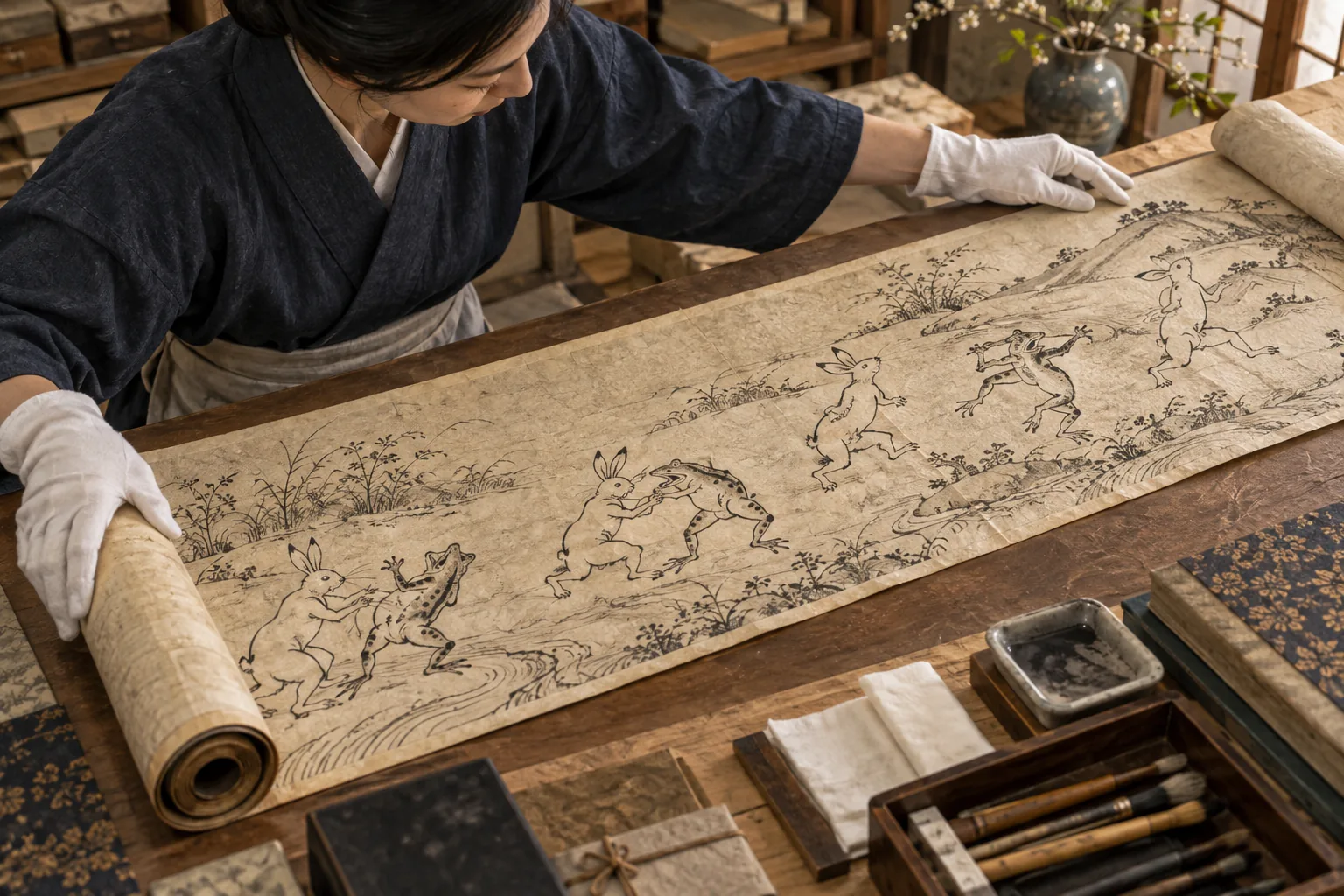
兎と蛙が相撲を取る、八百年前の絵。「日本最古の漫画」と呼ばれるが、吹き出しも筋書きもない。
一言で言うと
これだけ覚えれば最低限伝わる一文
Choju giga, the animal scrolls, are twelfth- and thirteenth-century ink drawings of animals acting like people, kept at Kyoto's Kozanji.
鳥獣戯画とは、動物が人のようにふるまう十二〜十三世紀の墨の絵巻で、京都の高山寺に伝わるものです。
30秒で説明する
外国人に説明するときの標準サイズ
Four handscrolls of ink drawings, held by Kozanji in Kyoto and designated national treasures. The most famous scroll shows rabbits, frogs and monkeys swimming, wrestling and holding a mock ceremony. There is no text and no certain story. The scrolls are routinely called the origin of manga, which is a stretch, but the sense of movement and the comic timing are genuinely close.
京都の高山寺に伝わる四巻の墨の絵巻で、国宝に指定されています。最もよく知られる巻には、兎と蛙と猿が、泳ぎ、相撲を取り、法会をまねる姿が描かれます。詞書はなく、筋書きも定かではありません。漫画の起源としばしば呼ばれますが、それは言い過ぎです。ただ、動きの捉え方と笑いの間合いは、たしかに近いものがあります。
スピーチ・英作文
通訳案内士の二次口述・大学入試の自由英作文に
Choju giga is a set of four ink handscrolls kept at Kozanji, a temple in the hills northwest of Kyoto, and made in the twelfth and thirteenth centuries. The first scroll is the one everybody has seen: rabbits, frogs and monkeys in quick brush lines with no color, swimming, shooting a bow, wrestling, and staging what looks like a Buddhist service with a frog sitting where the Buddha should be.
There is no writing on it at all, no captions and no speech, and no one knows for certain who drew it or what it was for. The traditional attribution to a bishop named Toba is now generally doubted, and the four scrolls are not by one hand or one period.
In Japan it is often introduced as the origin of manga, which is worth handling carefully: there are no panels, no word balloons and no continuous narrative, so the claim is really about something else, namely that Japanese artists were already drawing animals as characters, with motion and comic timing, eight hundred years ago. That part is true, and it is the more interesting claim anyway.
鳥獣戯画は、京都の北西の山にある高山寺に伝わる四巻の墨の絵巻で、十二世紀から十三世紀にかけて描かれました。誰もが見たことがあるのは第一巻です。兎と蛙と猿が、色を使わない速い筆の線で描かれ、川を泳ぎ、弓を引き、相撲を取り、蛙が仏の座に座る法会をまねています。文字はまったくありません。
詞書も台詞もなく、誰が描いたのか、何のために描かれたのかも確かには分かっていません。鳥羽僧正の筆とする言い伝えは、今では疑われていますし、四巻は一人の手でも一つの時代のものでもありません。日本ではよく「漫画の起源」として紹介されますが、そこは丁寧に扱いたいところです。
コマも吹き出しも続き物の筋もありません。この言い方が本当に指しているのは別のこと、つまり八百年前の日本の絵師が、すでに動物を登場人物として、動きと笑いの間合いをもって描いていたという事実です。そちらは本当ですし、そのほうが面白い話でもあります。
こう聞かれたら
外国人から実際にされる質問と、その答え方。
Is it really the first manga?
本当に最初の漫画なのですか。
Not in any technical sense: no panels, no speech balloons, no serial story. What it does share with manga is drawing animals as characters, with motion and humor, in fast ink line.
形の上ではそうとは言えません。コマも吹き出しも続き物の筋もありません。共通するのは、動物を登場人物として、動きと笑いを、速い墨の線で描いている点です。
Who drew it?
誰が描いたのですか。
Unknown. It was long attributed to the priest Toba Sojo Kakuyu, but that attribution is doubted today, and the four scrolls differ enough in hand and date that more than one artist is involved.
分かっていません。長く鳥羽僧正覚猷の筆とされてきましたが、今は疑われています。四巻は筆も時代も異なり、複数の絵師が関わっています。
Can I see the originals?
実物は見られますか。
Rarely. The scrolls are national treasures and sections are now held by the Tokyo and Kyoto national museums, shown occasionally. Kozanji displays reproductions.
めったに見られません。国宝で、現在は東京と京都の国立博物館が分けて保管し、時折公開されます。高山寺では複製が見られます。
誤解されやすい
MYTHThe scrolls tell a single story with a meaning everyone knows.
鳥獣戯画には、誰もが知る一つの物語と意味がある、と思われがちです。
FACTThere is no text, and interpretations — satire of the clergy, a temple artist's amusement — remain proposals rather than established readings.
文字がなく、僧侶への風刺だ、寺の絵師の戯れだといった解釈は、定説ではなく提案にとどまっています。
そのまま使えるフレーズ
- Rabbits and frogs wrestling, drawn in the 1100s.兎と蛙が相撲を取る、十二世紀の絵です。
- There's no text on it at all.文字はまったく書かれていません。
- People call it the first manga.最初の漫画だと言われます。
- But there are no panels or speech balloons.ただ、コマも吹き出しもありません。
- It belongs to Kozanji temple in Kyoto.京都の高山寺に伝わるものです。
説明に使う語句
- handscroll絵巻
- national treasure国宝
- ink line墨線
- satire風刺
- attribution伝承筆者
動画で見る
YouTube より豆知識
正式には「鳥獣人物戯画」といい、甲・乙・丙・丁の四巻からなる。甲巻が兎・蛙・猿の絵で最もよく知られ、丙巻の後半と丁巻には人物も描かれる。平安時代後期から鎌倉時代にかけて複数の手で描かれたとされ、筆者を一人に定める説は現在は支持されていない。高山寺は明恵上人ゆかりの寺で、1994年に「古都京都の文化財」の一部としてユネスコ世界遺産に登録された。
