江戸時代えどじだい
Edo jidai
Japan's 260 years of self-imposed peace and isolation
二百年以上、大きな戦争がなかった。その間に、今の「日本らしさ」の多くが作られた。
一言で言うと
これだけ覚えれば最低限伝わる一文
Edo jidai, or the Edo period, is the era from 1603 to 1868 when Japan was peaceful and largely isolated.
江戸時代とは、1603年から1868年まで、日本が平和を保ち、外の世界にほぼ閉じていた時代です。
30秒で説明する
外国人に説明するときの標準サイズ
From 1603 to 1868 Japan was ruled by the Tokugawa shogunate from Edo, now Tokyo. Foreign contact was tightly restricted, internal warfare effectively ceased, and the population and cities grew. Much of what is now considered traditional Japanese culture, including kabuki, sushi, ukiyo-e prints and hanami as a popular event, took its familiar form in this period.
1603年から1868年まで、日本は江戸、今の東京を拠点とする徳川幕府に統治されました。対外接触は厳しく制限され、国内の戦はほぼ止み、人口と都市が成長しました。今「日本の伝統」とされるものの多くは、歌舞伎も寿司も浮世絵も、庶民の行事としての花見も、この時期に今の形になりました。
スピーチ・英作文
通訳案内士の二次口述・大学入試の自由英作文に
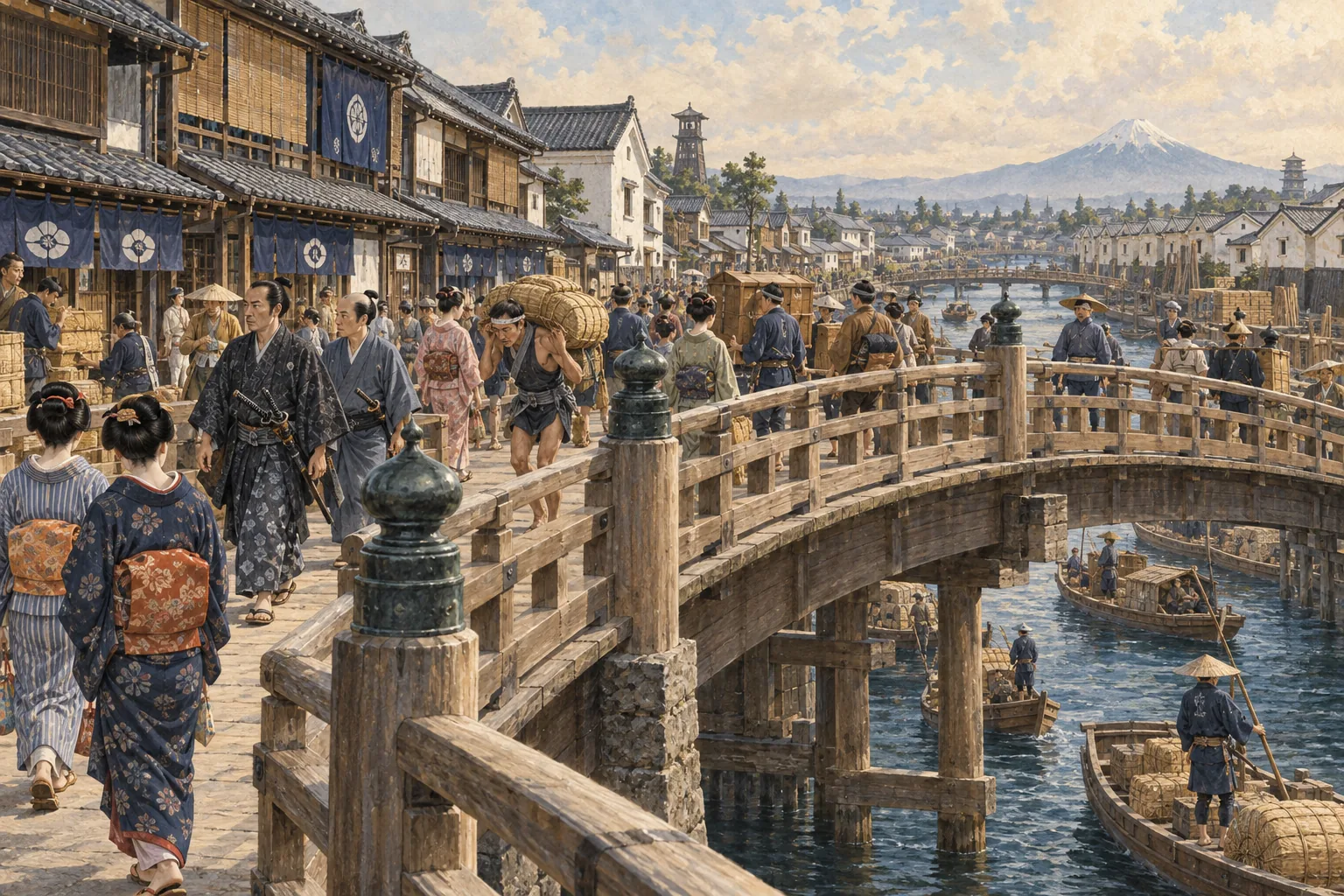
The Edo period runs from 1603 to 1868, and it is the single most important period for understanding what people now call traditional Japan. The Tokugawa family ruled from Edo, which became Tokyo, and they achieved something unusual: once the fighting of the early decades was over, more than two centuries passed with no major internal war and no foreign war.
Contact with the outside was tightly restricted, with trade running through a small number of controlled channels. What happened inside that closed and peaceful container is the interesting part. Cities grew enormously, and Edo may have been the largest city in the world by the eighteenth century.
A prosperous merchant class emerged below the samurai in official status but above them in money, and that class funded a popular culture: kabuki theater, woodblock prints, novels, restaurants, sumo as public entertainment, sushi as street food. When people picture traditional Japan, they are usually picturing the Edo period rather than anything older.
江戸時代は1603年から1868年まで続き、今「日本の伝統」と呼ばれるものを理解するうえで、最も重要な時期です。徳川家が江戸、のちの東京から統治し、珍しいことを成し遂げました。初期の戦いが収まってからは、二百年以上にわたり、大きな内戦も対外戦争もなかったのです。
対外接触は厳しく制限され、交易はごく限られた管理された窓口を通じて行われました。面白いのは、その閉じた平和な器の中で起きたことです。都市は大きく成長し、18世紀には江戸が世界最大の都市だった可能性があります。
武士より身分は下で、金では上回る豊かな商人層が現れ、その層が大衆文化を支えました。歌舞伎、浮世絵、読み物、料理屋、見世物としての相撲、屋台の食べ物としての寿司。人が伝統的な日本を思い描くとき、たいてい思い描いているのは、それより古い何かではなく江戸時代です。
こう聞かれたら
外国人から実際にされる質問と、その答え方。
Was Japan completely closed?
日本は完全に閉じていたのですか。
No. Trade continued with the Dutch and Chinese at Nagasaki, with Korea via Tsushima, with the Ryukyu Kingdom via Satsuma, and with the Ainu in the north. It was controlled, not sealed.
完全ではありません。長崎でオランダと中国、対馬を通じて朝鮮、薩摩を通じて琉球、北では蝦夷地のアイヌとの交易が続きました。封鎖ではなく管理でした。
Why did it end?
どうして終わったのですか。
American warships under Perry arrived in 1853 demanding that Japan open its ports, which exposed the shogunate's weakness. Fifteen years of political crisis followed, ending with the restoration of imperial rule in 1868.
1853年にペリーの軍艦が来航して開港を迫り、幕府の弱さが露呈しました。その後15年の政治的な危機を経て、1868年に天皇を中心とする体制へ移りました。
Was it a good time to be alive?
生きるのに良い時代だったのですか。
It depends entirely on who you were. It was peaceful, literate and urbanized by the standards of the time, and it was also rigidly hierarchical, with famines that killed large numbers and severe restrictions on movement and status.
誰であったかに完全に依ります。当時の水準では平和で識字率も高く都市化していましたが、身分は固定され、多くの死者を出した飢饉があり、移動や身分の制約も厳しいものでした。
そのまま使えるフレーズ
- It lasted from 1603 to 1868.1603年から1868年まで続きました。
- Over 260 years with almost no war.260年以上、ほとんど戦争がありませんでした。
- Edo became Tokyo.江戸が東京になりました。
- Most traditional culture took its current form then.伝統文化の多くは、この時期に今の形になりました。
- The country was controlled, not completely sealed.完全な鎖国ではなく、管理された状態でした。
説明に使う語句
- shogunate幕府
- isolation鎖国、孤立
- merchant class商人階級
- woodblock print浮世絵、木版画
- urbanization都市化
動画で見る
YouTube より豆知識
江戸の人口は18世紀に100万人を超えたとされ、同時期のロンドンやパリを上回り世界最大級だった。上水道が整備され、し尿は農村へ肥料として売られるなど、資源循環の仕組みが働いていた。寺子屋の普及により識字率は当時の世界水準では高かったとされる。参勤交代は大名に江戸と領地を往復させる制度で、街道と宿場町の発達、そして経済の全国的な結びつきを生んだ。一方で享保・天明・天保の大飢饉では多数の餓死者が出ている。「鎖国」という語自体は、ケンペルの著作の翻訳として19世紀に作られたもので、当時の幕府が使った言葉ではない。
