城しろ
shiro
a castle of the warlord era
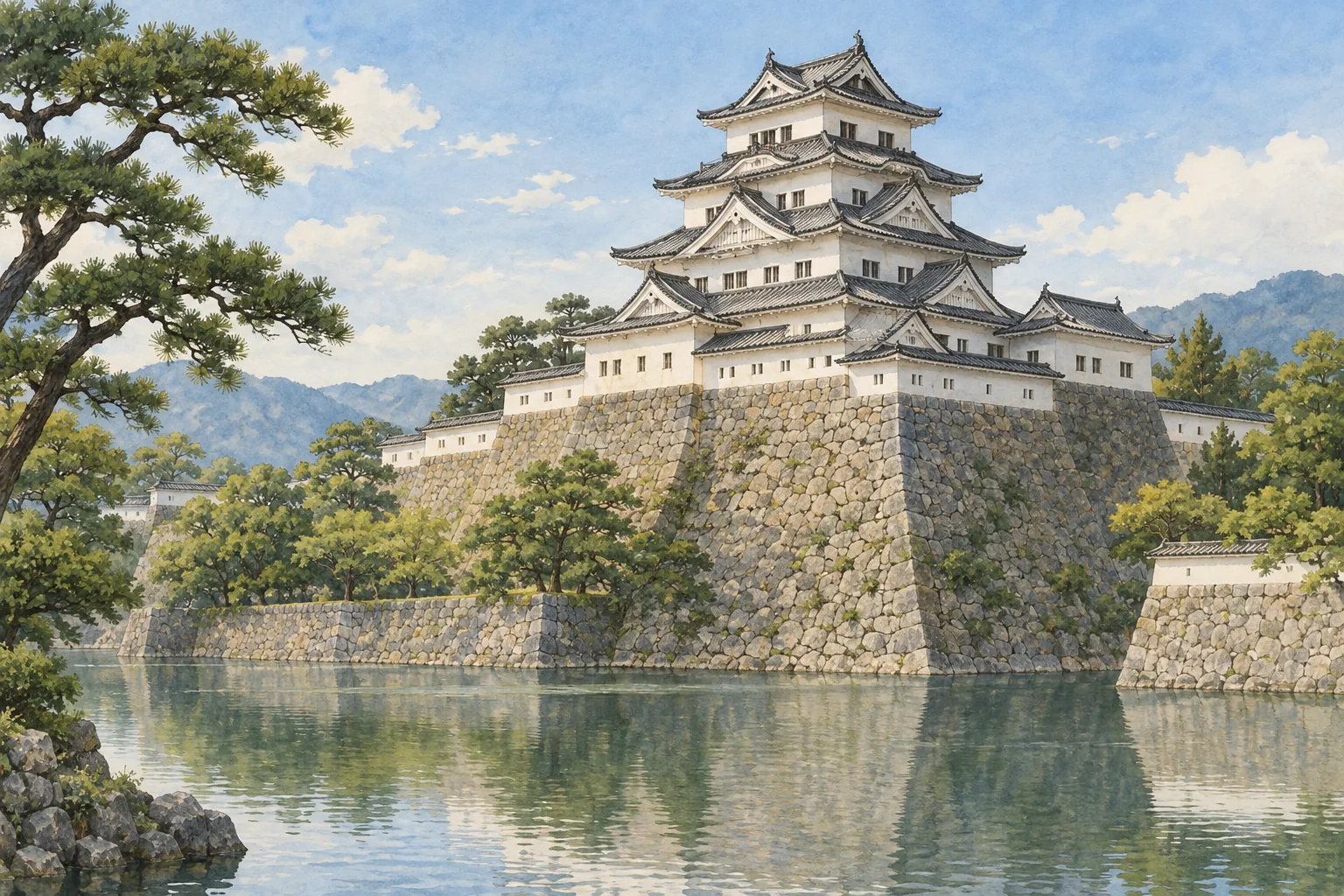
石垣の上に載っているのは、木と漆喰の建物。
一言で言うと
これだけ覚えれば最低限伝わる一文
Shiro, a Japanese castle, is a wooden tower on stone foundations, built to command land, not to house a court.
城とは、石垣の上に木造の建物を載せた、宮廷の住まいではなく土地を押さえるための施設です。
30秒で説明する
外国人に説明するときの標準サイズ
Japanese castles look like stone fortresses from a distance, but only the base is stone. Above it the keep is timber and white plaster, with tiled roofs. Most went up in a few decades around 1600, when warlords fought for territory, and most were later pulled down or burned. Only twelve keeps survive from that age.
日本の城は、遠くから見ると石の要塞のようですが、石なのは土台だけです。その上の天守は木でできており、白い漆喰を塗り、瓦を葺いています。多くは1600年前後の数十年に、領地を争う大名たちによって建てられ、その後、取り壊されたり焼けたりしました。当時の天守が残っているのは十二だけです。
スピーチ・英作文
通訳案内士の二次口述・大学入試の自由英作文に
Japanese castles are often misread by visitors who know European ones. The massive curved wall at the bottom is a foundation, not the building; it is packed earth faced with fitted stone, shaped to shed earthquakes. The tower on top is wood, plastered white as fireproofing, with tiled roofs.
Castles were not homes for a court but command posts and storehouses, and the lord normally lived in a lower palace building rather than in the keep. Almost all of them went up in a short burst around 1600, and in 1615 the shogunate ordered each domain down to a single castle.
More were demolished after 1868, and several were lost in the bombing of 1945. Twelve original keeps remain; the towers photographed in most cities are twentieth-century reconstructions, often in concrete.
ヨーロッパの城を知っている人は、日本の城を見誤りがちです。下の大きな反った壁は建物ではなく土台です。土を突き固め、表面に石を組んだもので、地震の力を逃がす形に積まれています。その上の建物は木造で、防火のために白く塗られ、瓦屋根を持ちます。
城は宮廷の住まいではなく、指揮所であり倉庫でした。城主はふつう天守ではなく、麓の御殿で暮らし、政務を執りました。ほとんどの城は1600年前後の短い期間に建てられ、1615年には幕府が一つの領国に一つの城だけを残すよう命じます。
1868年以降にさらに取り壊され、1945年の空襲などでもいくつかが失われました。当時のままの天守は十二。各地で写真に撮られている天守の多くは、二十世紀の再建で、鉄筋コンクリート造も少なくありません。
こう聞かれたら
外国人から実際にされる質問と、その答え方。
Why is only the base made of stone?
どうして石なのは土台だけなのですか。
Timber frames handle earthquakes better than stone walls, and Japan has plenty of good timber. The stone base gave height and resisted attack, while the wooden tower above could be built fast and repaired.
木の骨組みのほうが、石積みの壁より地震に強く、日本には良い木材が豊富にあったからです。石垣が高さと防御を受け持ち、その上の木造の建物は、早く建てられ、直すこともできました。
Which castles are original?
当時のまま残っている城はどれですか。
Twelve keeps survive from the Edo period or earlier, among them Himeji, Matsumoto, Hikone and Matsue. Himeji is the largest and is a World Heritage Site. Most other famous keeps, including Osaka and Nagoya, are modern rebuilds.
江戸時代以前の天守が残るのは十二で、姫路、松本、彦根、松江などです。姫路城は現存する中で最大で、世界遺産に登録されています。大阪城や名古屋城をはじめ、名の知られた天守の多くは近代の再建です。
Did people live in the keep?
天守には人が住んでいたのですか。
Not normally. The lord lived and worked in a palace at the foot of the keep, and the tower was used for storage, for watching, and as a last defensive position. Inside, the original keeps are dark, steep and almost empty.
ふつうは住みませんでした。城主は天守の下の御殿で暮らして政務を執り、天守は倉庫、物見、そして最後の拠り所でした。現存する天守の中は、暗く、階段が急で、ほとんど何も置かれていません。
誤解されやすい
MYTHJapanese castles are stone fortresses like European ones.
日本の城はヨーロッパの城のような石の要塞だ、と思われがちです。
FACTOnly the base is stone. The keep above it is a wooden building finished in white plaster, and it was a command post and storehouse rather than a residence.
石なのは石垣だけです。その上の天守は白い漆喰を塗った木造の建物で、住まいというより指揮所であり倉庫でした。
そのまま使えるフレーズ
- Only the base is made of stone.石なのは石垣だけです。
- The keep is wood and plaster.天守は木と漆喰でできています。
- This one is a modern reconstruction.これは近代の再建です。
- The stairs are very steep.階段がとても急です。
- Please take your shoes off at the entrance.入口で靴をお脱ぎください。
説明に使う語句
- castle keep天守
- stone base石垣
- moat堀
- reconstruction再建
- castle town城下町
動画で見る
YouTube より豆知識
日本の城は、石垣の上に木造の建物を載せる作りで、壁は防火のために白い漆喰を塗ります。天守が各地に建てられたのは十六世紀後半からの数十年で、1615年の一国一城令によって多くが取り壊されました。明治の廃城令と1945年の空襲でさらに失われ、江戸時代以前の天守が残るのは十二だけです。姫路城は現存する最大の天守で、1993年に世界遺産に登録されました。大阪城や名古屋城の天守は、鉄筋コンクリートによる再建です。
