二条城にじょうじょう
Nijojo
the Kyoto castle where the shogun gave power back to the Emperor
江戸幕府が始まった城であり、終わった城でもある。
一言で言うと
これだけ覚えれば最低限伝わる一文
Nijojo is the Kyoto castle where the last shogun handed power back to the Emperor in 1867.
二条城は、1867年に最後の将軍が政権を天皇に返した京都の城です。
30秒で説明する
外国人に説明するときの標準サイズ
Nijojo was built in Kyoto by Tokugawa Ieyasu in 1603, the year he became shogun. It was not a fortress so much as a statement: a place for the shogun to stay when he came to the city where the Emperor lived. In 1867 the fifteenth shogun announced in its main hall that he was returning power to the Emperor, which ended 265 years of Tokugawa rule.
二条城は1603年、徳川家康が将軍になった年に京都に建てた城です。守りの城というより、意思表示でした。天皇のいる都へ来たとき、将軍が滞在する場所です。1867年、15代将軍はこの城の二の丸御殿で政権を天皇に返すと表明し、265年続いた徳川の世が終わりました。
スピーチ・英作文
通訳案内士の二次口述・大学入試の自由英作文に
Nijojo is where the Tokugawa shogunate began and where it ended. Tokugawa Ieyasu built it in 1603, the year he became shogun, not as a fortress but as his residence in Kyoto, the city where the Emperor lived. The point was to be seen.
Then in October 1867 the fifteenth shogun, Yoshinobu, gathered senior retainers of the domains in the same building and announced that he was handing power back to the Emperor. Two hundred and sixty-five years of military government ended in that room, and you can stand in it.
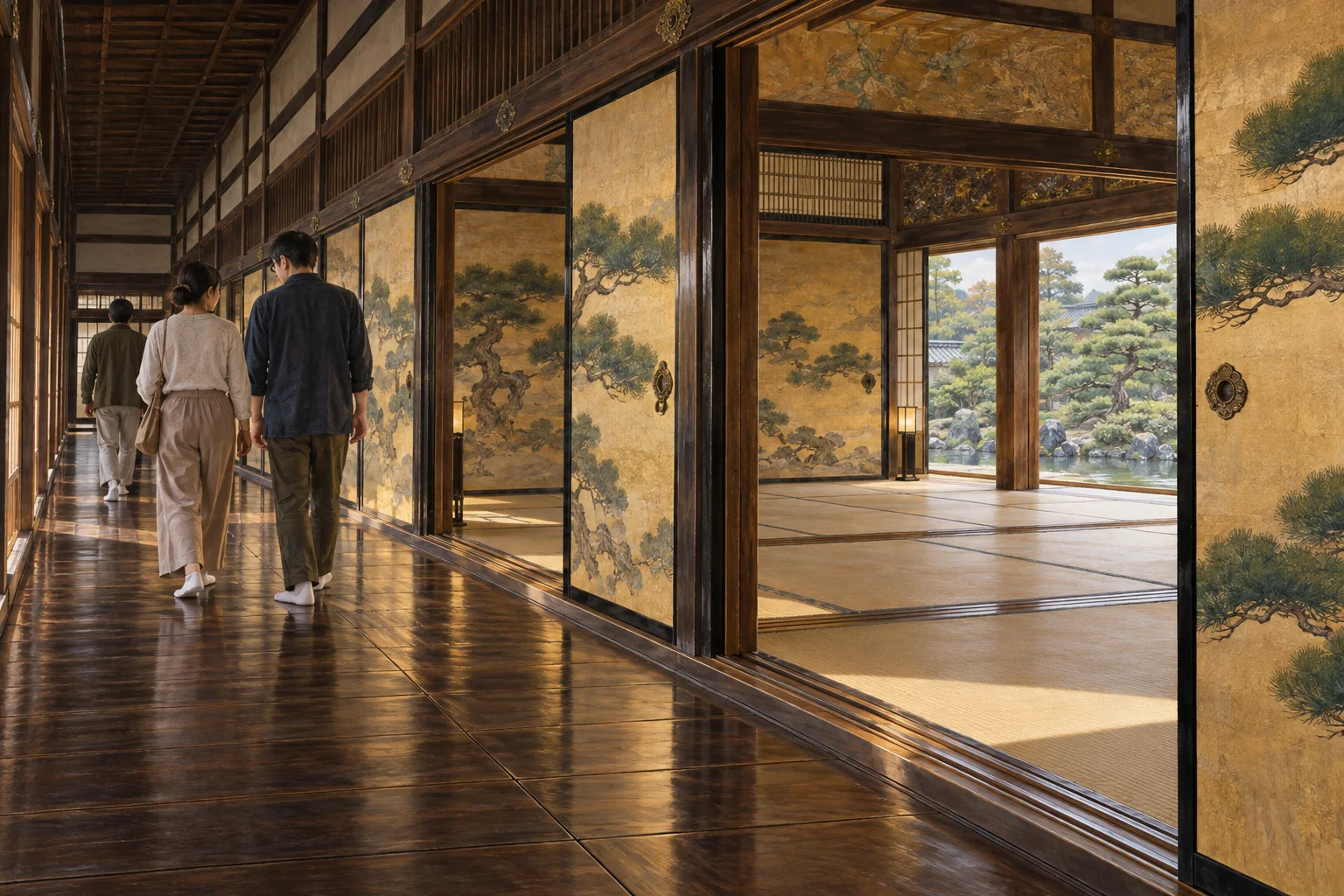
The building itself is worth the visit even without the history. The corridors are called nightingale floors because they chirp when you walk on them, and inside are painted screens of tigers and pine trees meant to impress visiting lords. It became a World Heritage site in 1994.
二条城は、徳川幕府が始まった場所であり、終わった場所でもあります。徳川家康が将軍になった1603年に建てたもので、守りの城ではなく、天皇のいる京都での住まいでした。狙いは「見せる」ことでした。
そして1867年10月、15代将軍慶喜が同じ建物に諸藩の重臣を集め、政権を天皇に返すと表明します。265年続いた武家政権が、その部屋で終わりました。いまそこに立つことができます。
建物そのものも、歴史抜きで見る価値があります。廊下は歩くと鳴るので鶯張りと呼ばれ、中には訪れた大名を圧倒するための虎や松の障壁画があります。1994年に世界文化遺産になりました。
こう聞かれたら
外国人から実際にされる質問と、その答え方。
Why does the floor squeak?
どうして床が鳴るのですか。
Metal clamps under the boards rub against nails as you step. It is often explained as a security device against intruders, but there is no clear evidence it was designed that way, and wooden floors of the period squeak anyway.
床板の下の目かすがいと釘がこすれて鳴ります。侵入者よけの仕掛けだとよく説明されますが、そう設計されたという確かな証拠はなく、当時の木の床はもともと鳴ります。
Is there a castle tower?
天守閣はあるのですか。
Not any more. The keep was struck by lightning and burned in 1750 and was never rebuilt. What you see today is the palace buildings and the gardens inside the walls.
いまはありません。天守は1750年に落雷で焼け、再建されませんでした。いま見られるのは、堀の内側の御殿と庭です。
What happened in 1867 exactly?
1867年には、正確には何があったのですか。
The shogun announced that he would return governing authority to the Emperor, hoping to stay in power in a new arrangement. It did not work out that way, and within a year civil war and the Meiji government had followed.
将軍が政権を天皇に返すと表明しました。新しい体制の中で力を保つつもりでしたが、そうはならず、一年のうちに戦いと明治の新政府が続きました。
誤解されやすい
MYTHNijojo was a military castle built to withstand a siege.
二条城は籠城のための軍事の城だと思われがちです。
FACTIt was a shogun's residence in the capital, built to display authority near the Emperor. Its defenses are modest compared with a hilltop war castle.
実際は天皇のそばで権威を示すために建てられた、都での将軍の住まいです。守りは山城に比べればささやかです。
そのまま使えるフレーズ
- The shogunate began here and ended here.幕府はここで始まり、ここで終わりました。
- In 1867 the shogun gave power back to the Emperor in this room.1867年、将軍はこの部屋で政権を天皇に返しました。
- The corridors squeak — they're called nightingale floors.廊下は鳴ります。鶯張りといいます。
- The tower burned in 1750 and was never rebuilt.天守は1750年に焼けて、再建されていません。
- The paintings were meant to impress visiting lords.障壁画は、訪れた大名を圧倒するためのものです。
説明に使う語句
- shogun, military ruler将軍
- to return political power大政奉還する
- painted sliding screens障壁画・襖絵
- audience hall大広間
- feudal lord大名
動画で見る
YouTube より豆知識
二条城は慶長8年(1603年)、徳川家康が築いた。三代家光が後水尾天皇の行幸に合わせて大改修し、いまの二の丸御殿はそのころの姿を伝える。慶応3年(1867年)10月、15代将軍慶喜が二の丸御殿大広間で大政奉還を表明した。天守は寛延3年(1750年)に落雷で焼失し、再建されていない。鶯張りの音は目かすがいと釘のこすれによるもので、防犯のために作られたという説には確かな裏づけがない。1994年に「古都京都の文化財」の一つとして世界文化遺産に登録された。
