城下町じょうかまち
jokamachi
a town laid out around a castle
道がわざと曲がっている。攻めにくくするためだった。
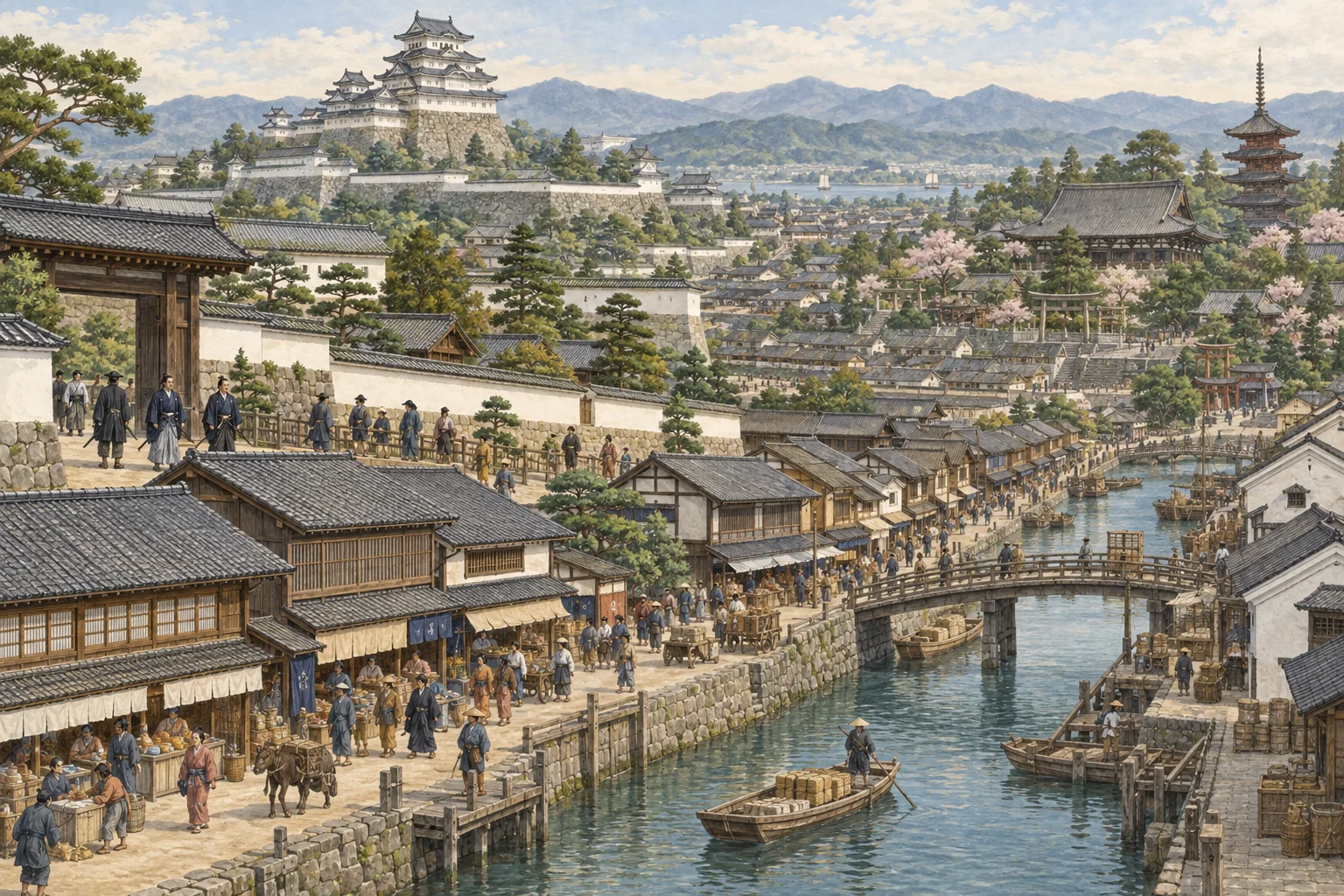
一言で言うと
これだけ覚えれば最低限伝わる一文
A jokamachi is a town planned around a castle, with each class of resident placed where the lord wanted them.
城下町とは、城を中心に計画された町で、どの身分の人をどこに住まわせるかまで決められていました。
30秒で説明する
外国人に説明するときの標準サイズ
A castle town was laid out on purpose. Samurai lived closest to the castle, merchants and craftsmen filled blocks grouped by trade, and temples were placed at the edges where they could serve as a defensive line. Streets were made to bend and end in T-junctions so that an attacking force could not charge straight through. Many Japanese cities still follow those lines.
城下町は計画して作られました。武士は城の近くに住み、商人と職人は職種ごとの町に分けられ、寺は外縁に置かれて防御の線を兼ねました。道はわざと折り曲げ、丁字路で突き当たりにして、攻め手がまっすぐ進めないようにしています。今の日本の都市の多くが、この骨格の上にあります。
スピーチ・英作文
通訳案内士の二次口述・大学入試の自由英作文に
If you get lost in a Japanese provincial city and the streets seem to bend for no reason, you are probably walking through a castle town. From the late sixteenth century, lords built a castle and then built a town around it to a plan. Retainers were housed by rank in the ring closest to the walls.
Merchants and artisans were put in blocks organized by trade, which is why so many towns still have a Blacksmith Street and a Draper Street even though no blacksmith remains. Temples were clustered at the approaches, partly for religion and partly because their grounds and walls made a defensive barrier.
The street pattern was deliberately awkward: roads jog sideways, dead-end at a wall, or meet at a T so that nobody can see or ride far ahead. Kanazawa, Matsumoto, Hikone and Himeji all still show it, and it is the main reason those city centers are pleasant to walk and confusing to drive.
日本の地方都市で道に迷い、通りが意味もなく折れ曲がっているように感じたら、たぶんそこは城下町です。十六世紀の終わりごろから、大名は城を築き、その周りに町を計画して作りました。家臣は身分ごとに、城壁に近い側から順に住まわされます。
商人と職人は職種ごとの町にまとめられました。だから、鍛冶屋が一軒もないのに鍛冶町、呉服屋がなくても呉服町という地名が今も残っています。寺は町の入口あたりに集められました。信仰のためでもあり、その境内と塀が防御の線になるからでもあります。
道筋はわざと通りにくくしてあります。横にずれ、塀で行き止まり、丁字路で突き当たる。先が見通せず、馬で駆け抜けられないようにするためです。金沢、松本、彦根、姫路にその形が残っています。これらの街の中心が、歩くと楽しく、車では分かりにくい理由でもあります。
こう聞かれたら
外国人から実際にされる質問と、その答え方。
How can I tell I am in one?
城下町かどうかは、どう見分ければよいですか。
Look for streets that jog sideways instead of crossing cleanly, a cluster of temples on one edge of the center, and district names ending in cho that name a trade. A surviving moat or an earth bank is the clearest sign.
交差せずに横へずれる道、中心の片側にまとまった寺町、職業の名がついた町名を探してください。堀や土塁が残っていれば、いちばんはっきりした印です。
Which ones are worth visiting?
行くならどこがよいですか。
Kanazawa kept whole samurai and geisha districts, Hagi in Yamaguchi kept its street grid almost intact, and Hikone and Matsumoto pair an original castle keep with the town below it.
金沢は武家地と茶屋街がそのまま残り、山口の萩は町割りがほぼ当時のままです。彦根と松本は、現存する天守とその下の町を合わせて見られます。
Why are the temples all in one place?
どうして寺が一か所に集まっているのですか。
Because they were moved there on the lord's orders. A row of temples on the approach to a town gave walled compounds and open grounds that could be used defensively, and it is also said to have kept the clergy where the domain could watch them.
大名の命令で移されたからです。町の入口に寺を並べれば、塀のある敷地と広い境内を防御に使えます。僧を藩の目の届くところに置いておく意味もあったと言われます。
そのまま使えるフレーズ
- This town grew around the castle.この町は城を中心に広がりました。
- The streets bend on purpose.道はわざと曲げてあります。
- Samurai lived nearest the walls.武士は城に近いところに住みました。
- That district was for the blacksmiths.あのあたりは鍛冶屋の町でした。
- The temples formed a defensive line.寺は防御の線を兼ねていました。
説明に使う語句
- castle town城下町
- town layout町割り
- samurai quarter武家地
- temple district寺町
- moat堀
動画で見る
YouTube より豆知識
城下町は、城を中心に身分ごとの居住地を定めて作られた計画都市です。城に近い側から武家地、そのまわりに町人地を置き、職種ごとに鍛冶町、呉服町といった町名がつけられました。寺は町の出入口付近にまとめられ、寺町と呼ばれます。道は鉤の手に曲げ、丁字路で突き当たらせて見通しを断ちました。1615年の一国一城令で城そのものは減りましたが、町の骨格は残り、金沢、萩、彦根、松本など多くの地方都市が今もその町割りの上にあります。
