街道と宿場かいどうとしゅくば
kaido and shukuba
the Edo highways and their post towns
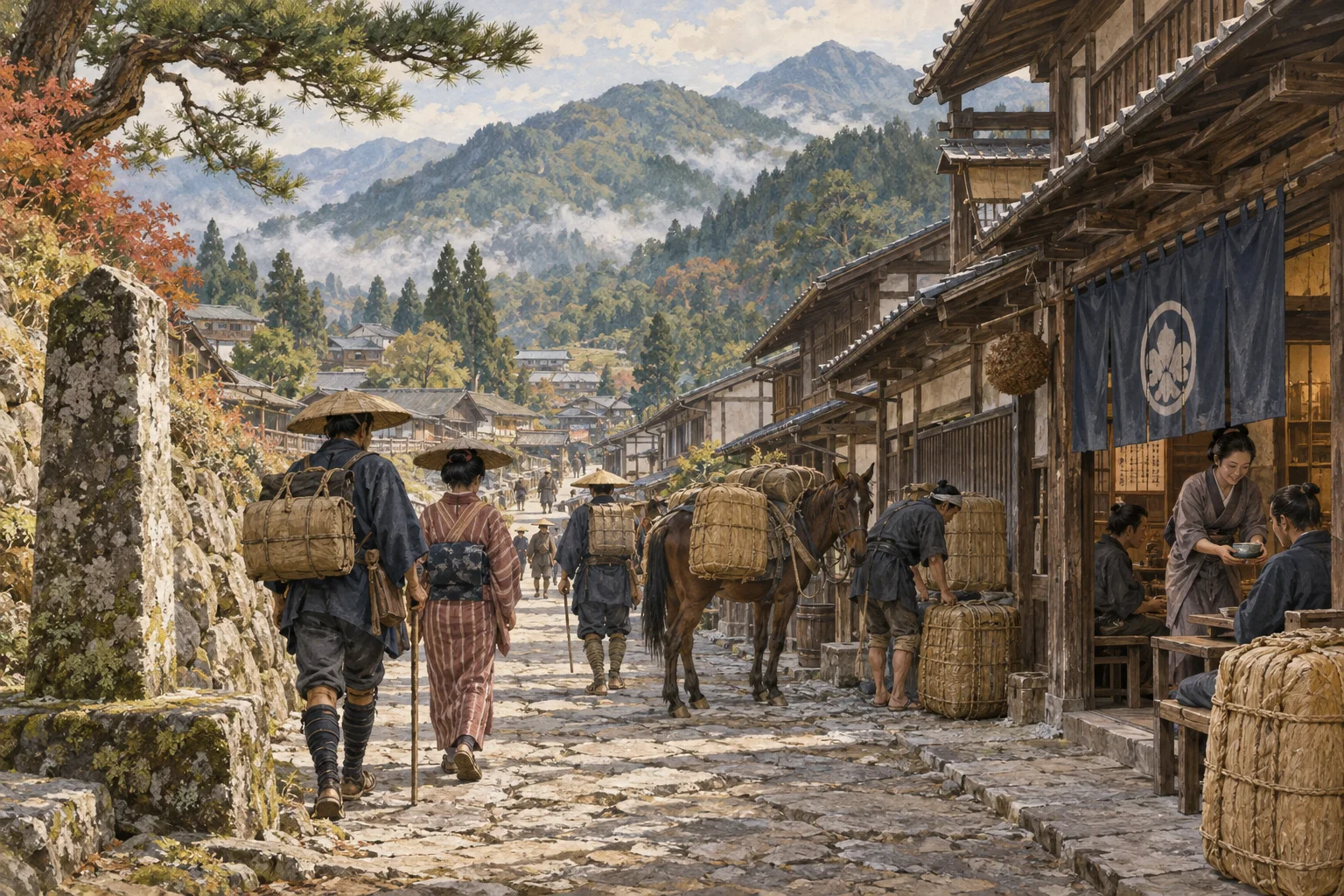
江戸時代の旅は徒歩。二、三里ごとに宿場があった。
一言で言うと
これだけ覚えれば最低限伝わる一文
Kaido and shukuba, highways and post towns, are the five Edo-era roads and their stops, a few hours' walk apart.
街道と宿場とは、江戸時代の五つの街道と、数時間歩くごとに置かれた宿場のことです。
30秒で説明する
外国人に説明するときの標準サイズ
Five official highways ran out of Edo, the busiest being the Tokaido along the coast to Kyoto. Every few hours' walk there was a post town with inns, stables and an official station that supplied horses and porters. Checkpoints controlled who passed. Some post towns survive almost intact and can be walked between in a day.
江戸からは五つの公の街道が伸び、いちばん賑わったのは海沿いに京へ向かう東海道でした。数時間歩くごとに宿場があり、旅籠と厩、人馬を出す問屋場が置かれます。関所が通行を検めました。当時の姿がほぼそのまま残る宿場もあり、一日で歩いてつなげます。
スピーチ・英作文
通訳案内士の二次口述・大学入試の自由英作文に
Travel in Edo-period Japan meant walking, and the roads were built for that. Five highways radiated from Edo, and the most famous, the Tokaido, ran along the coast to Kyoto with fifty-three post towns along the way, a set immortalized in a series of prints. A post town was not a village that happened to be there; it was licensed and obliged to keep a fixed number of horses and porters ready, to run an official station that handed travelers on to the next stage, and to provide a grand inn for a lord traveling under the alternate attendance system and simpler inns for everyone else.
Checkpoints inspected travelers, watching especially for weapons going into Edo and for the wives of lords trying to leave it. Two post towns in the Kiso valley, Tsumago and Magome, were restored rather than modernized, and the eight kilometers of old road between them is one of the best walks in the country.
江戸時代の旅は歩くことでした。道もそのように作られています。江戸から五つの街道が伸び、もっとも名高い東海道は海沿いに京へ向かい、その途中に五十三の宿場がありました。浮世絵の連作で知られる一組です。
宿場は、たまたまそこにあった村ではありません。公に定められ、決まった数の人馬をいつでも出せるようにしておく義務があり、次の宿場へ旅人を引き継ぐ問屋場を置き、参勤交代の大名が泊まる本陣と、それ以外の人のための旅籠を備えました。
関所では旅人が検められます。とくに江戸へ入る鉄砲と、江戸から出ようとする大名の妻が見張られました。木曽の妻籠と馬籠は、近代化せずに保存する道を選んだ宿場で、そのあいだの八キロほどの古道は、日本でもっとも気持ちのよい徒歩の道の一つです。
こう聞かれたら
外国人から実際にされる質問と、その答え方。
How far did people walk in a day?
一日にどのくらい歩いたのですか。
Around thirty to forty kilometers for a fit adult, so a traveler passed several post towns a day and stopped for the night at one of them. Women, the elderly and heavy loads went slower, and a palanquin could be hired for the hard stretches.
健脚な大人で三十から四十キロほどです。一日にいくつもの宿場を通り過ぎ、そのどれかで泊まりました。女性や高齢者、重い荷を運ぶ場合は遅くなり、難所では駕籠を雇うこともできました。
Could ordinary people travel freely?
庶民は自由に旅ができたのですか。
More freely than you might expect, if the journey was framed as a pilgrimage. A permit was needed and checkpoints were real, but pilgrimage to Ise became a mass activity, and the roads were full of ordinary travelers.
思われているより自由でした。参詣という名目があればなおさらです。手形は要りましたし関所も実際に機能しましたが、伊勢参りは大規模な流行になり、街道は庶民の旅人であふれました。
What is left today?
今は何が残っていますか。
Stretches of stone-paved road, rows of old cedars planted as shade, the original checkpoint building at Arai and a reconstructed one at Hakone, and preserved post towns in the Kiso valley and at Seki in Mie. The modern Tokaido line follows much of the same route.
石畳の道、日よけに植えられた杉並木、当時の建物が残る新居関所と復元された箱根関所、木曽の宿場や三重の関宿などです。今の東海道線も、多くの区間で同じ道筋をたどっています。
そのまま使えるフレーズ
- People traveled on foot.旅は歩くものでした。
- There was an inn town every few hours.数時間ごとに宿場がありました。
- The checkpoint inspected travelers.関所で旅人を検めました。
- This road is the old highway.この道が旧街道です。
- You can walk between the two towns.二つの宿場のあいだは歩けます。
説明に使う語句
- highway街道
- post town宿場
- inn for ordinary travelers旅籠
- official inn for lords本陣
- checkpoint関所
動画で見る
YouTube より豆知識
江戸幕府が整えた五街道は、東海道、中山道、日光街道、奥州街道、甲州街道です。東海道には五十三の宿場が置かれ、歌川広重の連作で広く知られました。宿場には人馬を継ぐ問屋場、大名が泊まる本陣と脇本陣、庶民の旅籠が並びます。関所では、江戸に入る武器と江戸を出る女性が厳しく検められ、これを入鉄砲に出女と言いました。木曽の妻籠と馬籠は早い時期から保存に取り組み、そのあいだの古道は今も歩けます。
