参勤交代さんきんこうたい
sankin kotai
the alternate attendance system
大名が一年ごとに江戸と領地を行き来した、江戸幕府の制度。
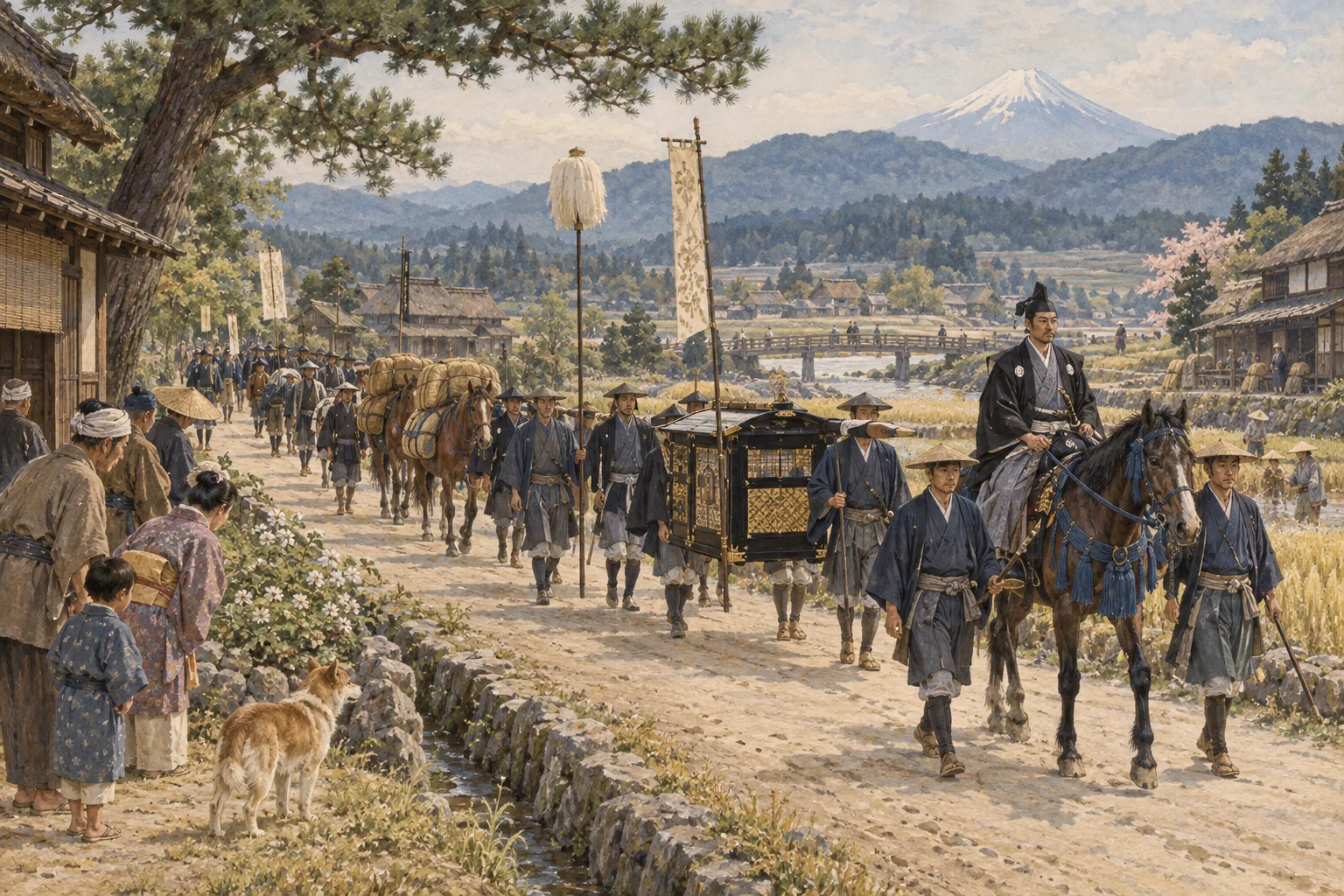
一言で言うと
これだけ覚えれば最低限伝わる一文
Sankin kotai required most lords to spend alternate years in Edo, which kept them loyal and poor.
参勤交代とは、大名に一年おきに江戸で暮らすことを義務づけ、従わせ、財を使わせた制度です。
30秒で説明する
外国人に説明するときの標準サイズ
Under sankin kotai, most regional lords had to spend alternate years in Edo, and leave his wife and heir there permanently as hostages. The travel and the two households were enormously expensive, which limited what a lord could spend on soldiers. It was formalized in 1635 and lasted, with changes, until the end of the shogunate.
参勤交代のもとで、各地の大名の多くは一年おきに江戸で暮らすことを義務づけられ、妻と世継ぎは人質として江戸に常住させられました。往復の費用と二つの屋敷の維持は莫大で、大名が兵に使える財を抑える働きをしました。1635年に制度として定められ、形を変えながら幕府の終わりまで続きました。
スピーチ・英作文
通訳案内士の二次口述・大学入試の自由英作文に
Sankin kotai means alternate attendance, and it is often described as an effective system of control. From 1635 it required each daimyo to live in Edo in alternate years and in his own domain the other years, while his wife and heir stayed in Edo all the time.
The effect was threefold. It kept a hostage in the capital, so rebellion was very costly. It drained the lords' money, because the processions could run to hundreds or even thousands of people and both residences had to be maintained.
And it built the country: highways, post towns, inns and a national market grew up around the traffic, and Edo became one of the largest cities in the world. A cultural side effect was that regional lords and their retainers constantly met in Edo, which spread fashions, food and speech across a country that was otherwise closed.
参勤交代は「交代で参勤する」という意味で、効果的な統制の仕組みとしてよく語られます。1635年から、各大名は一年おきに江戸に住み、残りの年は自分の領地に住むことを義務づけられ、妻と世継ぎは江戸に常住しました。
効果は三つありました。都に人質を置くことで、反乱の代価を非常に高くしました。行列は数百人から時に千人を超え、二つの屋敷を維持しなければならないため、大名の財を減らしました。そして国をつくりました。
街道、宿場、旅籠、全国的な市場がこの往来のまわりに育ち、江戸は世界有数の大都市になりました。文化の面では、諸国の大名と家臣が江戸で絶えず顔を合わせたため、閉ざされていたはずの国の中を、流行や食べ物や言葉が行き来しました。
こう聞かれたら
外国人から実際にされる質問と、その答え方。
Were the lords really made poor by it?
大名は本当にそれで貧しくなったのですか。
Many domains were chronically in debt, and travel and Edo expenses were a large part of that. The shogunate did not aim to bankrupt the lords, and at times it relaxed the requirements when domains were in trouble.
多くの藩は慢性的に借金を抱えており、旅費と江戸の費用はその大きな部分でした。幕府は大名を破産させることを狙ったわけではなく、藩が苦しいときには要件を緩めることもありました。
What happened to the wives and children?
妻子はどうなったのですか。
They lived permanently in the domain's Edo residence and generally could not leave the city. Many heirs were born and raised in Edo and saw their family's home province for the first time as adults.
妻子は藩の江戸屋敷に常住し、原則として江戸を出られませんでした。世継ぎの多くは江戸で生まれ育ち、大人になって初めて国元を見ることも珍しくありませんでした。
そのまま使えるフレーズ
- Every lord had to live in Edo every other year.大名は一年おきに江戸で暮らす決まりでした。
- His wife and heir stayed there as hostages.妻と世継ぎは人質として江戸に残されました。
- The cost made it hard to raise armies.その費用のせいで、軍を養う余裕がなくなりました。
- The highways grew because of this traffic.この往来のおかげで街道が発達しました。
説明に使う語句
- alternate years一年おきに
- procession行列
- hostage人質
- domain藩
動画で見る
YouTube より豆知識
参勤交代は1635年の武家諸法度で制度として定められました。大名行列の規模は幕府が身分に応じて定めており、見栄で増やすと出費がかさむため、道中は人数を減らし、城下に入る前に人を雇って増やすこともあったと伝えられます。この往来を支えたのが東海道や中山道の宿場で、旅籠、飛脚、名物の菓子など、今も残る街道文化はここで育ちました。行列に出会った庶民は道を空ける決まりがありました。
