長屋ながや
nagaya
the Edo row house where many townspeople lived
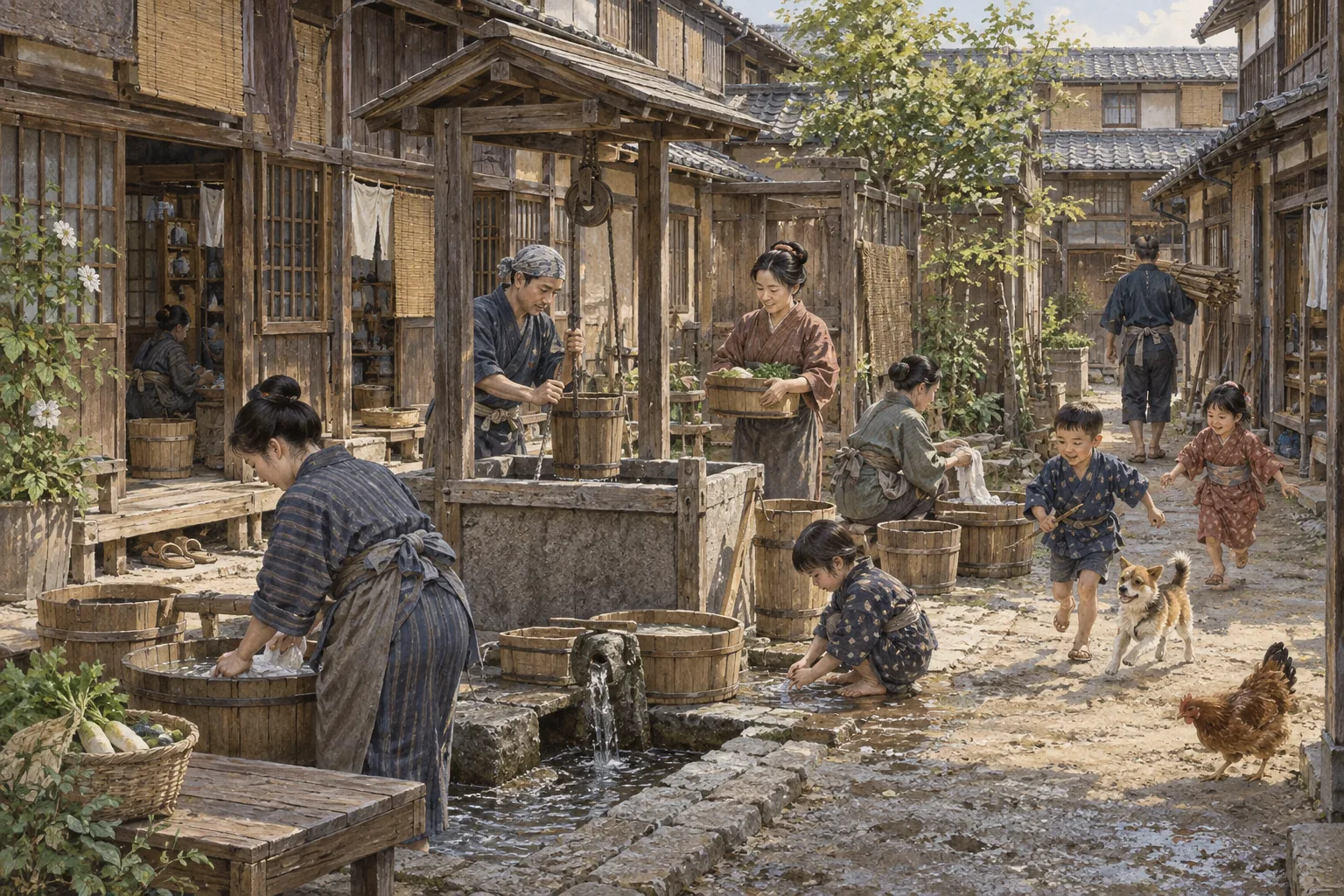
四畳半一間に一家族。井戸も便所も共同だった。
一言で言うと
これだけ覚えれば最低限伝わる一文
A nagaya was a long building divided into tiny one-room homes, where most Edo townspeople lived.
長屋とは、細長い建物を小さな一間に仕切った住まいで、江戸の町人の多くがここで暮らしました。
30秒で説明する
外国人に説明するときの標準サイズ
A nagaya was a single long building split into narrow units, each about four and a half mats with an earth-floored entry. There was no private well, no private toilet and no bath; those were shared in the alley. Most of Edo's townspeople lived this way, and the arrangement produced the dense neighborly life that fills so many comic stories.
長屋は、細長い一棟を狭い区画に仕切った住まいです。一戸はおよそ四畳半に土間がつく程度でした。自分の井戸も便所も風呂もなく、路地で共同に使います。江戸の町人の多くがこの形で暮らし、密な近所づきあいが生まれました。落語の舞台の多くがここです。
スピーチ・英作文
通訳案内士の二次口述・大学入試の自由英作文に
If you picture Edo only as a city of samurai residences, you are missing half its people. Most townspeople lived in nagaya, long single-story buildings divided into units of about nine feet by twelve, which is four and a half tatami plus a small earth floor for the stove. A family lived in that one room.
There was no private water, no private toilet and no bath; the alley had a shared well, a shared privy and a trash point, and everyone used the public bathhouse. The landlord was not a distant figure but the man who collected the rent, vouched for tenants to the authorities, settled their quarrels and sometimes arranged their marriages.
All of this is why Edo comic storytelling is set in a nagaya: the form guarantees that everybody knows everybody's business, which is exactly what a comic story needs. A reconstructed nagaya can be walked through at the Fukagawa Edo Museum in Tokyo.
江戸を武家屋敷の町としてだけ思い浮かべると、住人の半分を見落とすことになります。町人の多くは長屋に住みました。細長い平屋を、九尺二間、つまり四畳半に竈のための土間がつく程度の区画に仕切った建物です。一家族がその一間で暮らします。
自分の水も便所も風呂もありません。路地に共同の井戸と便所と塵芥の場所があり、湯は銭湯に行きました。大家は遠い存在ではなく、店賃を集め、役所に対して店子の身元を請け合い、もめごとを収め、時には縁談まで世話をする人でした。
江戸の落語が長屋を舞台にするのは、こうした事情によります。誰が何をしているか全員が知っている、という前提が、そのまま噺の土台になるからです。復元された長屋は、東京の深川江戸資料館で中まで歩いて見られます。
こう聞かれたら
外国人から実際にされる質問と、その答え方。
How small was one unit really?
一戸はどれくらいの広さだったのですか。
The standard was described as nine shaku by two ken, roughly two and a half by three and a half meters, which is four and a half mats with a small earth-floored entry. A family of three or four in that space was not unusual.
九尺二間が標準とされ、おおよそ二メートル半かける三メートル半。四畳半に小さな土間がつく形です。そこに三、四人の家族が住むのも珍しくありませんでした。
What did the landlord actually do?
大家は何をしていたのですか。
Far more than collect rent. He was answerable to the authorities for his tenants, so he vouched for them, mediated disputes, helped at funerals and weddings, and could turn someone out. The saying was that the landlord is a parent, the tenant a child.
店賃を集めるだけではありません。店子について役所に責任を負う立場だったので、身元を請け合い、もめごとを裁き、葬儀や祝儀の世話をし、追い出すこともできました。大家といえば親も同然、という言い方がありました。
Where can I see one?
どこで見られますか。
The Fukagawa Edo Museum in Tokyo has a full-scale reconstruction of an Edo street that you can enter, complete with the alley, the well and the communal privy.
東京の深川江戸資料館に、江戸の町並みの原寸の復元があり、中に入れます。路地も井戸も共同便所も再現されています。
そのまま使えるフレーズ
- A whole family lived in one room.一家族が一間で暮らしました。
- The well and the toilet were shared.井戸と便所は共同でした。
- Everyone knew everyone's business.誰の事情もみな筒抜けでした。
- The landlord settled the arguments.もめごとは大家が収めました。
- Most people in Edo lived like this.江戸の人の多くがこう暮らしていました。
説明に使う語句
- row house長屋
- alley路地
- landlord大家
- tenant店子
- shared well共同の井戸
動画で見る
YouTube より豆知識
長屋は、細長い一棟を仕切って複数の世帯が住む江戸の庶民住宅です。裏長屋の標準は九尺二間とされ、四畳半に土間がつく広さでした。井戸、便所、塵芥の場所は路地で共同に使い、風呂は銭湯に行きます。大家は店子の身元を役所に請け合う立場で、もめごとの仲裁や冠婚葬祭の世話まで担いました。井戸端会議という言葉は、共同の井戸に人が集まって話したことに由来します。落語の多くが長屋を舞台にするのは、この暮らし方によるものです。
