落語らくご
rakugo
solo comic storytelling
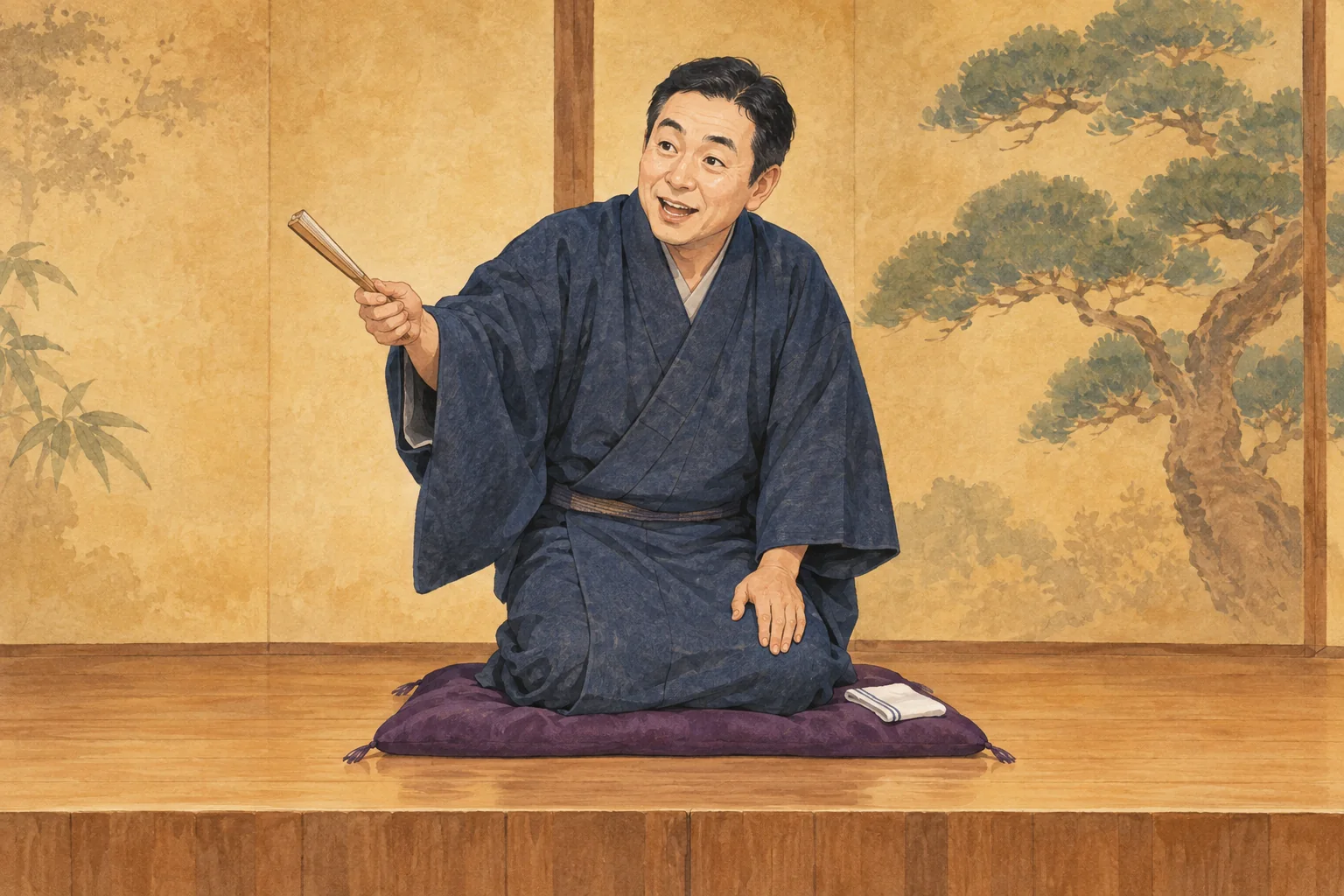
座布団の上に座ったまま、扇子一本で何人もの人物を演じ分ける一人芸。
一言で言うと
これだけ覚えれば最低限伝わる一文
Rakugo is comic storytelling performed by one person kneeling on a cushion with only a fan and a cloth.
落語は、座布団に座り、扇子と手ぬぐいだけで演じる一人語りの話芸です。
30秒で説明する
外国人に説明するときの標準サイズ
A rakugo performer kneels on a cushion in a plain kimono and tells a long comic story, playing every character by turning the head and changing the voice. The only props are a folding fan and a hand towel, which stand in for chopsticks, a pipe, a letter, a sword. The story builds to a punchline called an ochi, which gives the art its name.
落語家は無地の着物で座布団に正座し、長い滑稽話を語ります。首の向きと声を変えるだけで、登場人物を一人で演じ分けます。道具は扇子と手ぬぐいだけで、それが箸にも、煙管にも、手紙にも、刀にもなります。話は最後の「落ち」に向かって進み、その落ちが芸の名の由来です。
スピーチ・英作文
通訳案内士の二次口述・大学入試の自由英作文に
Rakugo is one of the most economical art forms I know. A performer walks on, kneels on a cushion, and for twenty or thirty minutes tells a comic story, playing every character in it. There is no set and no costume change. To switch between two characters talking, the performer simply turns their head left and right, and changes the voice.
The only props are a folding fan and a hand towel, and these become everything: chopsticks, a pipe, a letter, a fishing rod, a sword. The story ends on a punchline called an ochi, and the word rakugo means, roughly, a story that falls.
Most of the classic stories date from the Edo period and are still performed in much the same form, so audiences know the ending. They come for how it is told. There are performances with English subtitles, and a few performers work in English.
落語は、私の知るかぎり最も無駄のない芸のひとつです。演者が出てきて座布団に正座し、20分か30分、登場人物を一人で演じ分けながら滑稽話を語ります。舞台装置も衣装替えもありません。
二人の会話は、首を左右に振り分け、声を変えるだけで表します。道具は扇子と手ぬぐいだけで、それが箸にも煙管にも手紙にも釣り竿にも刀にもなります。話は「落ち」で終わり、落語という名はそこから来ています。
古典の多くは江戸時代の噺で、今もほぼそのまま演じられるため、観客は結末を知っています。それでも来るのは、どう語られるかを聞くためです。英語字幕つきの公演もありますし、英語で演じる噺家も何人かいます。
こう聞かれたら
外国人から実際にされる質問と、その答え方。
Is it improvised?
その場で作っているのですか。
No. The classic stories are fixed and passed from master to apprentice. What changes is the pacing, the small details and the performer's personality, which is exactly what audiences compare.
違います。古典の噺は固定されており、師匠から弟子へ受け継がれます。変わるのは間、細部、そして演者の個性で、観客が比べるのはまさにそこです。
How do you become a rakugo performer?
落語家にはどうやってなるのですか。
By apprenticeship. You ask a master to take you on, work as their assistant for years, sometimes living in their home, and rise through fixed ranks. There is no school route that replaces it.
弟子入りです。師匠に頼んで弟子にしてもらい、何年も身の回りの世話をしながら修業し(住み込みの場合もあります)、決まった階級を上がっていきます。これに代わる学校の道筋はありません。
Where can I see it?
どこで見られますか。
Yose, the dedicated variety halls in Tokyo and Osaka, run shows through the day, and you can walk in partway through. English-language rakugo shows are held from time to time, and tickets are inexpensive.
寄席という専門の演芸場が東京と大阪にあり、一日を通して公演していて、途中からでも入れます。英語の落語会もときどき開かれ、料金も高くありません。
そのまま使えるフレーズ
- One person plays every character.一人で全部の登場人物を演じます。
- The only props are a fan and a hand towel.道具は扇子と手ぬぐいだけです。
- Turning the head shows who is speaking.首の向きで、誰が話しているかを示します。
- The audience already knows the ending.観客はもう結末を知っています。
- The halls run all day, and you can walk in partway through.寄席は一日中やっていて、途中からでも入れます。
説明に使う語句
- storytelling話芸、語り
- punchline落ち、オチ
- prop小道具
- apprentice弟子
- kneel正座する
動画で見る
YouTube より豆知識
落語の源流は、戦国時代に大名に仕えて話を聞かせた「御伽衆」や、安楽庵策伝が江戸初期にまとめた笑話集『醒睡笑』にさかのぼるとされる。寄席は江戸時代後期に定着し、東京では鈴本演芸場・新宿末廣亭・浅草演芸ホール・池袋演芸場が「定席」として知られる。東京の落語家の階級は前座・二ツ目・真打で、真打になるまでに十年以上かかるのが一般的(上方にはこの階級制度が基本的にない)。扇子は「カゼ」、手ぬぐいは「マンダラ」と呼ばれ、箸・筆・刀・財布などに見立てられる。演者が座る座布団の向きや高座への上がり方にも決まりがある。上方落語では見台と小拍子を使い、江戸落語とは道具立てが異なる。
