文楽ぶんらく
bunraku
puppet theater with three operators to a puppet
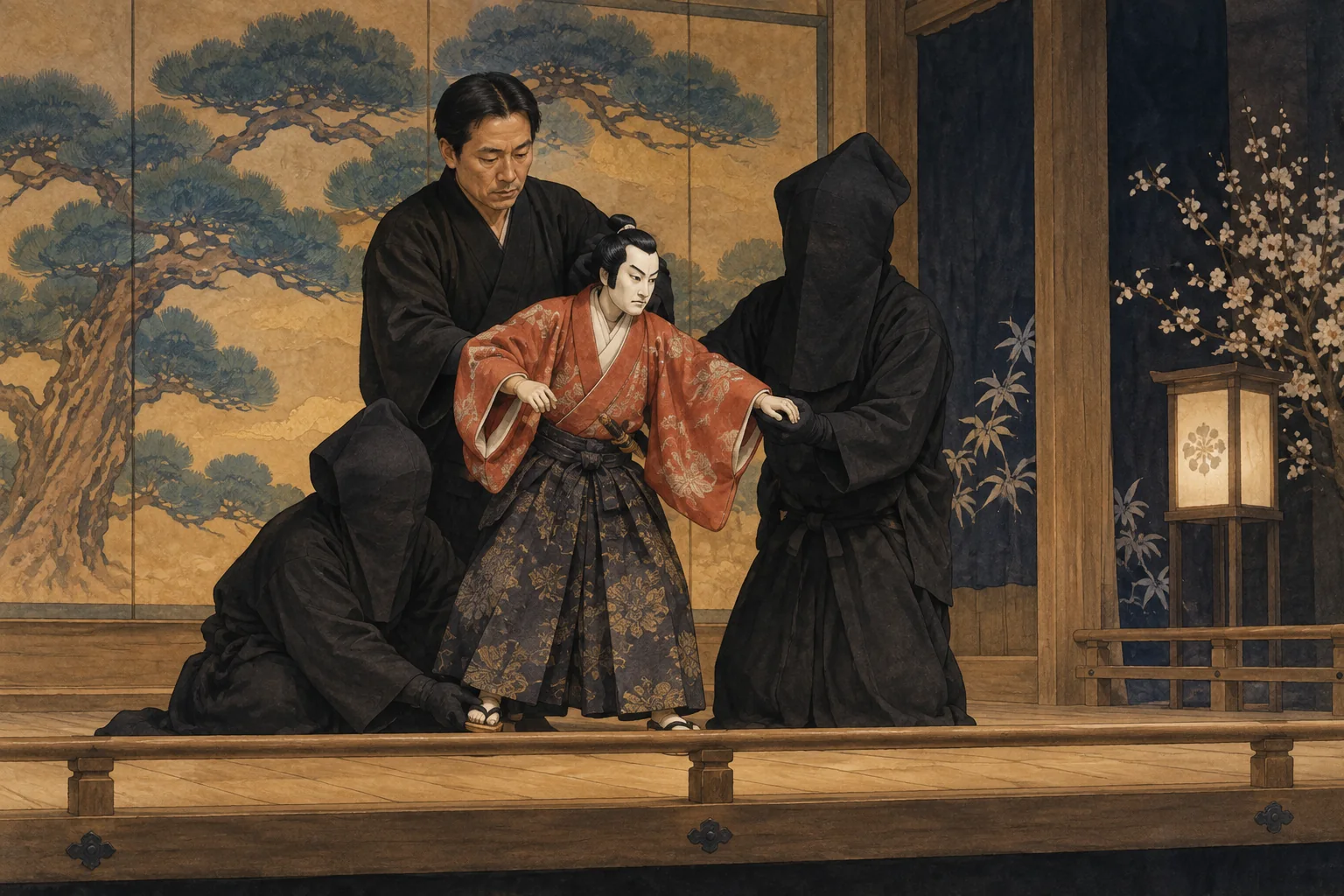
人形一体を三人で動かす。黒衣の二人は、見えていても見ないのが約束。
一言で言うと
これだけ覚えれば最低限伝わる一文
Bunraku is puppet theater in which three people operate one puppet in full view of the audience.
文楽とは、一体の人形を三人で、観客から見える形で操る人形劇です。
30秒で説明する
外国人に説明するときの標準サイズ
In bunraku, each main puppet is worked by three operators: one for the head and right arm, one for the left arm, one for the feet. They stand on stage in view. A single chanter speaks all the parts and narrates, accompanied by a shamisen player. It grew up in Osaka in the seventeenth and eighteenth centuries alongside kabuki.
文楽では、主な人形を三人で操ります。頭と右手、左手、足をそれぞれ受け持ちます。三人は舞台の上に立ち、観客から見えています。太夫が一人で全員のせりふと語りを受け持ち、三味線がそれに付きます。十七世紀から十八世紀の大坂で、歌舞伎と並んで育ちました。
スピーチ・英作文
通訳案内士の二次口述・大学入試の自由英作文に
Bunraku is Japanese puppet theater, and what surprises people is that nothing is hidden. Each principal puppet is between half and two-thirds life-size and is worked by three operators standing on the stage. The chief operator, whose face is usually uncovered, controls the head and the right arm; two others in black hoods take the left arm and the feet.
The audience sees all three and learns within a few minutes to stop seeing them, which is a convention rather than a trick. To one side sits the chanter, who speaks every character, narrates the scene and carries the emotional weight, with a shamisen player beside him.
The plays came from the same world as kabuki in seventeenth and eighteenth century Osaka, and the two forms borrowed from each other constantly, so many famous kabuki plays were written for puppets first. It was proclaimed a masterpiece by UNESCO in 2003 and inscribed on the Representative List in 2008. Performances run at the National Bunraku Theatre in Osaka and in Tokyo, with English headsets available.
文楽は日本の人形劇で、人が驚くのは、何も隠していないことです。主な人形は人の背丈の半分から三分の二ほどで、三人の遣い手が舞台の上に立って操ります。主遣いは、たいてい顔を出したまま、頭と右手を受け持ちます。黒い頭巾をかぶった二人が、左手と足を受け持ちます。
観客には三人とも見えており、数分のうちに見えなくなります。仕掛けではなく、約束ごとです。脇には太夫が座り、登場する全員のせりふを語り、場面を語り、感情を担います。その横に三味線が付きます。演目は十七世紀から十八世紀の大坂で、歌舞伎と同じ世界から生まれました。
二つは絶えず互いから借り合っており、有名な歌舞伎の演目の多くは、もともと人形のために書かれたものです。2003年にユネスコの傑作に宣言され、2008年に代表一覧表へ記載されました。大阪の国立文楽劇場と東京で上演があり、英語の音声案内も借りられます。
こう聞かれたら
外国人から実際にされる質問と、その答え方。
Why can I see the operators?
どうして操っている人が見えているのですか。
It is the convention of the form. The black hoods signal that the two assistants are to be treated as not present, and the chief operator often shows his face. Audiences stop registering them almost at once.
この芸能の約束ごとです。黒い頭巾は、その二人を居ないものとして扱うという合図で、主遣いは顔を出すことが多いです。観客はすぐに気にならなくなります。
How does one person voice everyone?
一人でどうやって全員の声を出すのですか。
The chanter changes voice for each character and also narrates, and the training takes decades. The script is on a stand in front of him, and he bows to it before and after, because the text is treated as the authority.
太夫が役ごとに声を使い分け、地の語りも受け持ちます。この修練には何十年もかかります。前に床本が置かれ、始まりと終わりに礼をします。本文そのものが拠りどころとして扱われているからです。
Is it the same as kabuki?
歌舞伎と同じものですか。
They are separate forms that grew up together in the same period and shared plays constantly. Kabuki uses living actors; bunraku uses puppets, a single chanter and a shamisen, and the repertoire overlaps heavily.
同じ時期に一緒に育ち、演目を絶えずやり取りしてきた別々の芸能です。歌舞伎は生身の役者、文楽は人形と一人の太夫と三味線で、演目はかなり重なっています。
そのまま使えるフレーズ
- Three people operate one puppet.一体の人形を三人で操ります。
- The chanter speaks all the parts.太夫が全員のせりふを語ります。
- The operators are visible on stage.人形遣いは舞台の上に見えています。
- Is there an English audio guide?英語の音声案内はありますか。
- Many kabuki plays were written for puppets first.歌舞伎の演目の多くは、先に人形のために書かれました。
説明に使う語句
- a puppet人形
- an operator人形遣い
- a chanter太夫
- a convention約束ごと
- a repertoire演目
動画で見る
YouTube より豆知識
三人遣いは、主遣いが頭と右手、左遣いが左手、足遣いが足を受け持ちます。足遣いから始めて左遣いを経て主遣いに至るまで、長い年月がかかると言われます。語りは義太夫節と呼ばれ、太夫と三味線が組んで務めます。近松門左衛門が書いた作品が代表として知られ、その多くが今も上演されています。2003年にユネスコの傑作として宣言され、2008年に代表一覧表へ記載されました。大阪の国立文楽劇場が拠点で、東京でも公演があります。
