銭湯せんとう
sento
the neighborhood public bath
温泉との違いは「湧いているかどうか」。そして銭湯は、風呂のない家のためにあった。
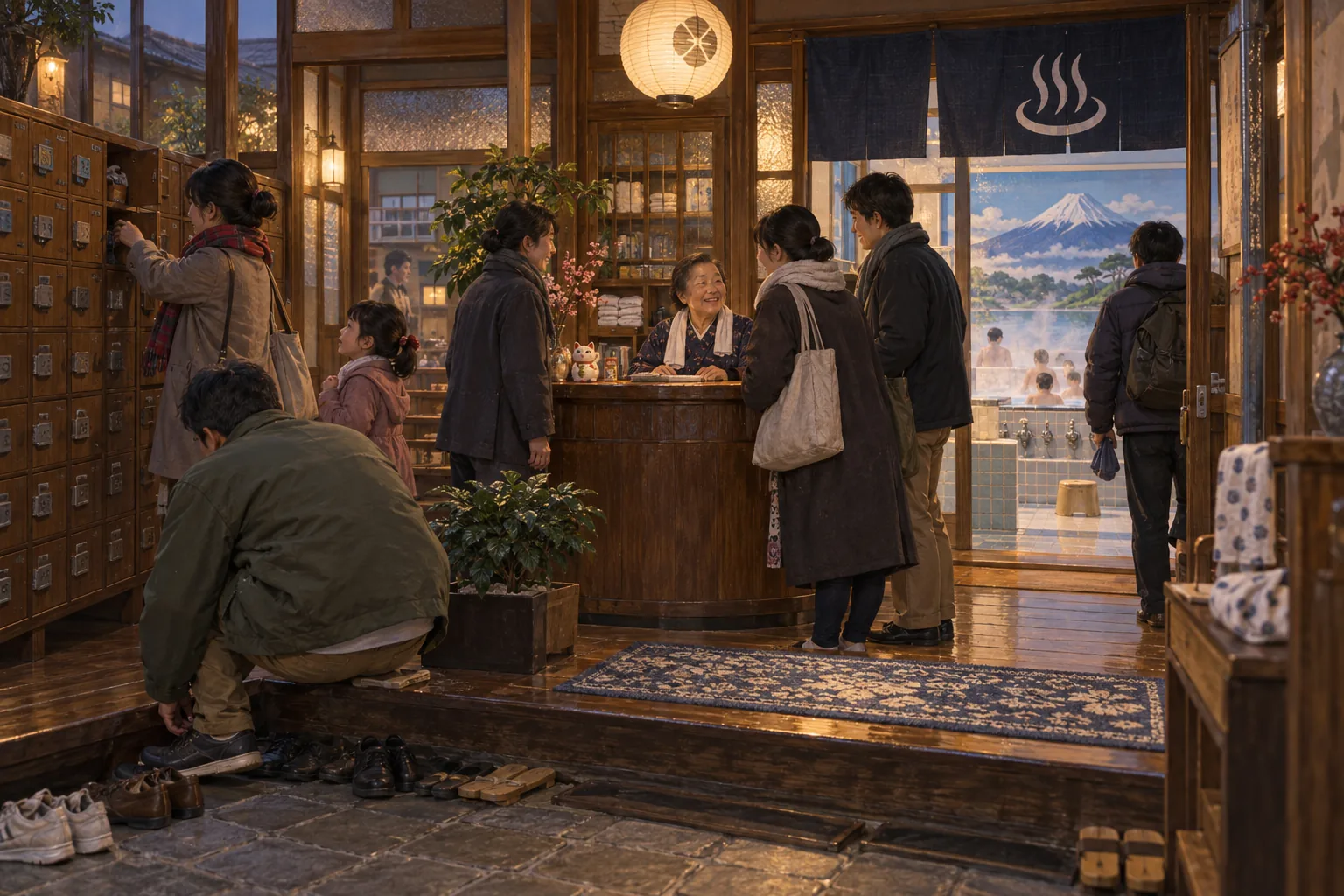
一言で言うと
これだけ覚えれば最低限伝わる一文
A sento is a public bath in an ordinary neighborhood, using heated tap water rather than a hot spring.
銭湯とは、温泉ではなく沸かした水道水を使う、街なかの公衆浴場です。
30秒で説明する
外国人に説明するときの標準サイズ
A sento is a public bath in a residential area. The difference from an onsen is the water: a sento heats ordinary tap water, while an onsen uses natural spring water. Sento exist because until well into the twentieth century, many Japanese homes had no bath. Numbers have fallen sharply, but the surviving ones have become places people go on purpose.
銭湯は住宅街にある公衆浴場です。温泉との違いは湯で、銭湯は水道水を沸かし、温泉は自然に湧いた湯を使います。銭湯があるのは、20世紀のかなり後まで多くの日本の家に風呂がなかったからです。数は大きく減りましたが、残った銭湯は、わざわざ足を運ぶ場所になりました。
スピーチ・英作文
通訳案内士の二次口述・大学入試の自由英作文に
A sento is a public bath in an ordinary neighborhood. People often confuse it with an onsen, but the difference is simple: an onsen uses natural hot spring water, and a sento heats tap water. The reason sento existed is not romantic.
Until the middle of the twentieth century, a great many Japanese homes had no bath at all, so the whole street washed at the same place, every evening. Once homes got their own baths, the numbers collapsed, from almost eighteen thousand nationwide at the 1968 peak to around fifteen hundred today.
The ones still open have changed character. Some have been redesigned by architects, some serve craft beer, and young people go for the experience rather than out of necessity. The rules are the same as an onsen: wash first, no swimsuits, no towel in the water.
銭湯は、普通の住宅街にある公衆浴場です。温泉とよく混同されますが、違いは単純で、温泉は自然に湧いた湯、銭湯は沸かした水道水です。銭湯があった理由はロマンチックなものではありません。
20世紀半ばまで、日本の多くの家には風呂そのものがなく、町内の全員が毎晩同じ場所で体を洗っていたのです。各家庭に風呂が入ると軒数は激減し、1968年に全国で1万8千軒近くあったものが、今では1,500軒ほどになりました。
残った銭湯は性格が変わりました。建築家が設計し直した店もあれば、クラフトビールを出す店もあり、若い人は必要からではなく体験として通います。決まりは温泉と同じです。先に洗う、水着は着ない、タオルは湯に入れない。
こう聞かれたら
外国人から実際にされる質問と、その答え方。
What's the difference from an onsen, in one line?
温泉との違いを一言で言うと何ですか。
Onsen water comes out of the ground hot; sento water comes out of a tap and is heated. Everything else about how you use them is the same.
温泉の湯は地中から温かいまま出てきて、銭湯の湯は水道水を沸かします。使い方の決まりは同じです。
Do I need to bring anything?
何か持っていく必要がありますか。
Soap, shampoo and towels are often not included, though most places sell or rent them for a small amount. Check at the counter when you pay.
石けん・シャンプー・タオルは含まれないことが多いですが、たいてい少額で売っているか貸してくれます。受付で払うときに確認してください。
Why is there a painting of Mount Fuji?
どうして富士山の絵が描いてあるのですか。
It is a tradition in Tokyo sento that goes back to the early twentieth century, when a bathhouse owner had a mural painted to please children. Only a handful of painters still do this work.
東京の銭湯の伝統で、20世紀初めに子どもを喜ばせようと壁画を描かせたのが始まりとされます。この仕事を続ける絵師は、今では数人しかいません。
そのまま使えるフレーズ
- A sento uses heated tap water, not spring water.銭湯は温泉ではなく、沸かした水道水です。
- You pay at the counter as you go in.入るときに受付で払います。
- Towels aren't usually included.タオルはふつう含まれていません。
- There used to be one on every street.昔はどの通りにもありました。
- That mural is a Tokyo bathhouse tradition.あの壁画は東京の銭湯の伝統です。
説明に使う語句
- public bath公衆浴場、銭湯
- tap water水道水
- mural壁画
- decline (in numbers)減少する
- lockerロッカー
動画で見る
YouTube より豆知識
全国公衆浴場業生活衛生同業組合連合会の統計では、銭湯(一般公衆浴場)の数は1968年(昭和43年)の17,999軒をピークに減り続け、2020年代半ばには1,500軒前後まで落ちている。半世紀で9割以上が姿を消した計算になる。住宅への内風呂の普及がその最大の要因である。東京の銭湯に富士山の壁画が多いのは、1912年に東京・神田の銭湯が子ども向けに絵を描かせたのが始まりとされる。この壁画を描く「銭湯絵師」は全国で数名しかいない。番台(入口の高い受付台)は近年フロント式に改装されることが多い。なお料金は都道府県ごとに上限が定められており、自由に値上げできない公共性の高い業種である。
