冬至とゆず湯とうじとゆずゆ
toji to yuzuyu
the winter solstice and citrus baths
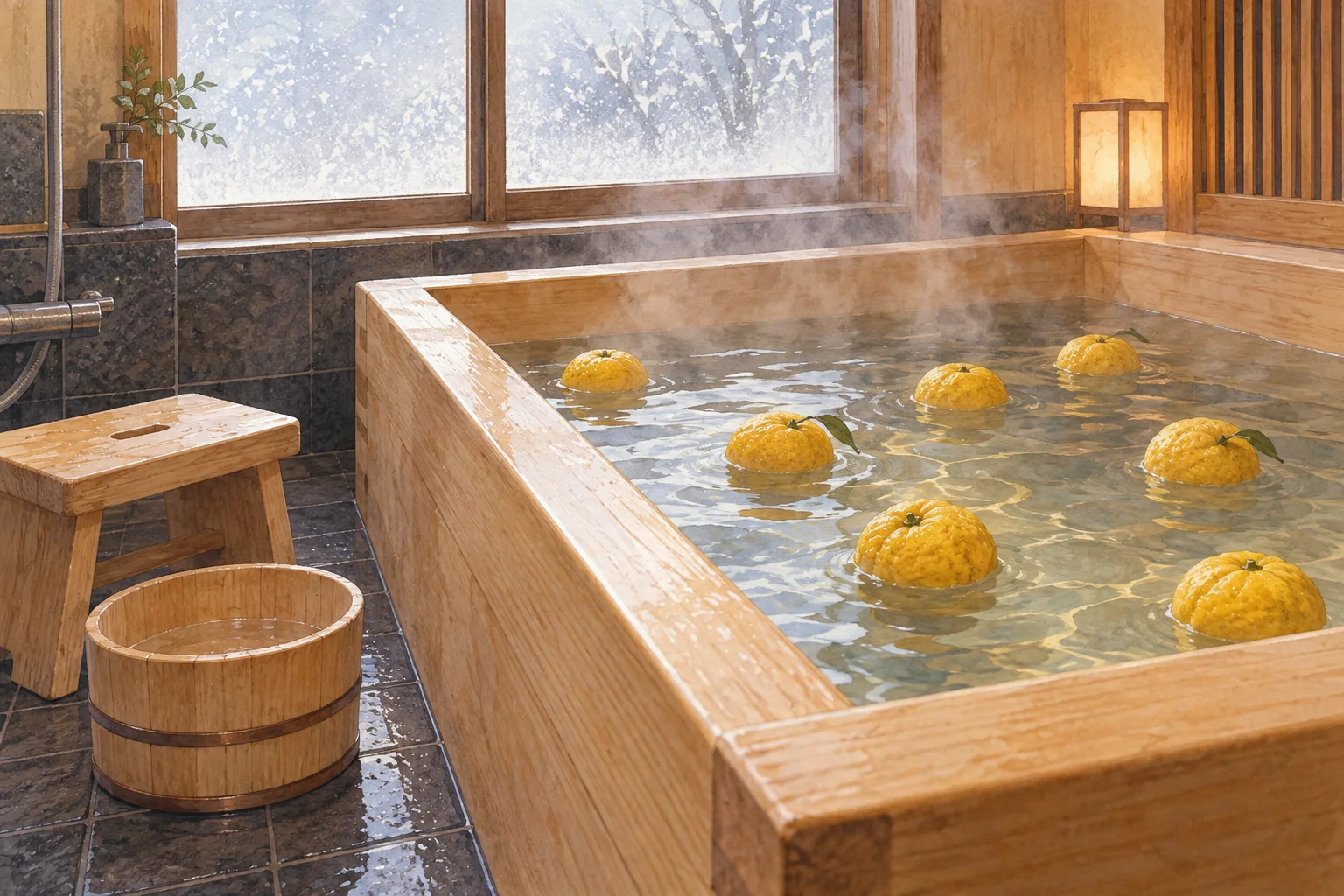
一年でいちばん夜が長い日に、柚子を浮かべた風呂に入る。
一言で言うと
これだけ覚えれば最低限伝わる一文
Toji to yuzuyu are the winter solstice and its yuzu citrus bath, when many families in Japan also eat pumpkin.
冬至とゆず湯とは、冬至の日とその日の柚子湯のことで、日本の多くの家庭でかぼちゃも食べる習わしです。
30秒で説明する
外国人に説明するときの標準サイズ
Toji is the winter solstice, around December 21st or 22nd. The custom is to take a bath with whole yuzu citrus floating in it, which perfumes the water and is said to ward off colds, and to eat pumpkin. Public baths and hot spring inns do the same, advertising a yuzu bath for the day.
冬至は十二月二十一日か二十二日ごろの、一年で最も昼の短い日です。柚子を丸ごと浮かべた風呂に入る習わしがあり、湯に香りが移り、風邪をひかないと言われます。かぼちゃを食べる習慣もあります。銭湯や温泉旅館もその日は柚子湯を掲げます。
スピーチ・英作文
通訳案内士の二次口述・大学入試の自由英作文に
Toji is the winter solstice, the shortest day of the year, falling around December 21st or 22nd. Two customs mark it. The first is the yuzu bath: whole yuzu, a fragrant yellow citrus, are floated in the hot bath, sometimes in a mesh bag, and the oil in the peel scents the water.
People say it keeps colds away for the year, and whether or not that holds, the smell in a hot bath on the darkest evening of the year is genuinely restorative. The second is eating pumpkin, which stores well and was a source of nutrients in a season with little fresh produce.
Public baths and hot spring inns advertise yuzu baths on the day, and supermarkets stack yuzu by the entrance. The underlying idea is that the solstice is the turning point: from here the days lengthen again, which older texts describe as the return of light. If you are in Japan in late December, this is an easy custom to join.
冬至は一年でいちばん昼の短い日で、十二月二十一日か二十二日ごろにあたります。二つの習わしがこの日を印づけます。一つは柚子湯です。香りのよい黄色い柑橘である柚子を丸ごと、ときには網の袋に入れて熱い湯に浮かべると、皮の油が湯に香りを移します。
一年風邪をひかないと言われます。それが本当かどうかはさておき、年でいちばん暗い晩に熱い湯であの香りを吸うことには、確かに人を立て直す力があります。もう一つはかぼちゃを食べることです。日もちがよく、新鮮な作物の少ない季節に栄養を得る手段でした。
銭湯や温泉旅館はその日に柚子湯を掲げ、スーパーは入口に柚子を積みます。根にあるのは、冬至が折り返しの日だという考えです。ここから日が長くなる。古い書物はそれを、光が戻ることとして描きました。十二月の末に日本にいるなら、これは加わりやすい習わしです。
こう聞かれたら
外国人から実際にされる質問と、その答え方。
Do you cut the yuzu or leave them whole?
ゆずは切るのですか、丸ごと入れるのですか。
Either. Whole fruit gives a gentle scent and is easiest; cut or scored fruit is stronger but releases more oil, which can sting sensitive skin. A mesh bag keeps seeds out of the water.
どちらでもかまいません。丸ごとなら香りが穏やかで扱いも簡単です。切ったり切れ目を入れたりすれば香りは強くなりますが、油が多く出て、肌の弱い人にはしみることがあります。網の袋に入れると種が湯に散りません。
Why pumpkin?
どうしてかぼちゃなのですか。
It keeps through the autumn into winter, so it was available when little else was, and eating it at the solstice was said to prevent illness. Red beans cooked with it are a common regional version.
秋を越して冬まで保存が利くため、ほかに食べるものの少ない時季に手に入りました。冬至に食べると病気をしないと言われてきました。小豆と一緒に煮る地域もあります。
Is it a holiday?
休日なのですか。
No, it is an ordinary working day. The customs are private ones, done at home or at a public bath in the evening, and there is no ceremony attached.
休日ではなく、ふつうの平日です。習わしは私的なもので、夕方に家や銭湯で行われ、儀式はありません。
そのまま使えるフレーズ
- Today is the winter solstice.今日は冬至です。
- We float yuzu in the bath.お風呂に柚子を浮かべます。
- It's said to keep colds away.風邪をひかないと言われています。
- The bathhouse has a yuzu bath today.銭湯は今日、柚子湯です。
- From tomorrow the days get longer.明日から日が長くなります。
説明に使う語句
- winter solstice冬至
- yuzu citrus柚子
- pumpkinかぼちゃ
- to float in the bath湯に浮かべる
- the shortest day一年で最も昼が短い日
動画で見る
YouTube より豆知識
冬至は二十四節気の一つで、太陽の高さが一年で最も低くなる日です。ここから日が長くなることを、陰が極まって陽に転じるという意味で一陽来復と呼びます。柚子湯の習わしは江戸時代の銭湯から広まったと言われ、柚子と融通を掛けた語呂合わせの説も語られます。かぼちゃのほか、名前に「ん」が二つ入る食べものを縁起がよいとして食べる土地もあり、なんきん、れんこん、にんじんなどが挙げられます。
