四季しき
shiki
the four seasons, as Japan talks about them
「日本には四季がある」は世界中そうだ、と返される。その先を言えるかどうか。
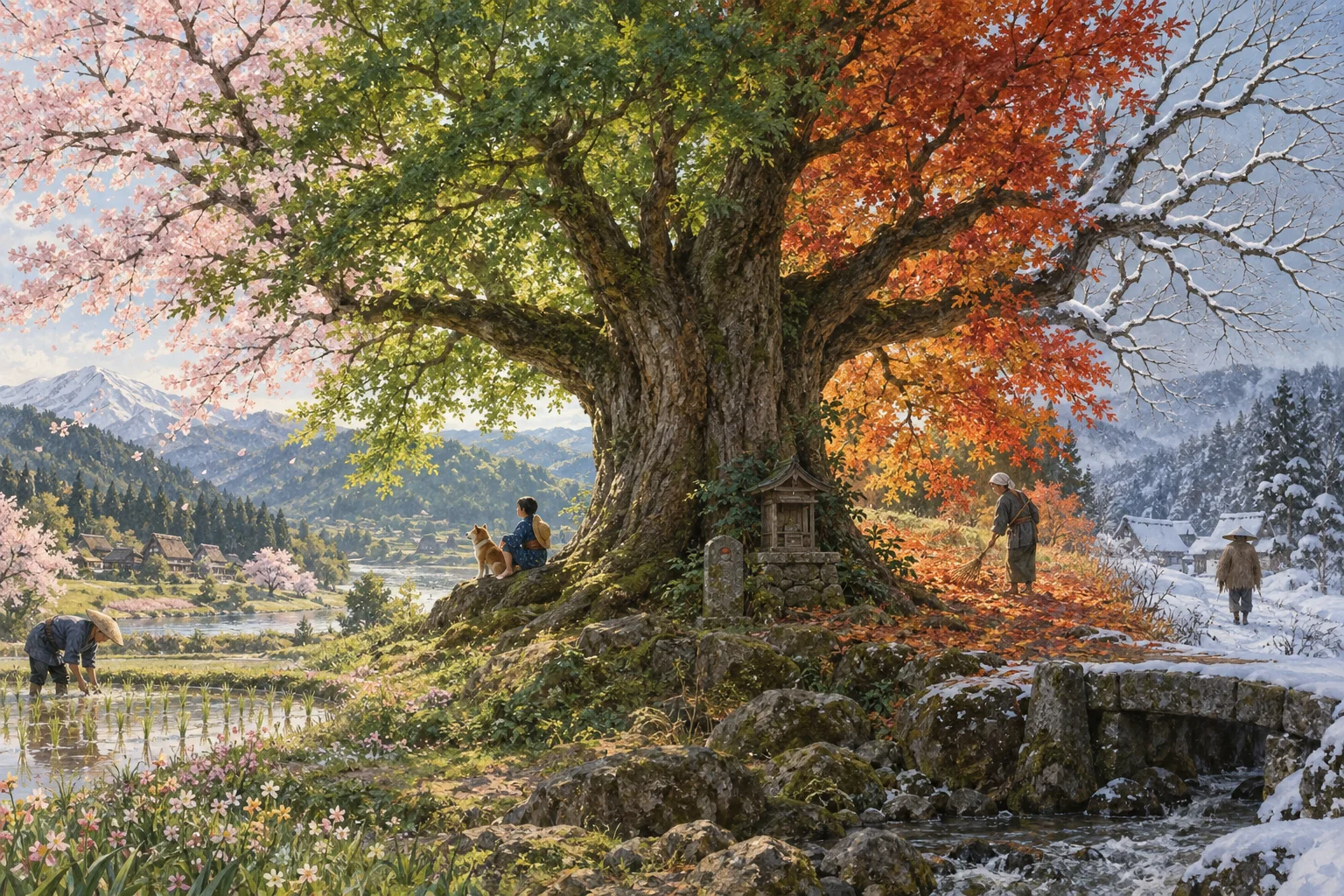
一言で言うと
これだけ覚えれば最低限伝わる一文
Japan is unusual not for having four seasons but for how much of daily life is organized around them.
日本が特別なのは四季があることではなく、暮らしのどれだけが季節に沿って動いているかです。
30秒で説明する
外国人に説明するときの標準サイズ
Every temperate country has four seasons, so saying Japan has them explains nothing. What is distinctive is how far the seasons reach into ordinary life: the menu at a chain restaurant, the design on a sweet, the words at the top of a letter, the flavor of a soft drink. The old calendar divided the year into twenty-four terms and then into seventy-two five-day micro-seasons.
温帯の国にはどこでも四季があるので、「日本には四季がある」と言っても何も説明したことになりません。特徴的なのは、季節が日常のどこまで入り込んでいるかです。チェーン店の献立、菓子の意匠、手紙の書き出し、清涼飲料の味。旧暦は一年を二十四の節気に分け、さらに五日ごと七十二の候に分けていました。
スピーチ・英作文
通訳案内士の二次口述・大学入試の自由英作文に
Japanese people often say that Japan has four seasons, and visitors sometimes find that puzzling, because so does most of the world. The point is not the existence of the seasons but how deeply the year is divided.
The traditional calendar splits the year into twenty-four solar terms, and then splits each of those into three, giving seventy-two micro-seasons of about five days. Each has a name describing one thing happening outside: swallows return, the first frost falls, crickets sing at the door.
You can see the effect everywhere. Letters begin with a line about the weather. Sweets change shape with the month. Even a convenience store changes its shelves with the seasons. What Japan really has is not four seasons but a strong habit of noticing which part of the year you are standing in.
日本人はよく「日本には四季がある」と言いますが、外国の方は少し戸惑います。世界の多くの国にも四季があるからです。要点は季節があることではなく、一年がどれだけ細かく分けられているかです。
伝統的な暦は一年を二十四の節気に分け、さらにそれぞれを三つに割って、およそ五日ずつの七十二候にします。それぞれに、外で起きている出来事ひとつの名前がついています。つばめが帰る、初霜が降りる、こおろぎが戸口で鳴く。
その影響はあちこちに見えます。手紙は天候の一文から始まります。菓子は月ごとに形を変えます。コンビニの棚さえ季節ごとに入れ替わります。日本にあるのは四季というより、自分が一年のどこに立っているかを気にする強い習慣なのです。
こう聞かれたら
外国人から実際にされる質問と、その答え方。
Isn't 'Japan has four seasons' a bit of a cliché?
「日本には四季がある」というのは、少し使い古された言い方ではありませんか。
It is, and Japanese people get teased about it. The useful version is to talk about the seventy-two micro-seasons, or to give a concrete example like seasonal sweets or seasonal letter openings.
その通りで、日本人はよくからかわれます。使えるのは、七十二候の話をするか、季節の和菓子や手紙の時候の挨拶のような具体例を出すことです。
Are there really only four?
本当に四つだけなのですか。
Officially, but in practice there are more. The rainy season in June and July is treated as its own period, and so is the stretch of late-summer heat after the calendar says autumn has begun.
公式には四つですが、実際にはもっとあります。6〜7月の梅雨は独立した期間として扱われますし、暦の上で秋になったあとの残暑もそうです。
Why do letters start with the weather?
どうして手紙は天気の話から始まるのですか。
It is a fixed form called jiko no aisatsu, a seasonal greeting. Formal business letters still open this way, and there are set phrases for every month, which people look up rather than invent.
「時候の挨拶」という決まった形式です。改まったビジネスの手紙は今もこの形で始まり、月ごとの定型句があります。自分で考えるのではなく、調べて使うのが普通です。
誤解されやすい
MYTHJapan is special because it has four distinct seasons.
四季がはっきりしているから日本は特別だと言われがちです。
FACTMost temperate countries do. What is distinctive is the density of seasonal vocabulary and the extent to which food, design and language track the calendar.
温帯の国の多くがそうです。特徴的なのは季節を表す語彙の多さと、食・意匠・言葉が暦をどこまで追いかけるかです。
そのまま使えるフレーズ
- The old calendar divides the year into seventy-two seasons.旧暦は一年を七十二の候に分けます。
- Sweets change shape with the month.和菓子は月ごとに形が変わります。
- Letters open with a line about the weather.手紙は時候の挨拶から始まります。
- The rainy season is almost a fifth season.梅雨はほとんど五つめの季節です。
- Everyone teases us for saying this, I know.これを言うとからかわれるのは分かっています。
説明に使う語句
- temperate温帯の
- solar term節気
- micro-season候(七十二候の一つ)
- seasonal greeting時候の挨拶
- distinctはっきり分かれた
動画で見る
YouTube より豆知識
二十四節気と七十二候はもともと中国で作られた暦で、日本には飛鳥時代までに伝わった。ただし中国の七十二候は中国の気候に基づくため、日本の実情に合わせて何度か改訂され、1685年の渋川春海による貞享暦で日本独自の候名が整えられた。現在よく使われるのは明治7年の略本暦の候名である。「日本には四季がある」という言い方が海外で笑われがちなのは事実だが、二十四節気・七十二候という細かい季節の区分を持つ文化は世界的に見ても珍しい。なお梅雨は東アジア特有の現象で、英語では rainy season のほか、そのまま tsuyu と紹介されることもある。
