枕草子まくらのそうし
Makura no Soshi
The Pillow Book
春はあけぼの。千年前の女房が書いた観察の記録。
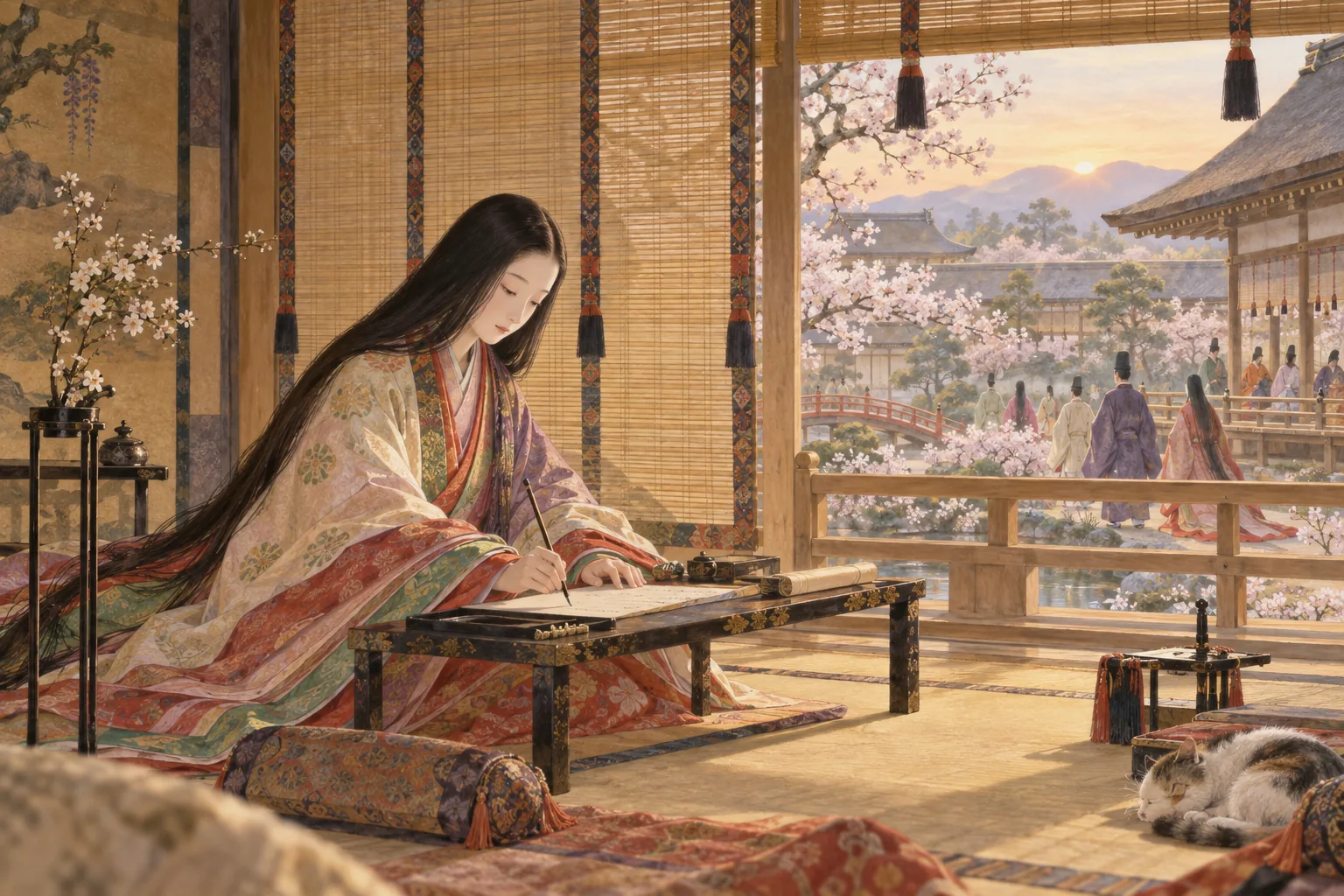
一言で言うと
これだけ覚えれば最低限伝わる一文
Makura no Soshi, or The Pillow Book, is a court lady's notebook of lists and observations, written around 1000.
枕草子とは、西暦1000年ごろに宮仕えの女性が書いた、覚え書きと観察の本です。
30秒で説明する
外国人に説明するときの標準サイズ
Makura no Soshi, usually translated as The Pillow Book, was written by Sei Shonagon, a lady-in-waiting at the Heian court. It is not a story but a collection of lists, scenes and opinions: things that quicken the heart, things that are irritating, what each season looks like at its best. Its opening line about spring and dawn is known to every Japanese student.
枕草子は、平安の宮中に仕えた清少納言が書いた本です。物語ではなく、覚え書きと場面と意見の集まりです。心がときめくもの、腹の立つもの、季節ごとにいちばんよい時刻。春はあけぼのという書き出しは、日本の学生なら誰でも知っています。
スピーチ・英作文
通訳案内士の二次口述・大学入試の自由英作文に
The Pillow Book is a thousand-year-old notebook, and it reads like one. Sei Shonagon served the empress Teishi at the Heian court and wrote down whatever struck her: lists of things that are elegant, things that are annoying, a description of snow on a winter morning, a sharp remark about a man who overstays his welcome.
It opens by saying that in spring it is the dawn that is best, and Japanese schoolchildren still learn that passage by heart. Together with The Tale of Genji, written by a woman serving a rival empress, it is the reason the Heian period is remembered as a moment when women produced the major literature of their country. Where Genji is remembered for melancholy, The Pillow Book is remembered for wit.
枕草子は千年前の覚え書きで、読んでみると本当にそのとおりです。清少納言は平安の宮中で中宮定子に仕え、心に留まったことを書き留めました。
優美なものの列挙、腹の立つものの列挙、冬の朝の雪の描写、長居する男への辛辣なひとこと。冒頭は、春はあけぼのがいちばんよい、という一文で始まり、日本の生徒は今もこの一節を暗唱します。
もう一人の后に仕えた女性が書いた源氏物語とあわせて、この時代が、女性が国の主要な文学を生んだ時期として記憶される理由になっています。源氏物語が哀しみで記憶されるとすれば、枕草子は機知で記憶されています。
こう聞かれたら
外国人から実際にされる質問と、その答え方。
Is it a diary?
日記なのですか。
Not quite. Japanese calls it zuihitsu, writing that follows the brush, and it mixes list, essay and memoir in no fixed order. Diary-like passages are in there, but so are pure catalogues of things she liked.
日記とは少し違います。日本語では随筆と呼びます。筆の進むままに書くという意味で、覚え書きと論と回想が、決まった順序なしに混ざっています。日記のような章段もあれば、好きなものを並べただけの章段もあります。
How does it compare with The Tale of Genji?
源氏物語と比べるとどうですか。
Genji is a long novel about longing and impermanence; The Pillow Book is short, sharp and often funny. Japanese criticism contrasts their keywords: the brightness of okashi against the wistfulness of mono no aware.
源氏物語は、恋しさと無常を描く長い物語です。枕草子は短く、鋭く、しばしば可笑しい。日本の評論では、枕草子のをかしと源氏物語のもののあはれを対比するのが定番です。
Can I read it in English?
英語で読めますか。
Yes, there are several good translations. It survives translation better than most classical Japanese, because the lists and observations do not depend on wordplay.
読めます。よい英訳が何種類かあります。覚え書きと観察が中心で、言葉遊びに寄りかかっていないため、古典の中では翻訳に耐えるほうです。
そのまま使えるフレーズ
- It was written around the year 1000.西暦1000年ごろに書かれました。
- The author was a lady-in-waiting.作者は宮中に仕えた女性です。
- Every student learns the opening line.冒頭は学生なら誰でも習います。
- It is a collection of lists and observations.短い感想やものの名を並べた本です。
- In spring, it is the dawn that is best.春はあけぼのがいちばんよい、という書き出しです。
説明に使う語句
- essay in the classical style随筆
- lady-in-waiting女房
- the imperial court宮中
- opening passage冒頭
- wit機知
動画で見る
YouTube より豆知識
枕草子は、一条天皇の中宮定子に仕えた清少納言が書いた随筆で、1000年前後の成立とされます。同じころ、藤原彰子に仕えた紫式部が源氏物語を書いており、二人は別の后に仕える立場でした。紫式部日記には、清少納言を辛辣に評した箇所があります。枕草子の美意識はをかし、源氏物語はもののあはれ、と対比するのが国語教育での定番の説明です。書名の由来は本文からはっきりせず、諸説あります。
