方丈記と徒然草ほうじょうきとつれづれぐさ
Hojoki and Tsurezuregusa
the two other great Japanese essay collections
枕草子と合わせて三大随筆。どちらも世を捨てた人が書いた。
一言で言うと
これだけ覚えれば最低限伝わる一文
Hojoki and Tsurezuregusa are the two essay collections that stand beside The Pillow Book in Japanese letters.
方丈記と徒然草は、枕草子と並んで日本の随筆を代表する二作です。
30秒で説明する
外国人に説明するときの標準サイズ
Hojoki, written in 1212 by Kamo no Chomei, is a short account of the disasters that struck Kyoto and of the tiny hut he retired to. Tsurezuregusa, written around 1330 by the monk Kenko, is a loose collection of observations on manners, taste and mortality. With The Pillow Book they make up what Japanese education calls the three great essays.
方丈記は1212年に鴨長明が書いたもので、京を襲った災害と、自ら移り住んだ小さな庵についての短い記録です。徒然草は1330年ごろに兼好法師が書いた、作法や趣味、死についての気ままな覚え書きです。枕草子とあわせて、日本の国語教育では三大随筆と呼ばれます。
スピーチ・英作文
通訳案内士の二次口述・大学入試の自由英作文に
Japanese schools teach three classical essay collections, and The Pillow Book is the earliest and the sunniest of them. The other two are darker and both were written by men who withdrew from the world.
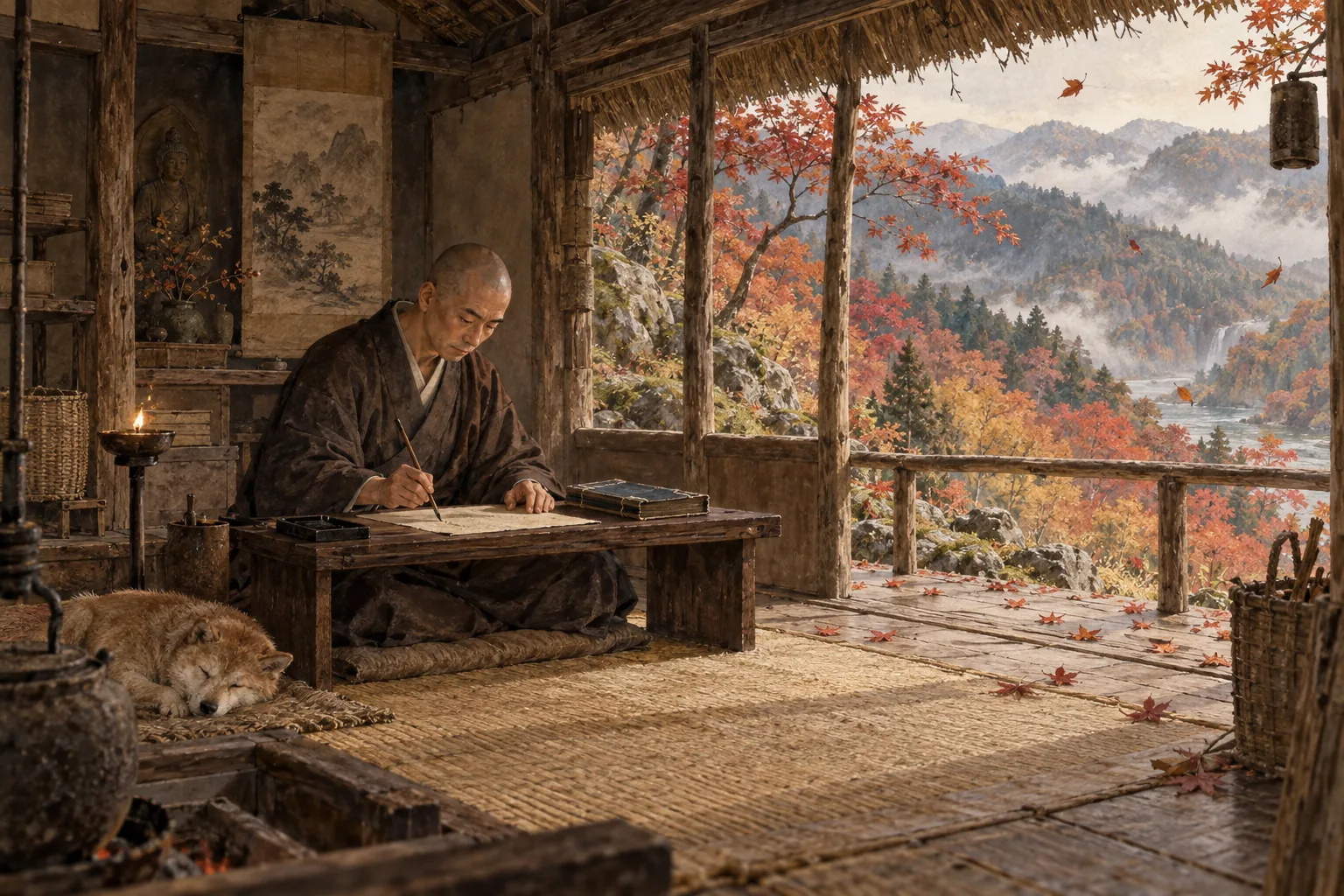
Kamo no Chomei lived through a run of catastrophes in Kyoto, a great fire, a whirlwind, a famine and an earthquake, and in 1212 he wrote a short piece about them and about the three-meter-square hut he had retired to. It opens by saying that the river flows on and the water is never the same water, which is one of the most quoted sentences in Japanese about impermanence.
A century later the monk Kenko wrote Tsurezuregusa, two hundred and forty-odd passages about whatever crossed his mind: how to behave at a drinking party, why a house should be built for summer, why a thing left unfinished is better than a thing complete. He is the one Japanese classical writer who reads like good company.
日本の学校は古典の随筆を三つ教えます。枕草子はそのうち最も古く、最も明るいものです。あとの二つは暗く、どちらも世を捨てた男の手によります。鴨長明は、京を次々に襲った災害を生き延びました。大火、竜巻、飢饉、地震です。
1212年、彼はそれらのことと、自分が移り住んだ一丈四方ほどの庵について、短い文章を書きました。冒頭は、川は流れ続け、その水は同じ水ではない、と告げます。無常について、日本語でもっともよく引かれる文の一つです。それから百年あまりのち、兼好法師が徒然草を書きます。
二百四十あまりの段に、心に浮かんだことがそのまま並びます。酒の席でのふるまい、家は夏を旨として建てるべきこと、仕上がってしまったものより、途中のもののほうがよいということ。日本の古典の書き手のなかで、読んでいて話し相手のように感じられるのは、この人です。
こう聞かれたら
外国人から実際にされる質問と、その答え方。
Why are all three called essays?
どうして三つとも随筆と呼ぶのですか。
The Japanese term zuihitsu means following the brush, writing that goes where it goes. None of them argues a case or tells a continuous story; they are collections of separate passages, which is the defining feature.
随筆とは、筆の進むままに書くという意味です。三つとも、何かを論証したり、続いた物語を語ったりしません。独立した段の集まりであることが、この形の特徴です。
Which should I read first in English?
英語で読むなら、どれから読めばよいですか。
Hojoki. It is about twenty pages, it has a clear arc, and the disaster reporting is vivid enough to hold up after eight hundred years. Tsurezuregusa is better dipped into than read straight through.
方丈記です。二十ページほどで筋が通っており、災害の記述は八百年たっても生々しいものです。徒然草は通して読むより、拾い読みするほうが合っています。
Did Kenko really live as a hermit?
兼好は本当に隠者として暮らしたのですか。
Less than the text implies. He had taken vows and lived simply, but he moved in cultured circles, knew the politics of his day and wrote for readers. The withdrawn voice is partly a literary stance.
文章から受ける印象ほどではありません。出家して質素に暮らしてはいましたが、文化人との交わりがあり、当時の政治も知っており、読み手を意識して書いています。隠者の口ぶりは、ある程度まで文学上の構えです。
そのまま使えるフレーズ
- These are the three great essay works.これが三大随筆です。
- The river flows on but the water is never the same.ゆく河の流れは絶えず、水は同じ水ではありません。
- He wrote it in a tiny hut.小さな庵で書かれました。
- It is a collection of short passages.短い段を集めたものです。
- The theme is that nothing stays.主題は、何も留まらないということです。
説明に使う語句
- classical essay随筆
- hermit's hut庵
- impermanence無常
- a numbered passage段
- to take Buddhist vows出家する
動画で見る
YouTube より豆知識
方丈記は1212年に鴨長明が著した随筆で、安元の大火、治承の辻風、養和の飢饉、元暦の地震という災害を記録し、方丈すなわち一丈四方の庵での暮らしを述べます。冒頭のゆく河の流れの一節は、無常を語る文としてよく引かれます。徒然草は兼好法師が1330年前後に書いたとされ、二百四十余りの段からなります。家は夏を旨として建てよ、何事も始めと終わりが趣深い、といった一節が知られます。枕草子と合わせて三大随筆と呼ばれるのは、近代の国語教育で定着した言い方です。
