無常むじょう
mujo
the impermanence of everything
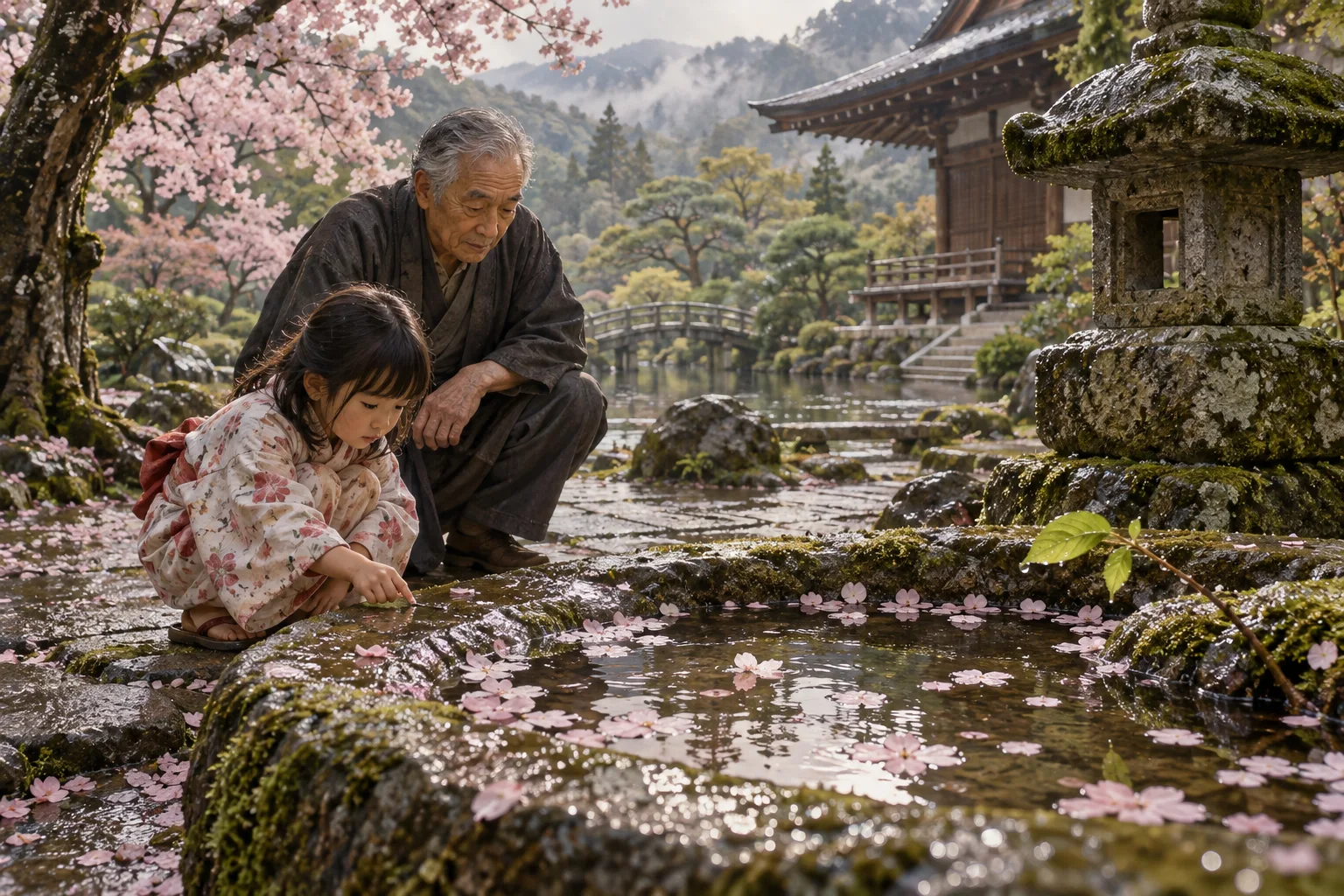
桜が数日で散るのを惜しむ気持ちの、いちばん奥にある考え方。
一言で言うと
これだけ覚えれば最低限伝わる一文
Mujo is the Buddhist idea that nothing lasts, which Japanese culture treats as beautiful rather than bleak.
無常とは、何ものも続かないという仏教の考えで、日本ではそれを陰気ではなく美しいものとして扱ってきました。
30秒で説明する
外国人に説明するときの標準サイズ
Mujo is the Buddhist teaching that everything changes and nothing holds its form. Japanese literature and art took that idea and made it a source of beauty rather than despair. It is one reason a blossom that falls within a week can be valued more highly than a flower that lasts a month.
無常とは、すべては移り変わり、何ものも形を保たないという仏教の教えです。日本の文学と美術はその考えを受け取り、絶望ではなく美の源にしました。一週間ほどで散る花が、ひと月もつ花より高く評価されることがあるのも、そのためです。
スピーチ・英作文
通訳案内士の二次口述・大学入試の自由英作文に
Mujo is the Buddhist observation that nothing stays as it is. Every school of Buddhism teaches it, but Japanese culture did something particular with it: instead of treating impermanence as a problem to escape, it made impermanence the reason things are beautiful.
The opening of a thirteenth-century war chronicle says the sound of a temple bell echoes the impermanence of all things, and that line is still learned by schoolchildren. You can see the same idea in practice every spring.
Cherry blossoms are loved partly because they fall within a week, and a long-lasting flower would not carry the same weight. It also shows up in less poetic places, such as the readiness to rebuild rather than preserve. My own feeling is that mujo is the quietest and most useful thing Buddhism left in ordinary Japanese life.
無常とは、何ものもそのままではとどまらないという仏教の見方です。どの宗派もこれを説きますが、日本の文化はそれに独特のことをしました。移ろいを逃れるべき問題として扱うのではなく、ものが美しい理由そのものにしたのです。
十三世紀の軍記物語の冒頭は、寺の鐘の音が諸行無常の響きを伝えると言い、その一節は今も子どもが学びます。同じ考えは毎年春に目にできます。桜が愛されるのは、一週間ほどで散ることも理由の一つであり、長もちする花では同じ重みを持ちません。
もっと詩的でない場面にも現れます。建物を保存するより建て替えることへの抵抗の少なさもその一つです。無常は、仏教が日本の日常に残したもののうち、最も静かで最も役に立つものだと私は感じています。
こう聞かれたら
外国人から実際にされる質問と、その答え方。
Isn't that a depressing way to see the world?
世の中をそう見るのは、気が滅入りませんか。
It can be read that way, but the Japanese handling of it is closer to attention than to gloom. If a thing will not last, you look at it now. That is the logic behind seasonal food, seasonal festivals and blossom viewing.
そう読むこともできますが、日本での扱い方は陰気さより注意深さに近いものです。続かないものなら、今見る。旬の食べもの、季節の行事、花見の考え方はここから来ています。
How is it different from carpe diem?
今を生きよという考えとはどう違うのですか。
Carpe diem urges you to grab the day. Mujo does not urge anything; it describes how things are. The Japanese response is usually to notice and record rather than to seize.
「carpe diem」は今日をつかめと促します。無常は何も促さず、ものごとのありようを述べるだけです。日本での応じ方は、つかむことより、気づいて書きとめることでした。
Where can I see mujo in Japan today?
今の日本で無常を感じられる場所はありますか。
In seasonal menus that vanish after a month, in shops selling only what is in season, and in the shrine at Ise that is rebuilt every twenty years rather than preserved as an old building.
ひと月で消える季節限定の品書き、旬のものだけを売る店、そして古い建物として保存するのではなく二十年ごとに建て替えられる伊勢の社殿に見ることができます。
そのまま使えるフレーズ
- Nothing stays the same.同じままのものはありません。
- That's what makes it beautiful.だからこそ美しいのです。
- It's only here for two weeks.二週間だけのものです。
- Let's see it while we can.見られるうちに見ましょう。
- Everything passes.すべては過ぎていきます。
説明に使う語句
- impermanence無常
- to pass, to fade移ろう
- seasonal, limited-time季節限定の
- fleetingはかない
- to treasure the moment今を惜しむ
動画で見る
YouTube より豆知識
無常は仏教の三法印の一つ、諸行無常のことです。『平家物語』の冒頭「祇園精舎の鐘の声、諸行無常の響きあり」は、日本でいちばん知られた無常の表現でしょう。鴨長明の『方丈記』は川の流れにたとえて同じことを説き、火災や地震を目にした体験から書かれています。桜を惜しむ心も、旬を追う料理も、この考えと無縁ではありません。ただし、日本人がみな仏教の教義としてこれを意識しているわけではなく、季節の感覚として受け継がれている面が大きいと言えます。
