かけ湯かけゆ
kakeyu
rinsing yourself before entering the bath
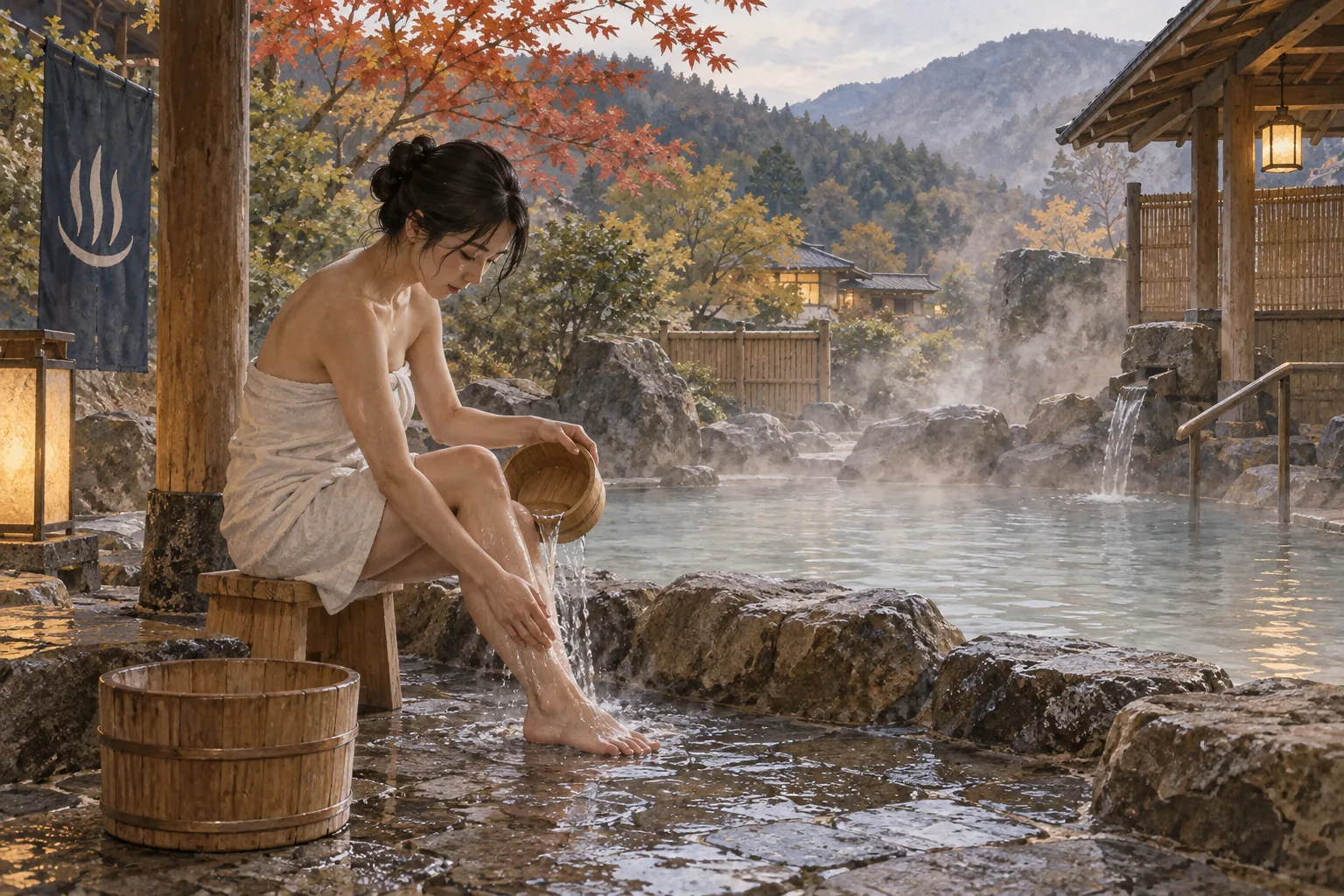
湯船の前で湯を浴びるあれ。体を清めるためだけでなく、心臓のためでもある。
一言で言うと
これだけ覚えれば最低限伝わる一文
Kakeyu means pouring hot water over yourself before you get into the bath.
かけ湯とは、湯船に入る前に自分に湯をかけることです。
30秒で説明する
外国人に説明するときの標準サイズ
By most Japanese baths there is a wooden or plastic scoop. Before you get in, you fill it and pour the water over yourself, starting from your feet and working up. This rinses off soap and sweat, since the bath water is shared. It also warms your body gradually, so the sudden heat is less of a shock.
日本の湯船のそばには、たいてい木かプラスチックの桶が置いてあります。入る前にそれで湯をすくい、足元から順に自分にかけます。湯は共有なので、石けんや汗を落とすためです。同時に体を少しずつ温めるので、急な熱さで体に負担がかかりにくくなります。
スピーチ・英作文
通訳案内士の二次口述・大学入試の自由英作文に
If you go to a Japanese bath, the first thing you should learn is kakeyu. There is a scoop by the bath. You fill it with hot water and pour it over yourself before you get in, starting at your feet and moving up to your shoulders, usually five or six times.
Most visitors assume this is only about hygiene, and it partly is, because everyone shares the same water. But there is a second reason that Japanese people are taught as children. Going straight from a cold body into water at around forty-two degrees Celsius puts a real strain on your heart and blood pressure.
Kakeyu lets your body adjust. Older people in Japan take this seriously, and every winter there are news stories about bath-related accidents. So it is a manner, but it is also a safety habit.
日本の風呂に行くなら、まず覚えたいのがかけ湯です。湯船のそばに桶があります。入る前にそれで湯をすくい、足元から肩のほうへ、だいたい5〜6杯かけます。多くの方は衛生のためだと思われますし、実際そうでもあります。
湯は全員で共有するからです。けれども、日本人が子どものころから教わる理由がもうひとつあります。冷えた体でいきなり42度前後の湯に入ると、心臓と血圧に本当に負担がかかるのです。
かけ湯は体を慣らすためのものです。日本の高齢の方はここを重く見ますし、毎年冬になると、入浴中の事故が報じられます。作法であると同時に、安全のための習慣なのです。
こう聞かれたら
外国人から実際にされる質問と、その答え方。
Isn't washing at the shower enough?
シャワーで体を洗うだけではいけませんか。
Washing at the shower is the main cleaning step and you should still do it. Kakeyu is the short rinse right at the edge of the bath, after washing and just before you get in. Many people do both without thinking about it.
シャワーで洗うのが本体の洗浄で、それは必ずしてください。かけ湯は、洗ったあと湯船に入る直前に縁で行う短い湯浴びです。多くの人は意識せず両方やっています。
Where do I pour the water — over my head?
お湯はどこにかけるのですか。頭からですか。
Start at your feet, then your legs, then your hips, and finish at your shoulders. Do not pour it over your head. And do not stand right next to someone while you do it, because the water splashes.
足からはじめ、脚、腰、最後に肩です。頭からはかけません。跳ねるので、人のすぐ横でやるのも避けてください。
誤解されやすい
MYTHKakeyu is a symbolic purification ritual, like at a shrine.
かけ湯は神社の清めのような儀式だと思われがちです。
FACTIt is practical. It rinses you before you enter shared water, and it lets your body adjust to the heat so your blood pressure does not change suddenly.
実用的なものです。共有の湯に入る前に体をすすぎ、熱さに体を慣らして血圧が急に変わらないようにするためです。
そのまま使えるフレーズ
- Pour some hot water over yourself before you get in.入る前に、体に湯をかけてください。
- Start from your feet and work up to your shoulders.足元から始めて、肩のほうへかけていきます。
- The scoop is right there by the bath.桶は湯船のすぐそばにあります。
- It helps your body get used to the heat.体を熱さに慣らすためです。
- Try not to splash the person next to you.隣の人にかからないように気をつけてください。
説明に使う語句
- scoop, ladle桶、ひしゃく
- rinse off洗い流す
- blood pressure血圧
- shared water共有の湯
- get used to慣れる
動画で見る
YouTube より豆知識
かけ湯の桶は「湯桶」と呼ばれ、木曽のさわら材などで作られたものが旅館では今も使われる。銭湯で広く見かける黄色いプラスチックの桶は、もとは特定の薬品会社の広告として配られたもので、そこからあの形と色が全国に広がったと言われる。なお、冬に暖かい部屋から寒い脱衣所へ移り、熱い湯に入ると血圧が大きく動く。これはヒートショックと呼ばれ、消費者庁なども冬場の入浴に注意を呼びかけている。かけ湯は、その負担を和らげる意味でも勧められている。
