町家まちや
machiya
the narrow deep townhouse of an old merchant quarter
間口は狭く、奥は深い。うなぎの寝床と呼ばれた。
一言で言うと
これだけ覚えれば最低限伝わる一文
A machiya is a merchant townhouse with a narrow frontage and a very deep plot behind it.
町家は、間口が狭く、奥に深く伸びた商家の家です。
30秒で説明する
外国人に説明するときの標準サイズ
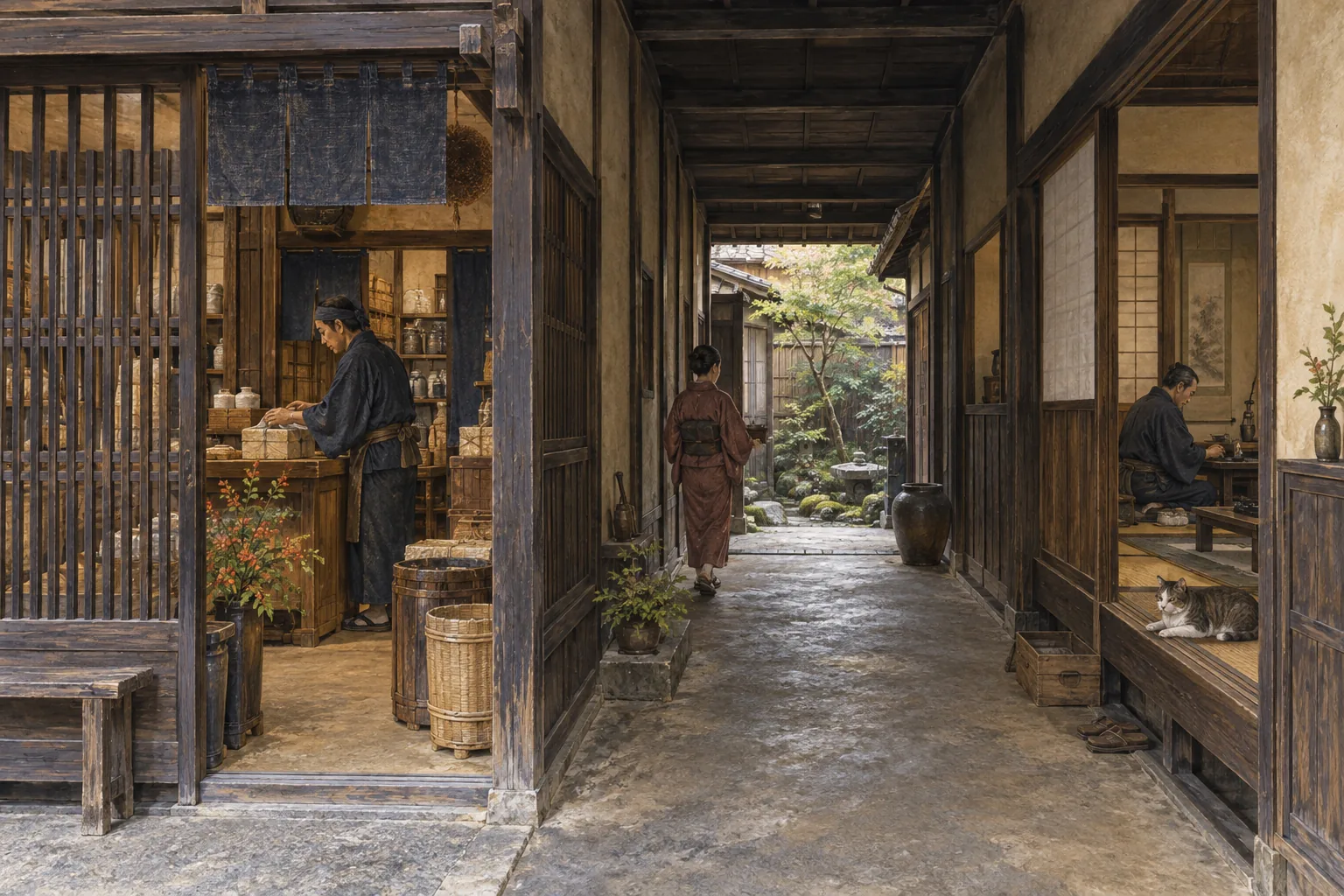
A machiya has a shop at the front, living rooms behind, and a small courtyard garden buried in the middle to bring in light and air. The plots are narrow and long, a shape often blamed on taxes levied by the width of the frontage. An earth-floored passage runs from the street all the way to the back, which is how goods and people moved without crossing the rooms.
町家は、通りに面して店、その奥に住まいがあり、途中に小さな坪庭を挟んで光と風を入れます。敷地は細長く、間口の広さに応じて課税されたためだと説明されます。通りから奥まで土間の通り庭が貫いており、部屋を横切らずに人も荷も動けるようになっています。
スピーチ・英作文
通訳案内士の二次口述・大学入試の自由英作文に
Walk an old street in Kyoto and the houses look modest from the front, three or four meters wide, and then you realize they go back thirty. The shape has a name, eel's bed, and it is usually explained by a tax on frontage width, which pushed owners to build narrow and deep. The interior solves the problems that creates.
A passage with an earth floor runs from the street to the rear, carrying deliveries past the rooms rather than through them, with the kitchen opening off it under a high smoke vent. Halfway back there is a courtyard a few meters square, open to the sky, which lights the middle of the house and pulls air through it in summer.
Lattice screens at the front let those inside see out while keeping the street from seeing in. Kyoto has lost a great many of these to demolition, and the ones you can now visit are mostly restored as inns, cafes and shops.
京都の古い通りを歩くと、家はどれも表からは控えめに見えます。間口は三、四メートル。ところが奥へ三十メートル続いていると気づきます。この形には、うなぎの寝床という呼び名があり、間口の広さに応じた課税のために、狭く深く建てるようになったと説明されます。
内部は、その形が生む不都合を解いています。通りから奥まで土間の通り庭が貫き、荷は部屋を通らずに運ばれます。台所はその脇に開き、上には煙を抜く高い吹き抜けがあります。中ほどには数メートル四方の坪庭があり、空に開いて家の真ん中を照らし、夏には風を引き込みます。
表の格子は、中から外は見え、外から中は見えにくい仕掛けです。京都ではこうした家が数多く取り壊されました。今見学できるものの多くは、宿や喫茶店や店として直されたものです。
こう聞かれたら
外国人から実際にされる質問と、その答え方。
Can I stay in one?
泊まれるところはありますか。
Yes. Restored machiya are rented as whole-house accommodation in Kyoto, Kanazawa and other old towns. They are atmospheric and usually cold in winter; check whether the heating is more than one room's worth.
あります。京都や金沢などで、一棟貸しの宿として貸し出されています。趣がありますが冬は寒いのがふつうです。暖房が一部屋分で足りるかどうかを確かめてください。
Why are so many being demolished?
どうして取り壊しが多いのですか。
Inheritance tax, the cost of earthquake reinforcement, and the fact that an old wooden house is valued at close to nothing in the market. Rebuilding has long been cheaper and easier to finance than restoring.
相続税、耐震の補強にかかる費用、そして古い木造家屋の市場での評価がほぼ無いに等しいことです。直すより建て替えるほうが安く、融資も受けやすい状態が長く続きました。
What is the curved fence along the base of the wall?
壁の下に立てかけてある、反った柵は何ですか。
It is called an inuyarai. It keeps mud splashed off the street, and rain running off the eaves, from staining the plaster. It also discourages people from leaning on the wall, and it is one of the features that mark a Kyoto street at a glance.
犬矢来です。通りの泥はねと軒からの雨で壁が汚れるのを防ぎます。人が壁に寄りかかるのも防げます。京都の通りをひと目でそれと分からせる要素の一つです。
そのまま使えるフレーズ
- It is narrow at the front and very deep.間口が狭くて奥に深い家です。
- There is a small garden in the middle.真ん中に坪庭があります。
- This passage runs the whole length.この通り庭は奥まで通っています。
- The lattice lets you see out, not in.格子は中から外だけが見えます。
- It has been converted into a cafe.喫茶店に改装されています。
説明に使う語句
- townhouse町家
- frontage width間口
- courtyard garden坪庭
- earth-floored passage通り庭
- wooden lattice格子
動画で見る
YouTube より豆知識
町家は、通りに面した部分を店とし、奥に住居を連ねる商家の住宅です。間口が狭く奥行きが長い形は、うなぎの寝床と呼ばれ、間口の広さに応じた課税がその理由だという説がよく知られます。通り庭と呼ぶ土間が表から裏まで通り、その上には煙出しの吹き抜けが設けられます。中ほどの坪庭が採光と通風を担い、表には格子、壁の足元には犬矢来を置きます。京都では戦後に多くが失われ、近年は宿泊施設や店舗として改修する動きが広がっています。
