和室わしつ
washitsu
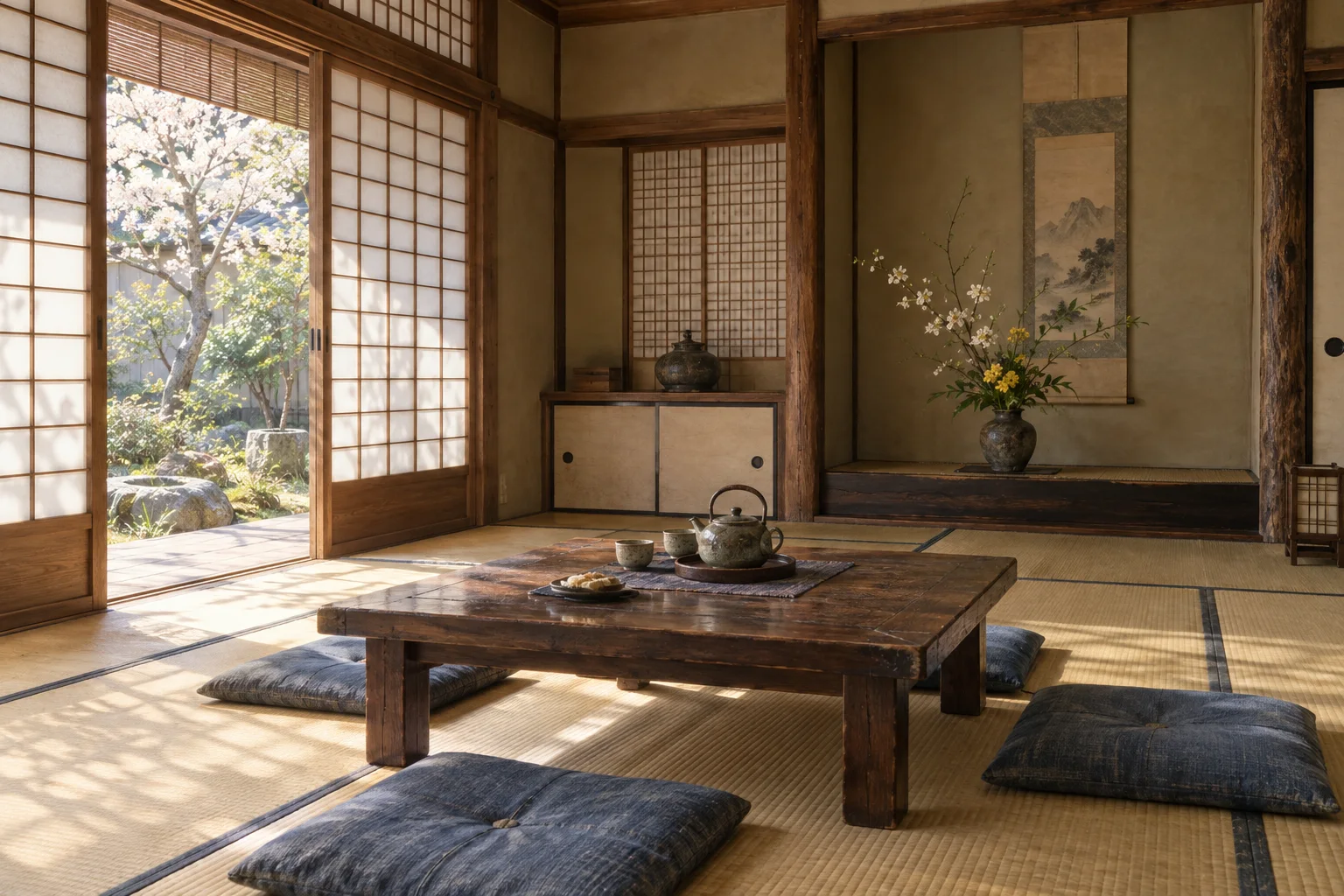
a traditional tatami room
家具を置かないから、同じ部屋が居間にも寝室にも食堂にもなる。
一言で言うと
これだけ覚えれば最低限伝わる一文
A washitsu is a traditional Japanese room floored with tatami mats and used for anything.
和室とは畳を敷いた日本の伝統的な部屋で、用途を決めずに使います。
30秒で説明する
外国人に説明するときの標準サイズ
A washitsu is a room floored with tatami, divided by sliding paper doors, with little or no fixed furniture. Because bedding is stored away during the day and a low table can be moved, the same room serves as a living room, a dining room and a bedroom. Most modern Japanese homes have at most one.
和室とは畳を敷き、襖や障子で仕切られ、据え付けの家具をほとんど置かない部屋です。布団は昼の間しまい、低い机は動かせるので、同じ部屋が居間にも食堂にも寝室にもなります。今の日本の家には、あっても一部屋というのがふつうです。
スピーチ・英作文
通訳案内士の二次口述・大学入試の自由英作文に
A washitsu is a traditional Japanese room, and what defines it is the floor. Tatami mats are made of compressed straw or board with a woven rush surface, they are firm but slightly soft underfoot, and they smell of grass when new.
The room has sliding doors rather than hinged ones, so walls can be opened up or closed off, and there is usually no fixed furniture at all. That is the real idea: bedding comes out of the cupboard at night and goes back in the morning, a low table is carried in for meals, and so one room can be a living room, dining room and bedroom in a single day.
The rules are simple. No shoes and no slippers on tatami, socks or bare feet only. Do not drag furniture across it, and try not to step on the cloth border of the mats, which is a habit taught from childhood.
和室は日本の伝統的な部屋で、それを和室たらしめているのは床です。畳は圧縮した藁や板の芯に藺草を織った表をつけたもので、しっかりしていながら足に少しやわらかく、新しいうちは草の匂いがします。
開き戸ではなく引き戸で仕切られるので、壁を開け放つことも閉め切ることもでき、据え付けの家具はふつうまったくありません。そこが肝心な考え方です。夜になると押し入れから布団を出し、朝にはしまう。食事のときは低い机を運び入れる。
こうして一つの部屋が、一日のうちに居間にも食堂にも寝室にもなります。決まりは単純です。畳の上に靴もスリッパも上げず、靴下か素足で。家具を引きずらないこと。そして畳の縁を踏まないようにすること。これは子どものころから教えられる習慣です。
こう聞かれたら
外国人から実際にされる質問と、その答え方。
Why shouldn't I step on the border of the mat?
どうして畳の縁を踏んではいけないのですか。
The cloth border wears out faster than the surface and is the part that is hardest to repair. There are older explanations involving family crests woven into the border, but the practical reason is wear, and the habit is now simply good manners.
縁の布は表よりも早く傷み、しかも直すのが難しい部分だからです。縁に家紋を織り込んだ時代にさかのぼる説明もありますが、実際の理由は傷みで、今では単に行儀のよさとして残っています。
Are tatami mats all the same size?
畳はどれも同じ大きさですか。
No, and it matters when comparing apartments. Mats in the Kyoto region are larger than those used around Tokyo, so a six-mat room is not the same size everywhere. Advertisements must state area in square meters as well.
同じではありませんし、部屋を比べるときには効いてきます。京間の畳は江戸間より大きいので、六畳といっても広さは同じではありません。広告には平方メートルでの表示も義務づけられています。
Can I put a bed in a washitsu?
和室にベッドを置いてもいいですか。
People do, but the legs press permanent dents into the mats and heavy furniture can tear the surface. If you must, put boards or coasters under the legs. This is a common cause of deductions from a rental deposit.
置く人はいますが、脚の跡が畳にくぼみとして残り、重い家具は表を傷めます。どうしても置くなら脚の下に板や受け皿を敷いてください。これは賃貸で敷金が引かれる原因としてよくあるものです。
そのまま使えるフレーズ
- No slippers on the tatami, please.畳の上ではスリッパを脱いでください。
- Try not to step on the border of the mat.畳の縁は踏まないようにしてください。
- The bedding goes back in the cupboard.布団は押し入れにしまいます。
- Room sizes are given in mats.部屋の広さは畳の枚数で表します。
説明に使う語句
- tatami mat畳
- sliding door襖・障子
- bedding / futon布団
- low table座卓
動画で見る
YouTube より豆知識
畳の大きさは地域で異なり、京間、中京間、江戸間、団地間の順に小さくなります。同じ六畳でも実際の面積が違うため、不動産の広告では一畳を1.62平方メートル以上として換算し、平方メートルでも表示する決まりがあります。畳の表は数年で擦れるため、まず裏返しをし、さらに傷めば表替えをします。新築の住宅では和室を設けない間取りが増えていますが、来客用や仏壇を置くために一部屋だけ残す例は今も多くあります。
