押し入れおしいれ
oshiire
the deep sliding-door closet
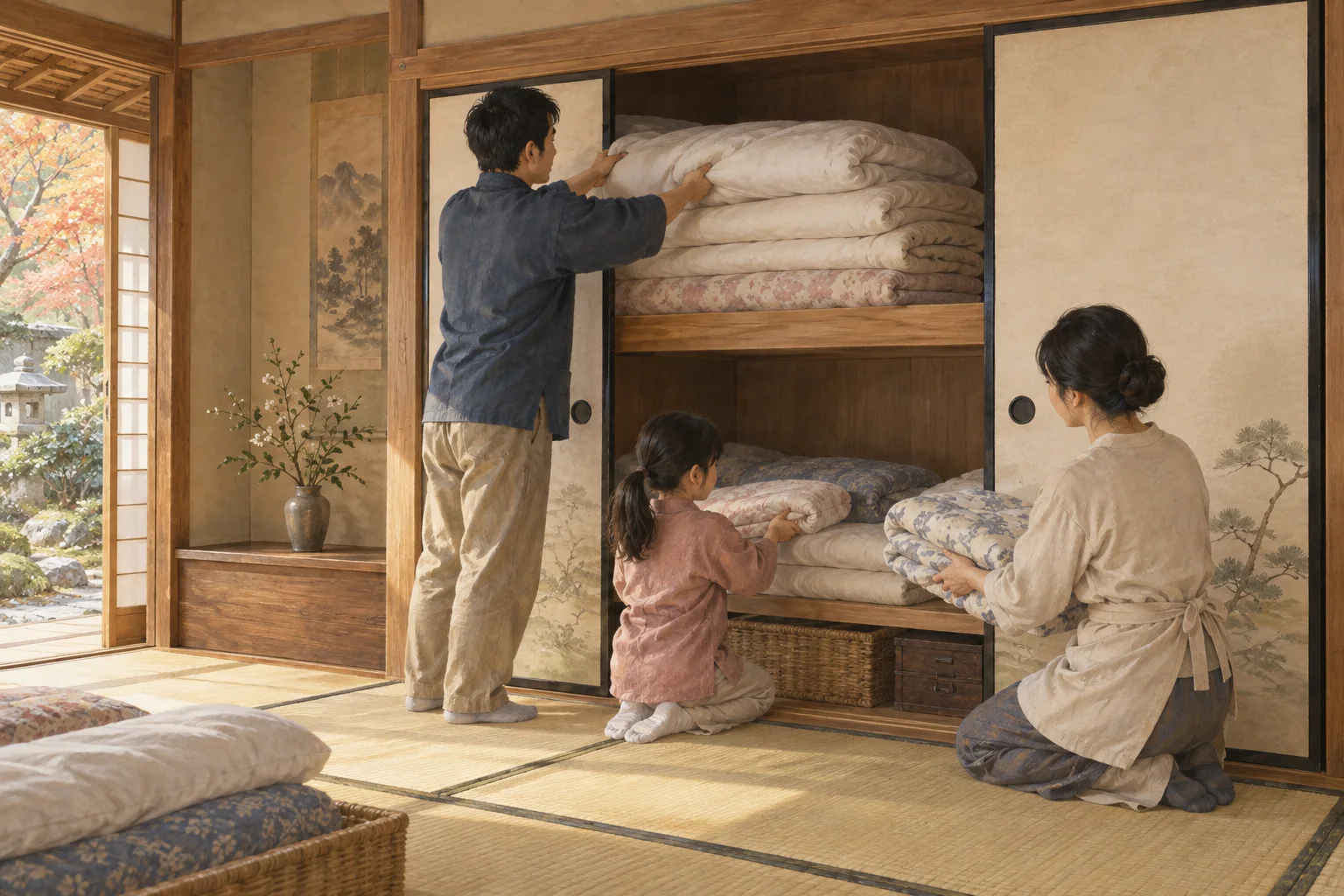
奥行きは畳の幅と同じ。布団をたたんで入れるために決まった寸法。
一言で言うと
これだけ覚えれば最低限伝わる一文
An oshiire is a deep closet with sliding doors, sized to hold folded bedding.
押し入れとは、たたんだ布団を納めるために作られた、襖のついた奥行きのある物入れです。
30秒で説明する
外国人に説明するときの標準サイズ
An oshiire is a built-in closet in a tatami room, closed by sliding paper doors and divided by a shelf at about waist height. It is deep, roughly the width of a tatami mat, because it was designed to hold folded futon bedding. That depth makes it excellent for bedding and awkward for hanging clothes.
押し入れとは和室に作り付けられた物入れで、襖で閉じられ、腰の高さあたりに中棚が渡してあります。奥行きはおよそ畳の幅ほどあり、これはたたんだ布団を入れるための寸法です。その奥行きは布団にはうってつけで、衣服を掛けるには不向きです。
スピーチ・英作文
通訳案内士の二次口述・大学入試の自由英作文に
An oshiire is the built-in closet you find in a Japanese tatami room, closed by sliding paper doors and divided horizontally by a shelf at about waist height. The depth is the interesting part: it is roughly the width of a tatami mat, because the whole thing was designed around one object, the folded futon.
Bedding goes in the lower half during the day, which is what allows a Japanese room to be a bedroom at night and a living room in the morning. The upper half takes boxes, seasonal clothing and the fan you use for three months of the year.
That depth is also the problem for modern life: you cannot hang a coat in it usefully, and anything pushed to the back is gone forever. It also needs air. Futons hold moisture, so people leave the doors open periodically, put a slatted board underneath, and air the bedding outside on sunny days.
押し入れは日本の和室に作り付けられた物入れで、襖で閉じられ、腰の高さあたりの中棚で上下に分かれています。面白いのは奥行きです。およそ畳の幅ほどあり、それはこの物入れ全体が、たたんだ布団というひとつの物を中心に設計されたからです。
昼の間、布団は下の段に入ります。だからこそ日本の部屋は、夜は寝室、朝には居間になれるのです。上の段には箱や季節の衣類、年に三か月しか使わない扇風機が入ります。その奥行きは現代の暮らしには難点でもあります。
上着を掛けても使い物にならず、奥へ押し込んだものは二度と出てきません。風も必要です。布団は湿気を含むので、ときどき襖を開けておき、下にすのこを敷き、晴れた日には外で干します。
こう聞かれたら
外国人から実際にされる質問と、その答え方。
Why does it smell musty?
どうしてかび臭いにおいがするのですか。
Because bedding gives off moisture and the closet has almost no airflow. Put a slatted board on the floor of it, leave the doors open for a while on dry days, and air the futon outside or over a chair when you can.
布団が湿気を出すのに、風がほとんど通らないからです。床にすのこを敷き、乾いた日には襖をしばらく開けておき、できるときは布団を外や椅子に掛けて干してください。
Can I use it as a wardrobe?
洋服だんすとして使ってもいいですか。
Only with help. The depth is wrong for hanging clothes front to back, so people fit a tension rod sideways, or use stacking drawers. Shops sell storage boxes sized specifically to the standard oshiire depth.
工夫すれば使えます。奥行きが深すぎて前後に服を掛けられないので、突っ張り棒を横向きに渡すか、積み重ねる引き出しを使います。店には押し入れの標準の奥行きに合わせた収納箱が売られています。
そのまま使えるフレーズ
- The bedding goes in during the day.昼の間は布団をしまいます。
- It's as deep as a tatami mat is wide.奥行きは畳の幅と同じくらいです。
- Leave the doors open sometimes to air it.ときどき襖を開けて風を通してください。
- Put a slatted board on the floor of it.床にすのこを敷くといいです。
説明に使う語句
- built-in closet押し入れ
- shelf中棚
- to air out風を通す
- damp / humidity湿気
動画で見る
YouTube より豆知識
押し入れの奥行きは、たたんだ布団が収まるようおよそ90センチ前後が標準です。襖を外せば開口が広く取れるため、子どもが中で遊んだり、机を入れて書斎にしたりする使い方も知られています。洋室に作られる収納は「クローゼット」と呼ばれ、奥行きが浅く、衣服を掛ける棒が付いています。湿気対策として、すのこ、除湿剤、扇風機で風を送る方法がよく紹介されます。近年は布団ではなくベッドを使う家庭が増え、押し入れの中身も変わってきました。
