収納と片づけしゅうのうとかたづけ
shuno to katazuke
living well in a small space
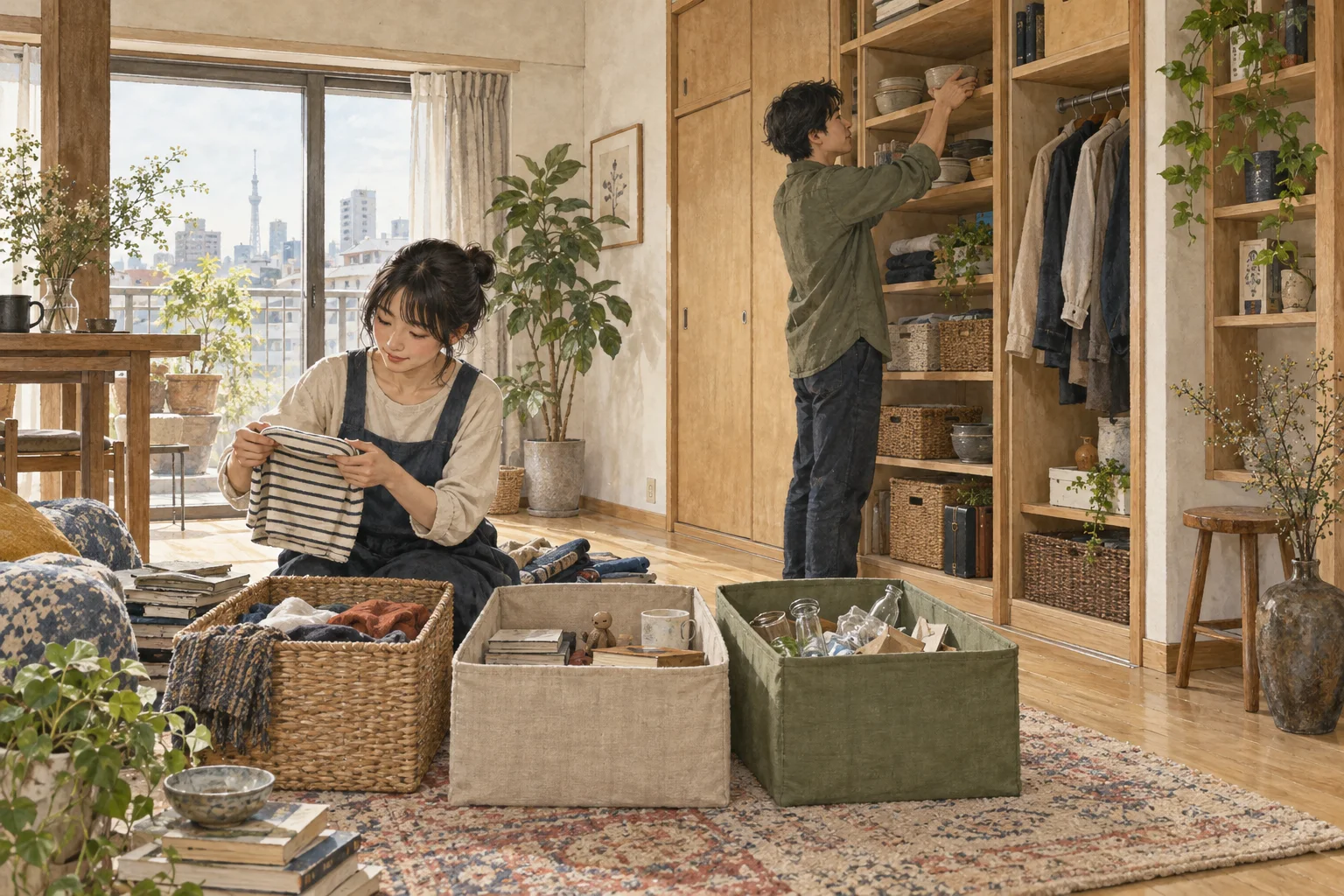
狭い家をどう使うか。収納という言葉が売り文句になる国。
一言で言うと
これだけ覚えれば最低限伝わる一文
Japanese homes are small, so storage is treated as a design problem and a selling point.
日本の家は狭いので、収納は設計の課題であり、売り文句にもなります。
30秒で説明する
外国人に説明するときの標準サイズ
Limited space has made storage a serious domestic subject in Japan: built-in closets, under-floor compartments, furniture that folds away, and an entire retail category of organizing goods. Decluttering methods developed here, including one that became internationally famous, grew out of the same constraint.
限られた広さのため、収納は日本の家の大きな課題になってきました。作りつけの押し入れ、床下の収納、たためる家具、そして収納用品という一つの売り場がそれを示します。国際的に知られたものを含め、日本で生まれた片づけの方法も、同じ制約から育ちました。
スピーチ・英作文
通訳案内士の二次口述・大学入試の自由英作文に
Japanese homes are small by the standards of most countries people visit from, and the culture has responded by treating storage as a design discipline. Traditional rooms had built-in closets deep enough to hold bedding, so the same room could be a living room by day and a bedroom by night, and that logic survives in modern apartments: under-floor compartments in the kitchen, a closet sized for suitcases, furniture that folds.
Rental listings advertise storage as a feature, and home centers devote whole floors to boxes, hooks and racks designed for specific gaps. The same constraint produced a genre of decluttering advice, including Marie Kondo's method, which became internationally famous for asking whether an object sparks joy, and an earlier approach called danshari, which frames tidying as cutting off, disposing of and separating from possessions. Both are recognizably responses to living in a small space within a culture that often finds throwing things away hard.
日本の家は、訪日客の多くが暮らす国の基準から見れば狭く、この文化はそれに応えて、収納を設計の技術として扱ってきました。伝統的な部屋には寝具を収められる深さの押し入れがあり、同じ部屋が昼は居間、夜は寝室になりました。その理屈は今の集合住宅にも生きています。
台所の床下収納、スーツケースが入る大きさのクローゼット、たためる家具です。賃貸の広告は収納を特長としてうたい、ホームセンターは、特定の隙間のために設計された箱、掛け具、棚に、まるまる一階を充てています。同じ制約は、片づけについての助言という分野も生みました。
ものがときめくかどうかを問う近藤麻理恵さんの方法は国際的に知られ、それより早く広まった断捨離は、片づけを、断ち、捨て、離れることとしてとらえます。どちらも、ものを捨てることにためらいを感じやすい文化のなかで、狭い空間に暮らすことへのはっきりとした応答です。
こう聞かれたら
外国人から実際にされる質問と、その答え方。
How small is a typical apartment?
日本の部屋はどのくらいの広さですか。
A single person's apartment in a city is often twenty to twenty-five square meters, and a family apartment sixty to seventy-five. Listings give the area in square meters and in tatami mats for rooms.
都市の一人暮らしの部屋は二十から二十五平方メートル、家族向けで六十から七十五平方メートルということが多くあります。広告には平方メートルと、部屋については畳の枚数が併記されます。
Where do people put seasonal things?
季節ものはどこにしまうのですか。
In the built-in closet, on top of wardrobes, in under-floor compartments, and increasingly in rented storage units, which have spread in cities over the past decade.
押し入れ、たんすの上、床下収納のほか、近年は貸し収納も使われます。都市部でこの十年ほどのあいだに広がりました。
Is throwing things away difficult here?
日本では物を捨てるのが大変なのですか。
It can be. Large items require a paid collection booked in advance, often with a sticker bought at a convenience store, and separation rules are strict, so disposal takes planning rather than a single trip.
難しいことがあります。大きなものは予約制の有料回収で、コンビニなどで買う券を貼ることが多いですし、分別の決まりも細かいため、処分には一度で済ませられない段取りが要ります。
そのまま使えるフレーズ
- The apartment has good storage.収納が多い部屋です。
- The bedding goes in the closet.布団は押し入れにしまいます。
- There's a compartment under the floor.床下に収納があります。
- I need to get rid of some things.少し処分しないといけません。
- Large items need a booked collection.粗大ごみは予約が必要です。
説明に使う語句
- storage収納
- built-in closet押し入れ
- to tidy up片づける
- to dispose of処分する
- bulky waste粗大ごみ
動画で見る
YouTube より豆知識
日本の住宅では、押し入れ、天袋、床下収納など、建物に組み込まれた収納が使われてきました。畳の部屋が昼と夜で用途を変えられるのは、寝具を収める場所があるからです。片づけの方法としては、断捨離という言い方が2010年前後に広まり、その後、近藤麻理恵の方法が海外でも知られるようになりました。粗大ごみは自治体ごとに手続きが決まっており、事前に申し込んで有料の処理券を貼り出すのが一般的です。貸し収納の利用も都市部で増えています。
