応仁の乱おうにんのらん
Onin no ran
the eleven-year conflict that opened Japan's age of civil war
十一年戦って、はっきりした勝者がいない。京都は焼け、戦国の世が始まった。
一言で言うと
これだけ覚えれば最低限伝わる一文
Onin no ran, or the Onin War, is an eleven-year conflict with no clear winner that began the Sengoku period.
応仁の乱とは、十一年続いて勝者のはっきりしないまま、戦国時代の始まりとなった争乱です。
30秒で説明する
外国人に説明するときの標準サイズ
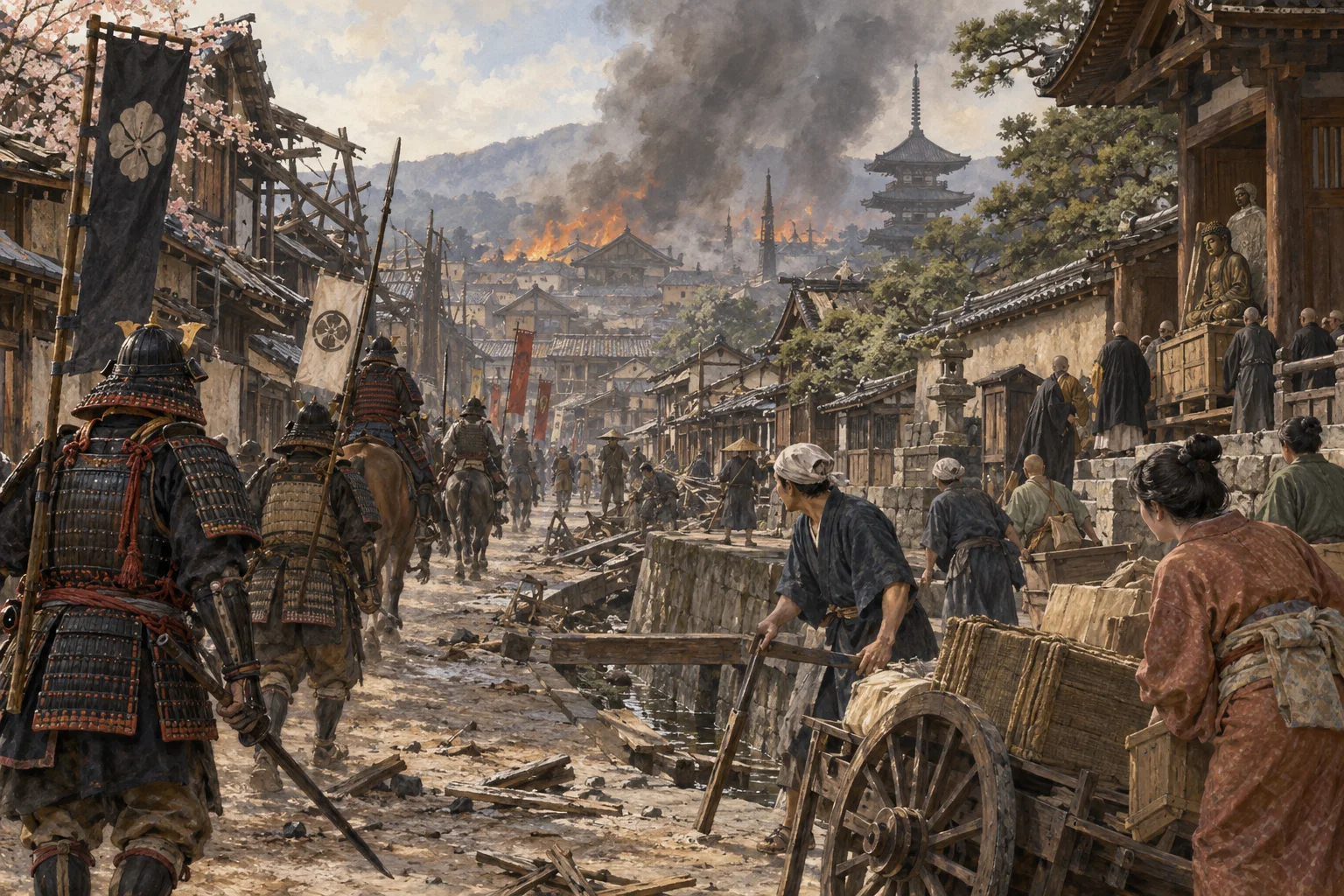
The Onin War began in 1467 over who would succeed the shogun, and two powerful warlords turned that dispute into open fighting in the streets of Kyoto. The war dragged on for eleven years, burned much of the capital, and ended in 1477 without either side clearly winning or the succession question being settled. What it did settle was the shogunate's authority, which never recovered, and regional lords spent the next century fighting largely on their own terms.
応仁の乱は1467年、将軍の後継をめぐる争いから始まり、二人の有力な武将がこれを京都の市街での実際の戦闘へと広げました。争乱は十一年続き、都の多くを焼き、1477年、どちらの陣営もはっきり勝つことなく、後継の問題も解決されないまま終わりました。はっきりしたのは幕府の権威が戻らなかったことで、その後の約百年、各地の大名はおおむね自分の力だけを頼りに争うことになります。
スピーチ・英作文
通訳案内士の二次口述・大学入試の自由英作文に
The Onin War is one of the most useful dates in Japanese history to know, because it marks the moment the country's political order broke and did not get put back together for a century. It started in 1467 over who would succeed the shogun Ashikaga Yoshimasa, a dispute that two rival warlords, Hosokawa Katsumoto and Yamana Sozen, escalated by backing opposite candidates and bringing their armies into Kyoto itself.
What followed was eleven years of fighting that burned large parts of the capital, ruined its economy, and outlasted both commanders, who died before it was over, yet settled almost nothing: the western army withdrew in 1477, but neither side had clearly won, and the succession dispute that started it all was never really resolved. What the war did accomplish was to expose the shogunate as unable to enforce order, so regional lords across the country stopped waiting for permission from Kyoto and began fighting for territory on their own, which many historians treat as the start of the Sengoku, or Warring States, period.
応仁の乱は、日本史を語るうえで知っておく価値の高い年号の一つです。この争いをきっかけに、国の政治秩序が崩れ、その後およそ百年にわたって立て直されなかったからです。1467年、将軍足利義政の後継をめぐる争いから始まり、細川勝元と山名宗全という二人の有力な武将が、それぞれ別の候補を担いで対立を激化させ、自らの軍勢を京都に持ち込みました。
そこから十一年に及ぶ戦闘が続き、都の多くを焼き、経済を疲弊させ、終わる前に両将とも世を去りましたが、決着した事柄はほとんどありません。西軍は1477年に撤退しましたが、どちらもはっきり勝ったわけではなく、争いの発端だった後継の問題も、実質的には解決されないままでした。
この乱が果たしたのは、幕府が秩序を保てないことを露わにしたことです。各地の大名は京都の許しを待たなくなり、それぞれの力で領地を争い始めました。多くの歴史家はこれを戦国時代の始まりと位置づけています。
こう聞かれたら
外国人から実際にされる質問と、その答え方。
Who actually won?
結局どちらが勝ったのですか。
Neither side, in any clear sense. The western army withdrew from Kyoto in 1477, but the shogunate's authority was left in ruins and the succession dispute that started the war was never cleanly settled.
どちらもはっきりとは勝っていません。西軍は1477年に京都から撤退しましたが、幕府の権威は崩れたままで、乱の発端となった後継の争いもきれいには解決しませんでした。
Why does this war matter so much if nobody won?
勝者がいないのに、なぜこの乱がそれほど重要なのですか。
Because it exposed the shogunate's inability to keep order, and regional lords responded by fighting for territory on their own. That shift is what historians treat as the start of the roughly century-long Sengoku period.
幕府に秩序を保つ力がないことを露わにしたからです。各地の大名は自らの力で領地を争うようになり、その転換が、歴史家がおよそ百年続く戦国時代の始まりと位置づけるものになっています。
What happened to Kyoto during the war?
戦の間、京都はどうなったのですか。
Large areas burned and much of the aristocratic and cultural life of the old capital was disrupted or scattered to the provinces, which is part of why the war is remembered as such a turning point.
広い範囲が焼け、古い都にあった貴族や文化の営みの多くが乱れ、地方へ散っていきました。この乱がこれほど大きな転換点として記憶されている理由の一つです。
そのまま使えるフレーズ
- The war started over who would be the next shogun.次の将軍をめぐる争いから戦が始まりました。
- Kyoto itself became the battlefield.京都そのものが戦場になりました。
- It lasted eleven years with no clear winner.十一年続きましたが、勝者ははっきりしませんでした。
- This is where the Sengoku period is usually said to begin.ここが戦国時代の始まりとされています。
- The shogunate never really recovered its authority.幕府の権威はその後も戻りませんでした。
説明に使う語句
- civil war内乱
- succession dispute後継争い
- warlord武将
- shogunate幕府
- the Warring States period戦国時代
動画で見る
YouTube より豆知識
応仁の乱は応仁元年(1467年)に始まり、文明9年(1477年)まで続いた。将軍足利義政の後継をめぐる対立に、幕府の実権を争う細川勝元と山名宗全の対立が重なって拡大したとする説明が一般的だが、原因については諸説あるとされる。東軍・西軍と呼ばれる両陣営に分かれて京都を戦場に戦い、都の多くが焼失した。明確な決着がつかないまま西軍が撤退して事実上終結し、その後、各地の大名が独自に争う戦国時代に移ったとされる。
