着物きもの
kimono
the traditional Japanese garment
日常着ではない。「日本人は毎日着ているの?」に、どう答えるか。
一言で言うと
これだけ覚えれば最低限伝わる一文
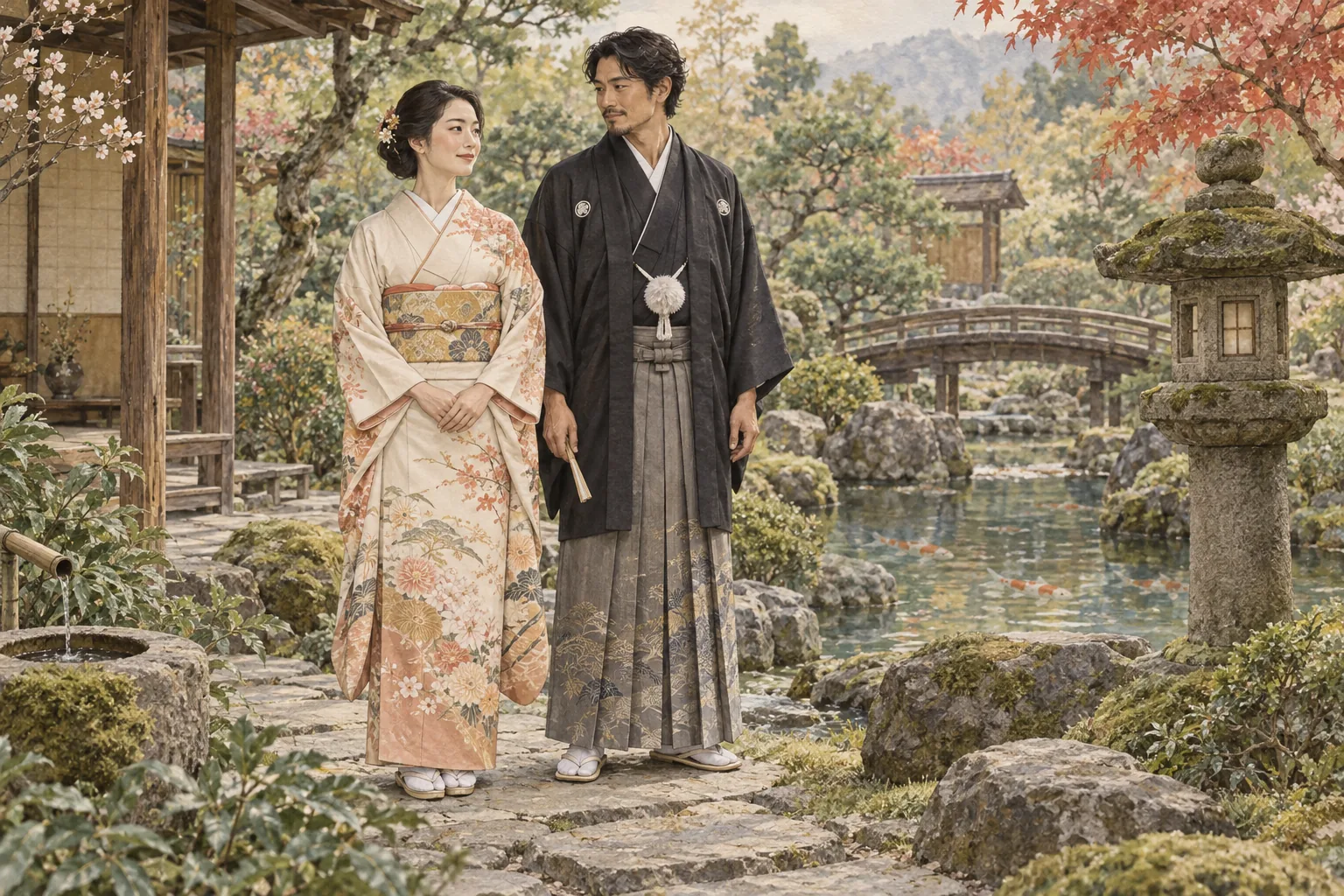
A kimono is the traditional Japanese garment, now worn mainly for formal occasions rather than daily life.
着物は日本の伝統的な衣服で、今では日常着ではなく、主に改まった場で着られます。
30秒で説明する
外国人に説明するときの標準サイズ
A kimono is a straight-seamed robe wrapped left over right and held with a wide sash called an obi. Almost nobody wears one daily now. They appear at weddings, funerals, coming-of-age ceremonies, tea ceremony and New Year. A formal kimono is expensive, has many layers, and most people need help to put one on.
着物は直線裁ちの衣で、左を上にして合わせ、帯という幅の広い帯状の布で留めます。今は日常的に着る人はほとんどいません。結婚式、葬儀、成人式、茶道、正月に登場します。正式な着物は高価で、重ねる枚数も多く、多くの人は人の手を借りないと着られません。
スピーチ・英作文
通訳案内士の二次口述・大学入試の自由英作文に
The question I am asked most often about kimono is whether Japanese people wear them every day. We do not. Almost nobody does. A kimono today is formal clothing, worn for weddings, funerals, the coming-of-age ceremony, graduation, tea ceremony and sometimes New Year. There are practical reasons.
A formal kimono involves many layers, a stiff sash, and a set of cords and pads underneath, and most people cannot put one on without help. Professional dressers exist, and schools teach it as a skill. It is also expensive: a good one can cost as much as a car, and they are often inherited. One rule matters more than any other.
The left side always goes over the right. The other way around is how the dead are dressed, so getting it backwards is immediately noticeable. If you want to try wearing one, rental shops in Kyoto and Asakusa will dress you for an afternoon, and Japanese people are pleased rather than offended.
着物について最も多く聞かれるのは、日本人は毎日着ているのか、という質問です。着ていません。ほとんど誰も着ていません。今日の着物は礼装で、結婚式、葬儀、成人式、卒業式、茶道、ときに正月に着られます。現実的な理由があります。
正式な着物は重ねる枚数が多く、帯は硬く、下には紐や補整の道具が必要で、多くの人は人の手を借りないと着られません。着付け師という仕事があり、教室もあります。そして高価です。良いものは車ほどの値段になり、受け継がれることも多いです。
ほかの何より大事な決まりが一つあります。必ず左が上です。逆は亡くなった方に着せる合わせ方なので、間違えるとすぐ分かります。着てみたいなら、京都や浅草のレンタル店が半日着付けてくれます。日本人は不快に思うどころか、喜びます。
こう聞かれたら
外国人から実際にされる質問と、その答え方。
Is it cultural appropriation for a foreigner to wear one?
外国人が着るのは文化の盗用になりますか。
The general view in Japan is no, and rental shops exist specifically for visitors. Wearing it correctly and respectfully is welcomed. The objection people do have is to costume-style versions worn as a joke.
日本では一般に問題視されず、訪日客向けのレンタル店もあります。きちんと敬意をもって着れば歓迎されます。嫌がられるのは、ふざけた仮装として着られる場合です。
How do I know which side goes over which?
どちらを上に合わせるのか、どう覚えればいいですか。
Left over right, always, for everyone regardless of gender. The right-over-left wrap is reserved for dressing the dead, and it is the one mistake nobody will miss.
性別にかかわらず、必ず左が上です。右を上にする合わせ方は死装束だけで、これは誰も見逃さない唯一の間違いです。
Why is it so expensive?
どうしてそんなに高いのですか。
The best are woven and dyed by hand, sometimes taking months, and the obi alone can cost more than the kimono. Rental and second-hand markets exist for exactly this reason.
上質なものは手織り・手染めで、何か月もかかることがあり、帯だけで着物より高い場合もあります。だからこそレンタルと古着の市場があります。
誤解されやすい
MYTHJapanese people wear kimono in daily life.
日本人は普段から着物を着ていると思われがちです。
FACTAlmost nobody does. It is formal wear for specific occasions, and many people own one or none. What you see on the street in Kyoto is largely rentals worn by tourists.
ほとんど誰も着ていません。特定の場のための礼装で、一着だけ、あるいは一着も持っていない人も多くいます。京都の街で見かける着物姿の多くは、観光客のレンタルです。
そのまま使えるフレーズ
- Left side over right — always that way around.必ず左を上に合わせます。
- Hardly anyone wears one in daily life now.今、日常で着る人はほとんどいません。
- Most people need help to put one on.多くの人は人に着せてもらいます。
- The obi can cost more than the kimono.帯のほうが着物より高いこともあります。
- You can rent one for the day in Kyoto.京都なら一日レンタルできます。
説明に使う語句
- garment衣服
- sash / belt帯
- formal wear礼装
- layer (noun)重ね、一枚
- hand-dyed手染めの
動画で見る
YouTube より豆知識
「着物」はもともと「着るもの」を意味する一般名詞で、洋服が入ってきたことで和装を指す語として定着した。直線裁ちで作られるため、ほどけば元の一枚の反物に戻り、洗い張りをして仕立て直すことができる。これは布を無駄にしない発想で、体型が変わっても仕立て直せる利点がある。格式には序列があり、既婚女性の第一礼装は黒留袖、未婚女性は振袖、男性は黒紋付羽織袴とされる。「右前」という言い方は、自分から見て右の身頃を先に肌に着ける、つまり左が上になる状態を指す。着付けを職業とする資格制度もあり、成人式や結婚式の時期には着付け師の需要が高まる。
