香道こうどう
kodo
the way of incense
香りを「嗅ぐ」ではなく「聞く」。茶道・華道と並ぶ芸道でありながら、いちばん知られていない。
一言で言うと
これだけ覚えれば最低限伝わる一文
Kodo is the art of appreciating fragrant wood, in which you are said to listen to the scent rather than smell it.
香道とは香木を味わう芸道で、香りは嗅ぐのではなく「聞く」と言います。
30秒で説明する
外国人に説明するときの標準サイズ
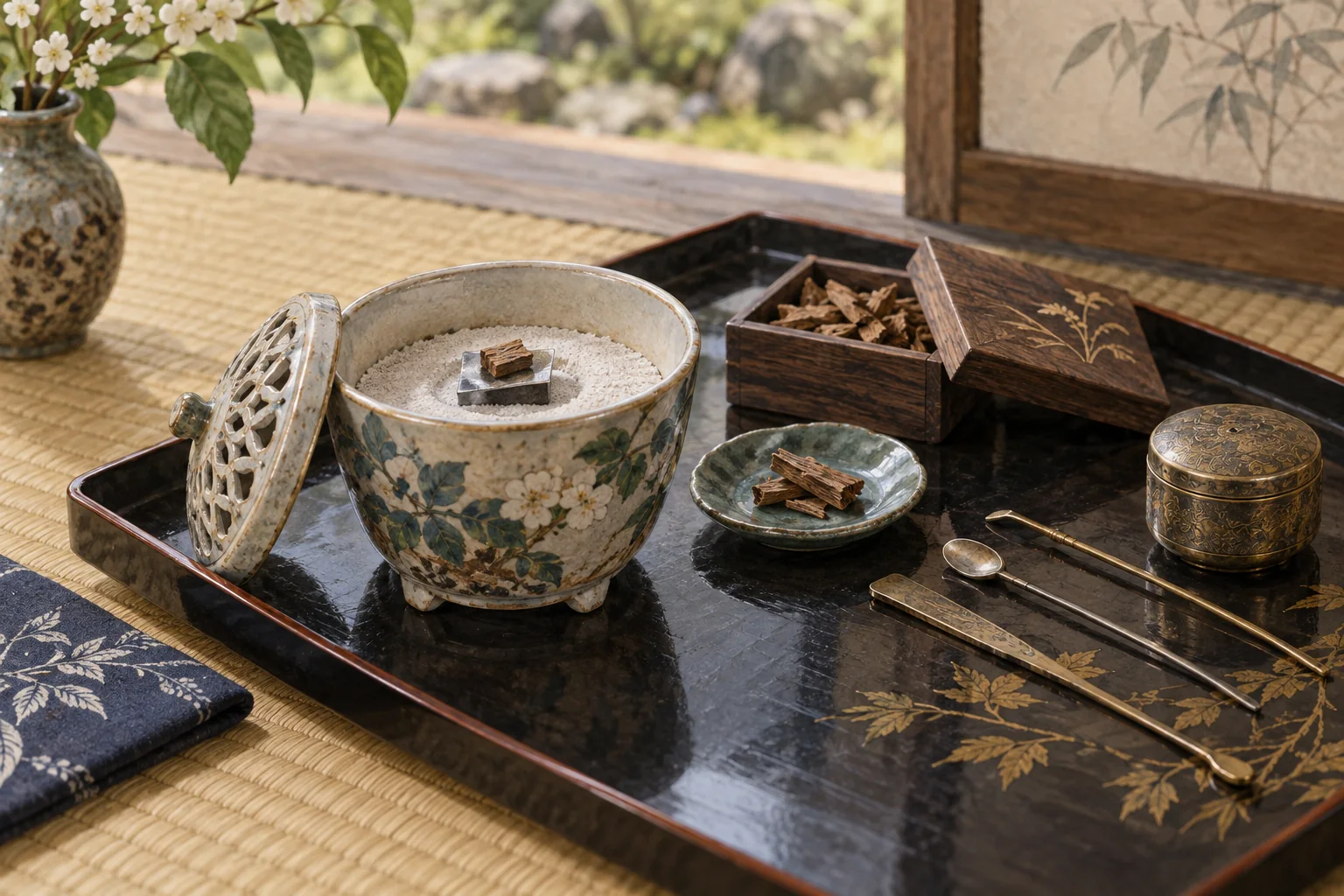
In kodo, slivers of rare fragrant wood are warmed over a piece of charcoal buried in ash, not burned, and the scent is inhaled from a small incense burner passed around. Participants often play games in which several scents are presented and you identify or match them, writing your answers. The verb used is to listen, not to smell. It is counted with tea ceremony and flower arranging as one of the classical arts.
香道では、灰に埋めた炭の上で、まれな香木のごく薄い片を焚かずに温め、小さな香炉を回して香りを吸います。参加者はしばしば、いくつかの香りを聞き分けて答えを紙に書く「組香」という遊びをします。使う動詞は「嗅ぐ」ではなく「聞く」です。茶道、華道と並ぶ古典の芸道に数えられます。
スピーチ・英作文
通訳案内士の二次口述・大学入試の自由英作文に
Most visitors know about tea ceremony and flower arranging. The third of Japan's classical arts, kodo, the way of incense, is far less known, partly because the material is scarce and expensive. The practice centers on agarwood, a resinous wood formed when certain tropical trees are damaged and infected, which does not grow in Japan and has always been imported.
A thin sliver is placed on a small plate of mica over charcoal buried in ash, so that it is warmed rather than burned, and the small burner is passed so each guest can cup it in their hands and inhale. The Japanese verb is to listen to incense, which suggests attention rather than consumption.
Much of the practice takes the form of games: several scents are presented, you are asked to say which are the same and which differ, and answers are written and scored. One famous scheme uses patterns of five vertical lines to record combinations, and those patterns became a decorative motif in their own right. Good agarwood is now extremely expensive and the source species are protected, which shapes the art's future.
外国から来た人の多くは茶道と華道を知っています。日本の古典の芸道の三つ目、香道はずっと知られていません。材料が希少で高価なことも理由の一つです。この芸の中心にあるのは沈香で、熱帯のある種の木が傷つき菌に侵されたときにできる樹脂を含んだ木です。
日本には生えず、つねに輸入されてきました。ごく薄い片を、灰に埋めた炭の上の雲母の小さな板に載せ、焚くのではなく温めます。香炉を回し、客はそれを両手で包んで香りを吸います。日本語の動詞は「香を聞く」で、消費ではなく注意を向けることを示しています。実際の多くは遊びの形を取ります。
いくつかの香が出され、どれが同じでどれが違うかを問われ、答えを紙に書いて採点します。有名な仕組みの一つは五本の縦線の組み合わせで答えを記すもので、その図柄自体が意匠として広まりました。良質の沈香は今では非常に高価で、原料となる種は保護の対象になっており、それがこの芸道の先行きを左右しています。
こう聞かれたら
外国人から実際にされる質問と、その答え方。
Why do you listen to incense rather than smell it?
どうして香を「嗅ぐ」ではなく「聞く」と言うのですか。
The wording marks it as an act of attention. Smelling is passive and physical; listening implies concentration, interpretation and a relationship with something that is speaking to you. The same logic appears in other Japanese arts, where the vocabulary raises an ordinary act into a discipline.
その言い方が、これを注意を向ける行為として位置づけています。嗅ぐことは受け身で身体的ですが、聞くことは集中と解釈、そして語りかけてくるものとの関係を意味します。ほかの日本の芸道にも同じ理屈があり、言葉がふつうの行為を修練へと引き上げます。
Is it the same as burning incense at a temple?
寺で焚くお香と同じものですか。
No. Temple incense is usually a stick of blended powder, burned as an offering, and the smoke is the point. In kodo the wood is warmed below the point of combustion, the smoke is minimal, and the aim is to distinguish subtle differences between pieces of wood.
違います。寺の線香はふつう粉を練った棒で、供養として焚き、煙そのものに意味があります。香道では木を燃える手前の温度で温めるので煙はほとんど出ず、目的は木の一片ごとの微妙な違いを聞き分けることです。
Can a visitor try it?
旅行者でも体験できますか。
Yes, through introductory classes and occasional public sessions, mostly in Kyoto and Tokyo, sometimes in English. Wear no perfume, avoid strongly scented soap, and do not eat anything strong beforehand. The session is usually seated and lasts an hour or two.
体験教室や、ときどき開かれる公開の会で試せます。主に京都と東京で、英語で行われることもあります。香水はつけず、香りの強い石けんも避け、直前に匂いの強いものを食べないでください。ふつうは座って行い、一、二時間です。
そのまま使えるフレーズ
- In this art you listen to the scent.この芸道では香りを聞くと言います。
- The wood is warmed, not burned.香木は焚くのではなく温めます。
- Cup it in your hands and breathe in.両手で包んで吸い込んでください。
- Please don't wear perfume.香水はつけないでください。
- You write down which scents matched.どの香が同じだったかを紙に書きます。
説明に使う語句
- incense香
- fragrant wood香木
- agarwood沈香
- charcoal炭
- distinguish聞き分ける
- classical art芸道
動画で見る
YouTube より豆知識
香道は茶道・華道と並ぶ芸道の一つに数えられ、室町時代に形が整えられたとされます。灰に埋めた炭の上に銀葉と呼ばれる雲母の薄板を置き、その上に香木の小片を載せて、燃やさずに間接的に温め、香炉を回して一人ずつ香りを聞きます。「聞く」という言い方は、香りを味わうことを注意深い行為として位置づけたものです。複数の香を聞き分けて答えを記す「組香」が実践の中心で、源氏物語の巻名を答えに当てる「源氏香」では、五本の縦線を結ぶ五十二種の図が用いられ、その図柄は着物や和菓子の意匠にも使われています。原料となる沈香や伽羅は東南アジアからの輸入に頼り、資源の減少と国際的な取引規制により価格が高騰しています。流派としては御家流と志野流が知られています。
