和菓子わがし
wagashi
traditional Japanese sweets
季節を形にした菓子。同じ店の品書きが、月ごとにまるごと入れ替わる。
一言で言うと
これだけ覚えれば最低限伝わる一文
Wagashi are traditional Japanese sweets, usually made from beans and rice, and shaped to match the season.
和菓子とは、豆や米から作る日本の伝統的な菓子で、季節に合わせた形に作られます。
30秒で説明する
外国人に説明するときの標準サイズ
Wagashi are made mainly from red bean paste, rice flour, sugar and agar, with very little dairy or fat. They are sweet but light, and are designed to be eaten with bitter green tea. The shapes and names change with the season, so a shop's display in April looks nothing like its display in November.
和菓子は主に餡、米粉、砂糖、寒天から作られ、乳製品や油脂はほとんど使いません。甘くても重くはなく、苦い抹茶に合わせて作られています。形も名前も季節で変わるため、4月の店先と11月の店先はまるで違って見えます。
スピーチ・英作文
通訳案内士の二次口述・大学入試の自由英作文に
Wagashi are traditional Japanese sweets, and the first thing to notice is what is not in them. There is almost no butter, no cream and very little fat of any kind. The main ingredients are sweetened red bean paste, rice flour, sugar and a seaweed-based setting agent.
They were developed alongside tea, so they are made to be eaten just before drinking something bitter, and that is why they can taste flat on their own and completely different with matcha. The other defining feature is the seasons.
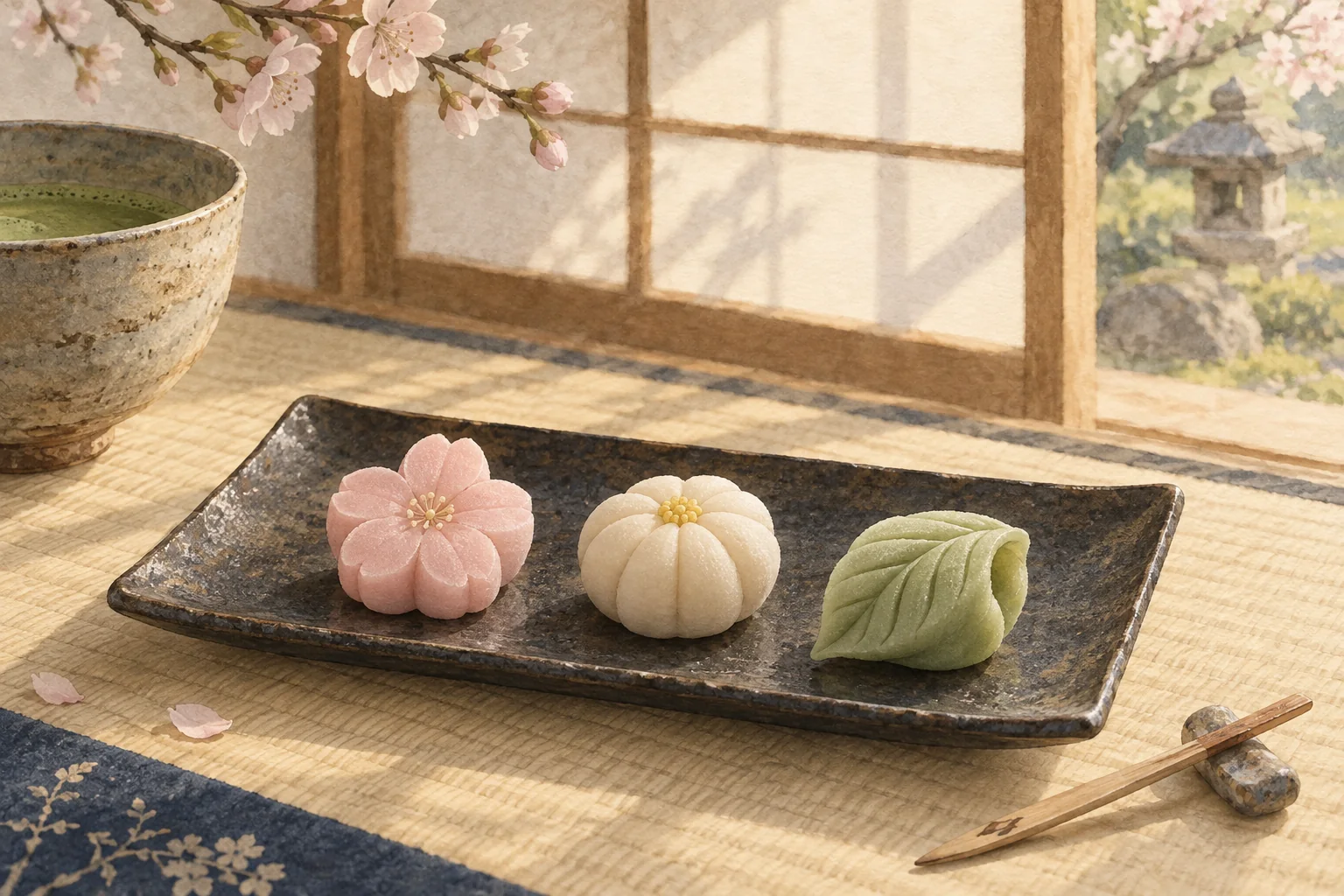
A wagashi is expected to reference the time of year, in shape, color and name: a pale pink one for cherry blossom in spring, a translucent one that looks like water in summer, a maple leaf in autumn. The names are often taken from classical poetry, so the sweet, the tea bowl, the scroll on the wall and the flowers in the room all point at the same few weeks of the year.
和菓子は日本の伝統的な菓子ですが、まず気づくべきは、そこに入っていないもののほうです。バターもクリームもほとんど使わず、油脂全般が非常に少ない。主な材料は甘く炊いた餡、米粉、砂糖、そして海藻から作る寒天です。
茶とともに発達したため、苦いものを飲む直前に食べるように作られています。単体では平坦に感じるのに、抹茶と合わせるとまったく違って感じられるのは、そのためです。もう一つの決定的な特徴が季節です。
和菓子は、形・色・名前で時季を指すことが求められます。春は淡い桜色、夏は水のように透ける一品、秋はもみじ。名前は古典の和歌から取られることも多く、菓子と茶碗と掛け軸と部屋の花が、そろって一年のうちの同じ数週間を指すことになります。
こう聞かれたら
外国人から実際にされる質問と、その答え方。
What is the paste inside?
中に入っているのは何ですか。
Anko, sweetened red bean paste. Koshian is smooth and strained; tsubuan keeps the bean skins and texture. Which one a shop uses is taken seriously.
餡です。こしあんは裏ごしして滑らか、つぶあんは皮と粒を残します。どちらを使うかは、店にとって真剣な選択です。
Why does it taste bland to me?
私には味が薄く感じるのですが。
Because it is designed as half of a pair. Eat the sweet first, then drink matcha, and the bitterness pulls the flavor forward. On its own with coffee it will not work the same way.
対の片方として作られているからです。先に菓子を食べ、そのあと抹茶を飲むと、苦みが味を引き出します。コーヒーと単体で合わせても、同じようには働きません。
What should I try first?
まず何を食べてみるといいですか。
Daifuku, a soft rice cake around bean paste, is the easiest entry point. Dorayaki, two small pancakes sandwiching paste, is also familiar to most visitors through anime.
餡をやわらかい餅で包んだ大福が入りやすいです。小さな二枚の生地で餡を挟んだどら焼きも、アニメを通じて見覚えのある人が多いでしょう。
そのまま使えるフレーズ
- Eat the sweet first, then drink the tea.先にお菓子、そのあとお茶です。
- The shapes change every month.形は毎月変わります。
- It's mostly beans, rice and sugar.材料はほとんど豆と米と砂糖です。
- There's almost no butter or cream.バターやクリームはほとんど使いません。
- The name usually refers to the season.名前はたいてい季節を指しています。
説明に使う語句
- sweet bean paste餡、あんこ
- rice flour米粉
- delicate繊細な
- seasonal季節の
- confectioner菓子職人
動画で見る
YouTube より豆知識
和菓子は、水分の多い順に、生菓子、半生菓子、干菓子に分類される。茶席で出す上生菓子は、季節を写した意匠と銘(名前)を持ち、菓子職人の技量が最も表れる。餡の起源は中国から伝わった点心で、当初は肉を包んだものだったが、肉食を避けた日本で小豆の餡に置き換わったとされる。砂糖が一般に使えるようになったのは江戸時代で、それ以前は甘葛(あまづら)などが使われた。京都の老舗の多くは茶道と結びついて発展した。近年は和菓子の消費量が減少傾向にあり、若い職人の確保が課題になっている一方、海外での評価は高まっている。
