帯おび
obi
the wide sash worn with a kimono
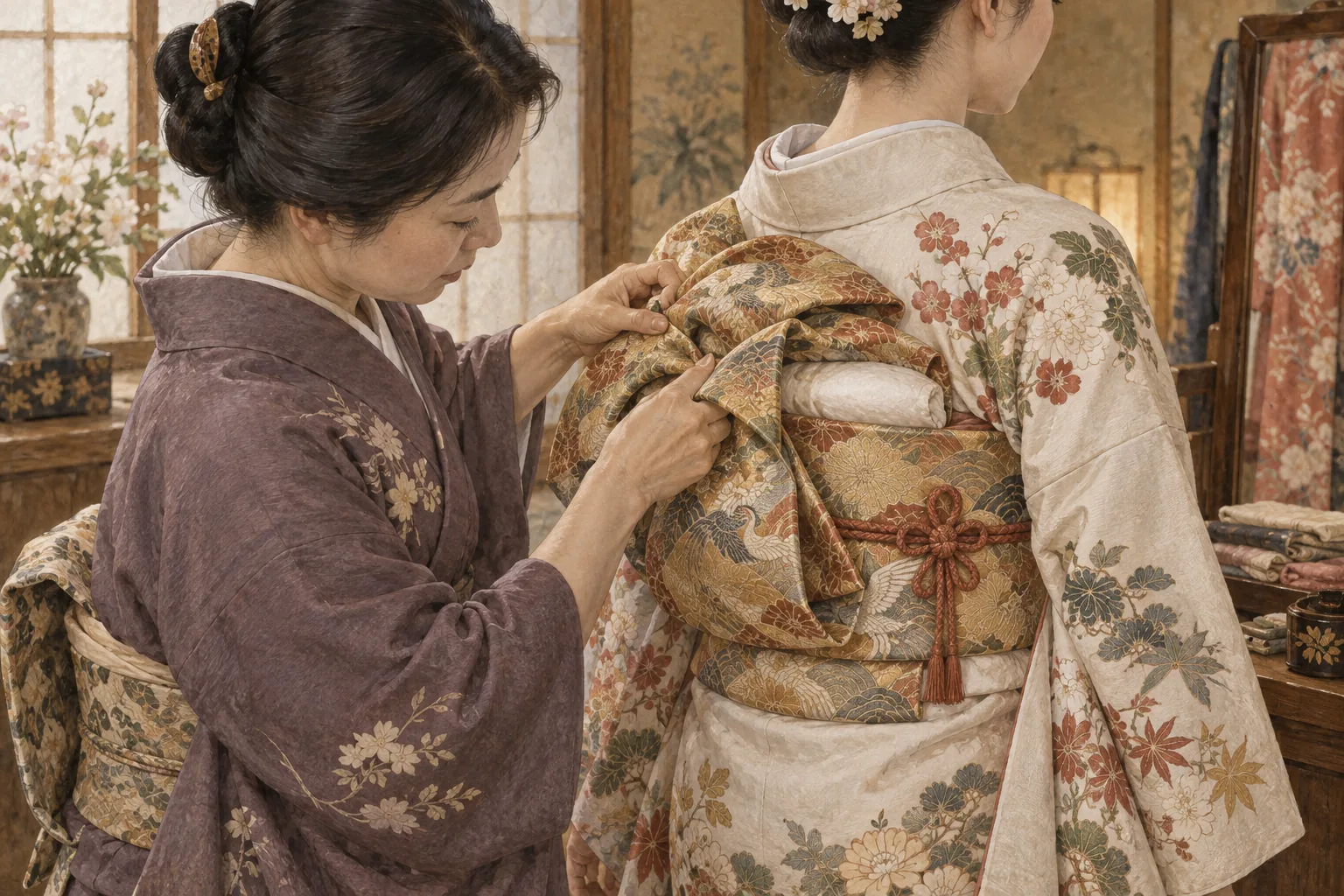
ベルトではない。長さ4メートル以上、結び方に名前がついている。
一言で言うと
これだけ覚えれば最低限伝わる一文
An obi is the wide sash that holds a kimono closed, often longer than four meters.
帯とは、着物を留める幅広の布で、長さは4メートルを超えることもあります。
30秒で説明する
外国人に説明するときの標準サイズ
The obi is not a belt. A formal women's obi is over thirty centimeters wide and four meters long, usually wrapped twice around the body and tied into a shaped knot at the back. There are many named knots, some requiring another person to tie. Men's obi are far narrower and simpler. The obi often costs more than the kimono itself.
帯はベルトではありません。女性の礼装用の帯は幅30センチ以上、長さ4メートルを超え、ふつう体に二重に巻いて背中で形のある結びにします。結び方には名前がついたものが多くあり、人の手を借りないと結べないものもあります。男性の帯はずっと細く単純です。帯は着物本体より高いこともよくあります。
スピーチ・英作文
通訳案内士の二次口述・大学入試の自由英作文に
If you look at someone in a kimono, the part doing the visual work is usually the obi. It is not a belt; it is a broad sash, and a formal women's obi can be over thirty centimeters wide and more than four meters long.
It usually goes around the body twice and is tied at the back into a shaped knot, and there are dozens of named knots, from the simple drum shape used for everyday formal wear to elaborate ones for unmarried women's furisode. Some cannot be tied on yourself at all, which is one of the reasons professional dressers exist.
Underneath there are cords and a stiff board and padding holding the whole shape in place, which is why a kimono looks so flat and upright compared with Western clothing. The obi is often the most expensive part of the outfit. A good one, woven with gold thread, can cost more than the kimono it is worn with.
着物姿を見たとき、視覚的に効いているのはたいてい帯です。ベルトではなく幅の広い布で、女性の礼装用なら幅30センチ以上、長さ4メートルを超えます。ふつう体に二重に巻き、背中で形のある結びにします。
結びには名前のついたものが何十もあり、日常の礼装に使うお太鼓結びのような簡素なものから、未婚女性の振袖に結ぶ華やかなものまであります。自分では結べないものもあり、着付け師という職業がある理由のひとつです。
下には紐や帯板、補整が入って全体の形を保っています。着物姿が洋服に比べて平らでまっすぐに見えるのは、そのためです。帯は一式のなかで最も高価な部分であることも多く、金糸で織られた良い帯は、合わせる着物より高いこともあります。
こう聞かれたら
外国人から実際にされる質問と、その答え方。
Why is it tied at the back?
どうして後ろで結ぶのですか。
It was not always. Tying at the front was common in earlier periods and survives in some contexts, but as obi got wider and more decorative, tying at the back became standard for women.
昔からそうだったわけではありません。前で結ぶ形は以前は一般的で、今も一部に残っています。帯が幅広く装飾的になるにつれ、女性は後ろで結ぶのが標準になりました。
What is the padding under it for?
下に入れている当て物は何のためですか。
To create a straight, flat line. Kimono is designed for a cylindrical silhouette, not for curves, so towels and pads are used to even out the body shape before the obi goes on.
まっすぐで平らな線を作るためです。着物は曲線ではなく円筒形の輪郭を前提に作られているので、帯を締める前にタオルや補整で体の形を整えます。
Can I tie one myself?
自分で結べますか。
The simple everyday knots yes, with practice. The elaborate ones for formal wear generally require help, and this is why dressing services are booked for weddings and coming-of-age day.
日常の簡単な結びなら、練習すればできます。礼装の複雑な結びはふつう人の手が要り、結婚式や成人式に着付けが予約される理由がそこにあります。
そのまま使えるフレーズ
- It's a sash, not a belt.ベルトではなく帯です。
- A formal one is over four meters long.礼装用は4メートルを超えます。
- The knot has a name.結び方には名前があります。
- Some knots need someone else to tie them.人に結んでもらう必要がある結び方もあります。
- The obi often costs more than the kimono.帯のほうが着物より高いこともよくあります。
説明に使う語句
- sash帯
- knot結び
- silhouette輪郭、シルエット
- padding補整、詰め物
- brocade錦、織りの生地
動画で見る
YouTube より豆知識
帯は時代とともに幅が広がった。江戸時代初期には細い紐状だったが、元禄期以降に幅広になり、結びの種類も増えた。現在の代表的な結びである「お太鼓結び」は、江戸後期に亀戸天神の太鼓橋の再建を祝った深川芸者の結び方が起源とする説が知られる。帯の種類は、格式の高い順に丸帯・袋帯・名古屋帯・半幅帯などがあり、名古屋帯は大正期に名古屋で考案された簡略化された帯である。男性の帯は角帯・兵児帯で、幅も長さも女性用よりはるかに小さい。「帯に短し襷に長し」は、どちらにも中途半端で役に立たないことを表す慣用句である。
