七五三の晴れ着しちごさんのはれぎ
shichigosan no haregi
the special outfit children wear for the Shichi-Go-San ceremony
3歳・5歳・7歳の子が着る特別な晴れ着。今は写真館とレンタルがセットに。
一言で言うと
これだけ覚えれば最低限伝わる一文
Shichigosan formal wear is the special kimono or hakama that children wear at ages three, five, and seven for their shrine visit.
七五三の晴れ着とは、3歳・5歳・7歳の子供が神社参りのために着る特別な着物や袴のことです。
30秒で説明する
外国人に説明するときの標準サイズ
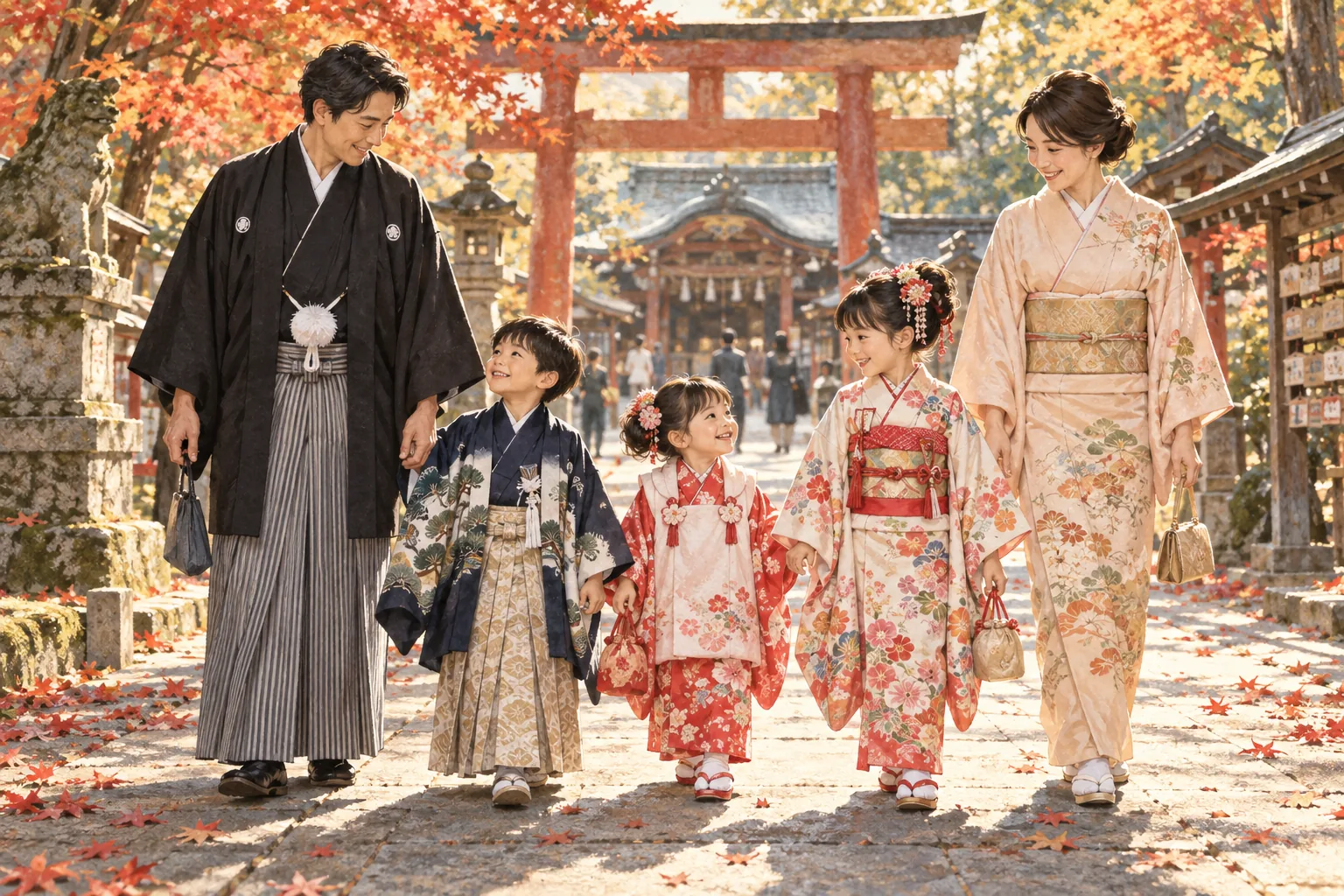
For the Shichi-Go-San ceremony, held every November for children turning three, five, and seven, families dress children in formal clothing more elaborate than everyday wear. Girls typically wear a colorful kimono, sometimes with a small fur stole, and boys wear a hakama outfit, following an old rite in which a boy first put on hakama at about age five. Since children outgrow the outfit almost immediately, many families now rent the entire thing from a photo studio, which also handles hair, makeup, and formal portraits before or on the day itself. The shrine visit and the photo session have become almost two separate events for many families.
3歳・5歳・7歳になった子供のために毎年11月ごろに行われる七五三では、ふだんとはまったく違う特別な服装をさせます。女児は色鮮やかな着物に小さな毛皮のストールを合わせることが多く、男児は5歳で初めて袴を着ける古い儀礼に由来する袴姿になります。子供はすぐに体が変わるため一度しか着ない着物を買う家庭は少なく、今では写真館で一式をレンタルし、ヘアメイクと本格的な写真撮影までまとめて頼む家庭が多くなっています。神社参りと写真撮影が、多くの家庭で別々の行事のようになっています。
スピーチ・英作文
通訳案内士の二次口述・大学入試の自由英作文に
Shichi-Go-San formal wear is the elaborate outfit children wear at ages three, five, and seven, when families take them to a shrine to pray for healthy growth, usually sometime in November. Girls often wear a brightly patterned kimono, sometimes finished with a small fur stole, while boys typically wear a hakama, following an old rite of passage in which a boy first put on hakama at about age five.
Because a child that age will outgrow the outfit almost immediately, fewer families buy one outright now; instead, many rent the full outfit from a photo studio, which also does hair, makeup, and a formal portrait session. In practice, many families now split the event in two, taking studio photos weeks in advance in comfortable, controlled conditions, and then doing a simpler shrine visit on the actual day. I think that split says a lot about how much a modern shichigosan revolves around the photos as much as the ceremony itself.
七五三の晴れ着とは、3歳・5歳・7歳になった子供が、たいてい11月ごろに家族で神社を訪れ健やかな成長を祈るときに着る、手の込んだ特別な服装です。女児は色鮮やかな着物に小さな毛皮のストールを添えることが多く、男児は5歳で初めて袴を着けるという古い通過儀礼に由来する袴姿になります。
その年齢の子供はすぐに体格が変わってしまうため、今では一式を買い切る家庭は少なくなり、多くは写真館でレンタルし、ヘアメイクと本格的な写真撮影までまとめて依頼します。実際には、快適で条件の整った環境で撮る前撮りを数週間前に済ませ、当日の神社参りは簡単にするという形に、行事そのものを二つに分ける家庭も増えています。この分け方は、現代の七五三が儀式そのものと同じくらい写真を中心に回っていることをよく表していると思います。
こう聞かれたら
外国人から実際にされる質問と、その答え方。
Do families still buy the kimono, or is renting more common now?
いまも家で着物を買うのですか、それとも借りるほうが多いのですか。
Renting is very common today, usually through a photo studio, since a child that age outgrows the outfit almost immediately after one use.
今はレンタルがとても一般的で、たいてい写真館を通して借ります。その年齢の子供は一度着ただけですぐに体格が変わってしまうためです。
Do the photos have to be taken on the actual shrine visit day?
写真はお参りの当日に撮らなければいけませんか。
No, many families book a separate studio session weeks earlier, when the weather and the child's mood are easier to manage, and keep the shrine visit itself simpler.
いいえ、多くの家庭は天候や子供の機嫌を管理しやすい数週間前に別途スタジオで撮影を予約し、神社参りそのものは簡単に済ませます。
そのまま使えるフレーズ
- We booked the photo studio for her shichigosan kimono.娘の七五三の着物は写真館で予約しました。
- He's turning five, so he'll wear a hakama this year.彼は5歳になるので今年は袴を着ます。
- The rental plan includes hair and makeup.レンタルプランにはヘアメイクも含まれています。
- We're taking the photos a few weeks before the shrine visit.写真は神社参りの数週間前に撮る予定です。
説明に使う語句
- formal kimono晴れ着
- hakama袴
- photo studio写真館
- shrine visit神社参り
動画で見る
YouTube より豆知識
七五三の晴れ着は、女児は着物に毛皮の小さなストールを合わせることが多く、男児は5歳で初めて袴を着ける「袴着」という古い儀礼に由来するとされる。子供はすぐに体格が変わるため、今は多くの家庭が写真館でのレンタルとヘアメイク・写真撮影をセットにして利用し、実際の神社参りとは別の日に前撮りを済ませることも珍しくない。
