七五三しちごさん
shichi-go-san
the festival for children aged seven, five and three
なぜ7・5・3なのか。子どもが育つことが当たり前ではなかった時代の名残。
一言で言うと
これだけ覚えれば最低限伝わる一文
Shichi-go-san is a November shrine visit to celebrate children reaching the ages of seven, five and three.
七五三は、7歳・5歳・3歳になった子どもを祝って、11月に神社へ参る行事です。
30秒で説明する
外国人に説明するときの標準サイズ
In mid-November, families take children aged three, five and seven to a shrine, dressed in formal kimono, to give thanks for their growth and pray for their health. Typically girls are celebrated at three and seven and boys at five, though in some areas boys also mark three. Odd numbers are considered auspicious, and the custom dates from a time when surviving early childhood could not be assumed.
11月半ば、家族は3歳・5歳・7歳の子どもに晴れ着を着せて神社へ連れていき、無事に育ったことへの感謝と健康を祈ります。女の子は3歳と7歳、男の子は5歳が中心ですが、男の子も3歳で祝う地域があります。奇数は縁起のよい数とされ、この習わしは、幼い子が育つことが当たり前ではなかった時代にさかのぼります。
スピーチ・英作文
通訳案内士の二次口述・大学入試の自由英作文に
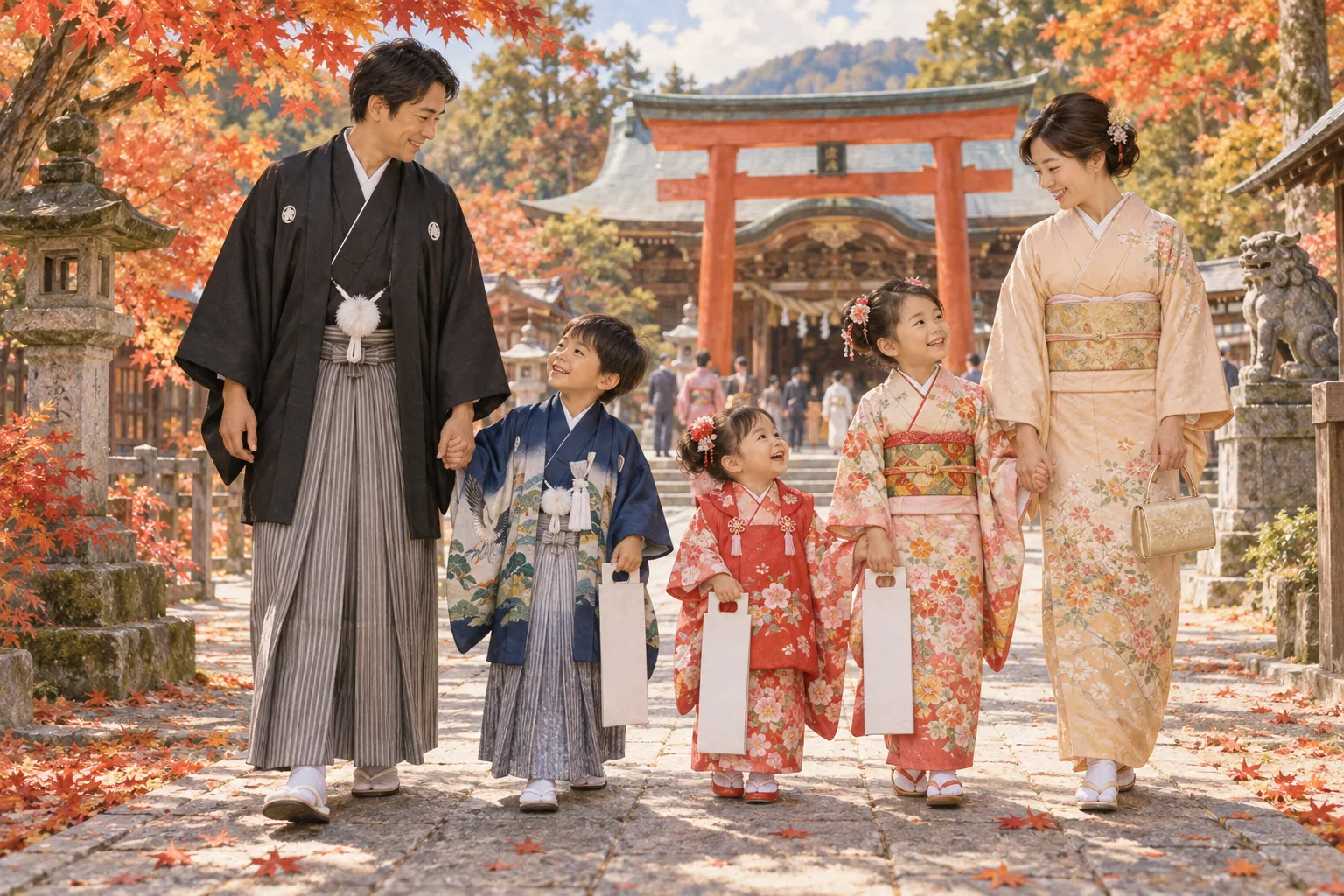
Shichi-go-san means seven, five, three, and it is a festival for children of those ages, held in mid-November. Families dress the child in formal kimono, take them to a shrine, receive a blessing from a priest, and take a great many photographs. Girls are celebrated at three and seven, boys at five, though practice varies by region.
The ages are not arbitrary. Odd numbers were considered auspicious, and each age traditionally marked a stage: at three a child stopped having their head shaved, at five a boy first wore hakama, at seven a girl first used a proper obi instead of a cord. Underneath all of it is something more serious.
In earlier centuries, child mortality was high enough that reaching these ages was genuinely uncertain, and the festival is fundamentally an expression of relief. Children are also given long thin sweets in a decorated bag, whose shape symbolizes a long life.
七五三は「七・五・三」のことで、その年齢の子どものための行事です。11月半ばに行われます。家族は子どもに晴れ着を着せて神社へ連れていき、神職からお祓いを受け、写真をたくさん撮ります。女の子は3歳と7歳、男の子は5歳が中心ですが、地域によって違います。
この年齢には理由があります。奇数は縁起がよいとされ、それぞれの年齢が節目でした。3歳で髪を伸ばしはじめ、5歳で男の子が初めて袴をつけ、7歳で女の子が紐ではなく本式の帯を締める。その下には、もっと重いものがあります。
かつては幼い子が亡くなることが多く、この年齢まで育つことは確かではありませんでした。この行事の根にあるのは、安堵の表明なのです。子どもは千歳飴という細長い飴を絵柄のついた袋でもらいます。その形が長寿を表します。
こう聞かれたら
外国人から実際にされる質問と、その答え方。
Why those specific ages?
どうしてその年齢なのですか。
Odd numbers were considered lucky, and each age marked a traditional milestone in how a child was dressed and treated. The three ages together cover the years when survival was least certain.
奇数が縁起のよい数とされたことに加え、それぞれの年齢が、子どもの装いと扱いが変わる節目でした。この三つの年齢は、生き延びられるかが最も不確かな時期にあたります。
Is it a religious ceremony?
宗教の儀式なのですか。
It takes place at a Shinto shrine and a priest performs a purification, but families do not generally treat it as a matter of belief. For most it is a milestone and a family photograph.
神社で行われ、神職がお祓いをしますが、家族はふつうそれを信仰の問題として扱っていません。多くにとっては人生の節目と、家族写真です。
What is the long sweet?
あの細長い飴は何ですか。
Chitose-ame, thousand-year candy. It is deliberately long and thin, and comes in a bag decorated with cranes, turtles and pine, all symbols of long life. The shape is the whole message.
千歳飴です。わざと細長く作られ、鶴・亀・松を描いた袋に入っています。どれも長寿の象徴です。その形そのものが意味なのです。
そのまま使えるフレーズ
- It's for children aged three, five and seven.3歳・5歳・7歳の子どものための行事です。
- Families go to a shrine in mid-November.11月半ばに神社へ行きます。
- The odd numbers were considered lucky.奇数は縁起がよいとされていました。
- The long sweet stands for a long life.長い飴は長寿を表します。
- It started when surviving childhood wasn't a given.子どもが育つことが当たり前でなかった時代に始まりました。
説明に使う語句
- milestone節目
- auspicious縁起のよい
- blessingお祓い、祝福
- infant mortality乳幼児死亡率
- formal dress晴れ着、礼装
動画で見る
YouTube より豆知識
七五三の日付は11月15日とされるが、現在は前後の週末に済ませる家庭が多い。11月15日になった理由には、五代将軍徳川綱吉が息子の健康を祈った日という説など諸説がある。年齢ごとの儀礼は、3歳の「髪置き」(それまで剃っていた髪を伸ばしはじめる)、5歳の「袴着」、7歳の「帯解き」に由来する。千歳飴は江戸時代に浅草で売られたのが始まりとされ、袋には鶴亀や松竹梅が描かれる。近年は着物のレンタルと写真スタジオの撮影がセットになった「前撮り」が一般的で、混雑を避けて9月や10月に撮影だけ済ませる家庭も多い。
