お地蔵さんおじぞうさん
Ojizo-san
the roadside guardian of children
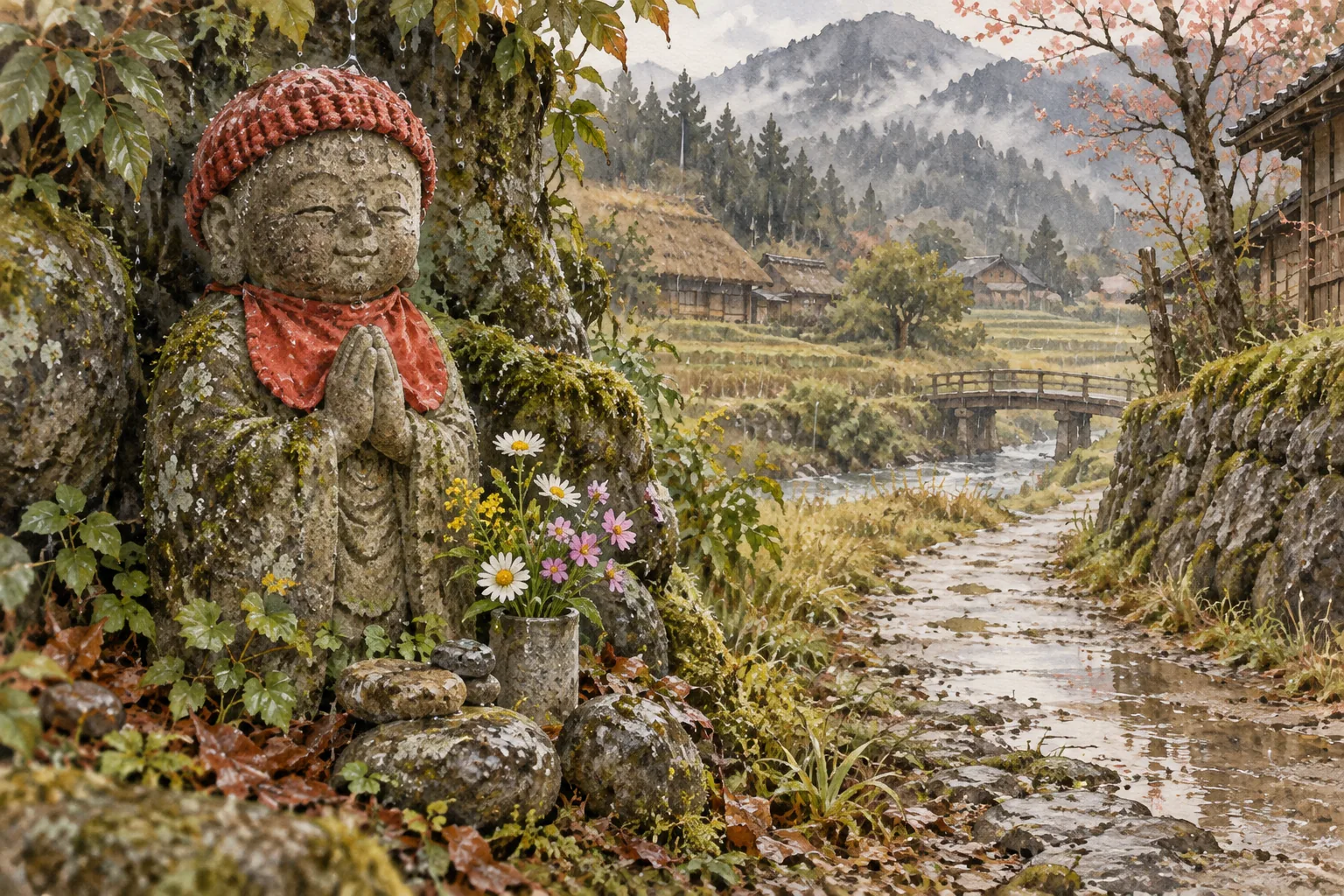
赤い前掛けをした石像。子どもと旅人を守るとされる。
一言で言うと
これだけ覚えれば最低限伝わる一文
Ojizo-san is a small stone figure found at roadsides, regarded as a protector of children and travelers.
お地蔵さんは道端に立つ小さな石像で、子どもと旅人を守るとされています。
30秒で説明する
外国人に説明するときの標準サイズ
Ojizo-san is the familiar name for Jizo, a bodhisattva who vowed to help beings in all realms. Small stone figures of him stand at roadsides, crossroads, temple gates and mountain paths, often wearing a red bib or cap put there by local people. He is especially associated with the protection of children and of travelers.
お地蔵さんは地蔵菩薩の親しみをこめた呼び名で、あらゆる世界の人々を救うと誓った菩薩です。その小さな石像が道端、辻、寺の門、山道に立ち、地元の人が着せた赤い前掛けや帽子をつけていることがよくあります。とくに子どもと旅人を守るとされます。
スピーチ・英作文
通訳案内士の二次口述・大学入試の自由英作文に
Ojizo-san is the most familiar Buddhist figure in the Japanese landscape. He is Jizo, a bodhisattva who made a vow to help beings in every realm, and he is represented as a simple shaven-headed figure in robes, usually carved in stone, standing about knee to waist height.
You find him at roadsides, at crossroads, on mountain paths and at temple gates, very often wearing a red cloth bib and sometimes a knitted cap. The clothing is put there by local people, and the red is a color associated with protection from harm.
He is understood as a protector of travelers and especially of children, including children who died before or shortly after birth, and at some temples rows of small figures stand with pinwheels and toys left by families. If you pass one, a small bow is enough. Do not move the figure, take the bib, or pose with it for a joke photograph.
お地蔵さんは、日本の風景の中で最も親しまれている仏の姿です。あらゆる世界の人々を救うと誓った地蔵菩薩で、剃髪して法衣をまとった簡素な姿に表され、たいていは石に彫られ、膝から腰ほどの高さで立っています。
道端、辻、山道、寺の門で見かけ、赤い布の前掛けをつけ、編んだ帽子をかぶっていることもよくあります。その衣は地元の人が着せたもので、赤は災いを避ける色とされます。旅人の、そしてとくに子どもの守り手と理解されていて、生まれる前や生まれてまもなく亡くなった子どもも含まれます。
寺によっては、家族が供えた風車や玩具とともに小さな像が並んでいます。通りかかったら、軽く頭を下げれば十分です。像を動かしたり、前掛けを取ったり、ふざけて一緒に写真を撮ったりしないでください。
こう聞かれたら
外国人から実際にされる質問と、その答え方。
Why the red bibs?
どうして赤いよだれかけをしているのですか。
Red is treated as a color that wards off harm, and dressing the figure is an act of care, often done by someone in the neighborhood who also cleans it and changes flowers. Bibs are associated with children, which fits his role.
赤は災いを避ける色とされ、像に衣を着せることは世話の行為です。たいていは近所の誰かが着せ、掃除をし、花を替えています。前掛けは子どもと結びつくもので、その役目にも合っています。
Is it a grave?
お墓なのですか。
Usually not. Most roadside figures mark a place rather than a burial: a dangerous corner, a boundary, a spot where someone died. At temples, rows of small figures may be memorials for children, and those should be treated with particular care.
ふつうは違います。道端の像の多くは墓ではなく場所を示しています。危ない曲がり角、境、誰かが亡くなった場所などです。寺に並ぶ小さな像は子どもの供養であることがあり、そこではとくに慎んで接してください。
そのまま使えるフレーズ
- He protects children and travelers.子どもと旅人を守るとされます。
- Local people put the bib on.前掛けは地元の人が着せたものです。
- A small bow is enough.軽く頭を下げれば十分です。
- Please don't move it or take anything.動かしたり物を取ったりしないでください。
説明に使う語句
- bodhisattva菩薩
- stone figure石像
- bib前掛け
- roadside道端
動画で見る
YouTube より豆知識
地蔵菩薩は釈迦の入滅から弥勒の出現までの間、人々を救うと誓った菩薩とされます。道祖神と重なって辻に祀られた例が多く、六体並ぶ「六地蔵」は六つの世界を表すとされます。京都などでは八月に「地蔵盆」という子どものための行事が行われ、町内で地蔵を飾り、菓子を配ります。幼くして亡くなった子どもの供養として石像を納める寺もあり、風車や玩具が供えられています。
