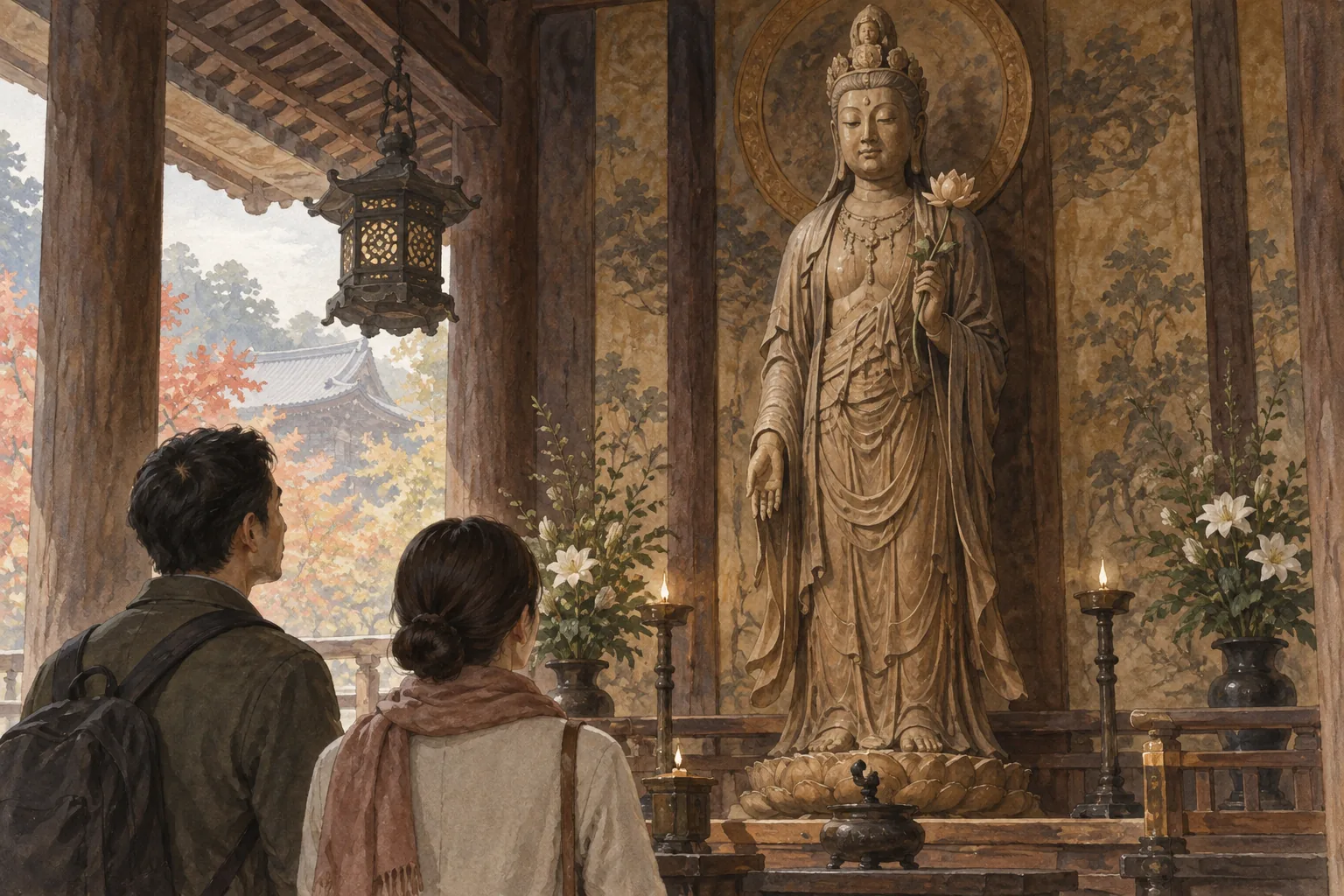
観音かんのん
Kannon
the bodhisattva of compassion
男でも女でもない。相手に応じて三十三の姿に変わるとされる。
一言で言うと
これだけ覚えれば最低限伝わる一文
Kannon is the bodhisattva of compassion, said to take whatever form is needed to help.
観音とは慈悲の菩薩で、救うために必要な姿へ何にでも変わるとされます。
30秒で説明する
外国人に説明するときの標準サイズ
Kannon is the bodhisattva who hears the cries of the world and responds. In Japan Kannon is one of the most widely worshipped Buddhist figures, appears in many forms including one with eleven faces and one with a thousand arms, and is the focus of long pilgrimage routes visiting thirty-three temples.
観音とは、世の声を聞いて応える菩薩です。日本で最も広く信仰される仏のひとつで、十一の顔を持つ姿や千の手を持つ姿など多くの形に現れ、三十三の寺をめぐる長い巡礼の道の中心になっています。
スピーチ・英作文
通訳案内士の二次口述・大学入試の自由英作文に
Kannon is the bodhisattva of compassion, and in Japan is probably the most widely worshipped Buddhist figure after the Buddha himself. The name means one who perceives the sounds of the world, and the defining idea is responsiveness: Kannon is said to take whatever form will actually help the person in front of them, which is why images vary so much.
You will see a standing figure holding a vase, a figure with eleven faces looking in all directions, and one with a thousand arms, each hand holding a different implement. Kannon is usually described as beyond gender, though Japanese images often read as female to Western eyes.
Pilgrimage routes of thirty-three Kannon temples exist across the country, the number coming from the thirty-three forms. There is also a striking historical footnote: during the ban on Christianity, hidden Christians prayed to statues of Kannon holding a child as images of Mary, and some of those statues survive in museums today.
観音は慈悲の菩薩で、日本では仏そのものに次いで最も広く信仰されている存在でしょう。名は世の音を観る者という意味で、核心にあるのは応じることです。観音は目の前の人を実際に救える姿へ、何にでも変わるとされます。
だから像の形がこれほど多様なのです。瓶を持って立つ姿、あらゆる方角を見る十一の顔を持つ姿、それぞれ違う持ち物を握る千の手を持つ姿があります。観音はふつう性を超えた存在とされますが、日本の像は西洋の目には女性に見えることが多くあります。
全国に三十三の観音の寺をめぐる巡礼の道があり、この数は三十三の姿に由来します。印象的な歴史の余談もあります。禁教の時代、潜伏したキリシタンは子を抱く観音の像にマリアを重ねて祈りました。その像の一部は今も資料館などに残っています。
こう聞かれたら
外国人から実際にされる質問と、その答え方。
Is Kannon male or female?
観音は男性ですか、女性ですか。
Neither, in doctrine. The figure is understood as beyond gender and able to appear in any form. The images that came to Japan through China increasingly took a gentle appearance that many people read as female, and Japanese usage often follows that.
教えの上ではどちらでもありません。性を超えた存在で、どんな姿にも現れられるとされます。中国を経て日本に伝わった像は次第に柔和な姿になり、多くの人がそれを女性として受け取ります。日本語の用法もそれに従うことが多くあります。
What are the thirty-three temple pilgrimages?
三十三所の巡礼とは何ですか。
Routes visiting thirty-three temples that enshrine Kannon, the best known being the one in western Japan. Pilgrims collect a stamp and calligraphy at each temple in a book, and many people now do them by car over several years.
観音を祀る三十三の寺をめぐる道で、最もよく知られているのは西国のものです。巡礼者は寺ごとに帳面へ朱印と墨書を受け、今は何年もかけて車で回る人が多くいます。
そのまま使えるフレーズ
- Kannon is the bodhisattva of compassion.観音は慈悲の菩薩です。
- The figure is beyond gender.性を超えた存在とされます。
- That one has eleven faces.あれは十一面観音です。
- The pilgrimage visits thirty-three temples.巡礼は三十三の寺をめぐります。
説明に使う語句
- bodhisattva菩薩
- compassion慈悲
- pilgrimage巡礼
- temple stamp朱印
動画で見る
YouTube より豆知識
観音は正しくは観世音菩薩、または観自在菩薩と呼ばれます。姿には聖観音、十一面観音、千手観音、馬頭観音、如意輪観音などがあり、三十三に変化するという説から、西国三十三所をはじめとする巡礼が生まれました。浅草寺の本尊も観音で、東京で最も参拝者の多い寺のひとつです。禁教下の長崎などでは、子を抱く観音像をマリアに見立てた「マリア観音」が用いられ、現在は資料館で見ることができます。
