神仏習合しんぶつしゅうごう
shinbutsu shugo
the long blending of Shinto and Buddhism
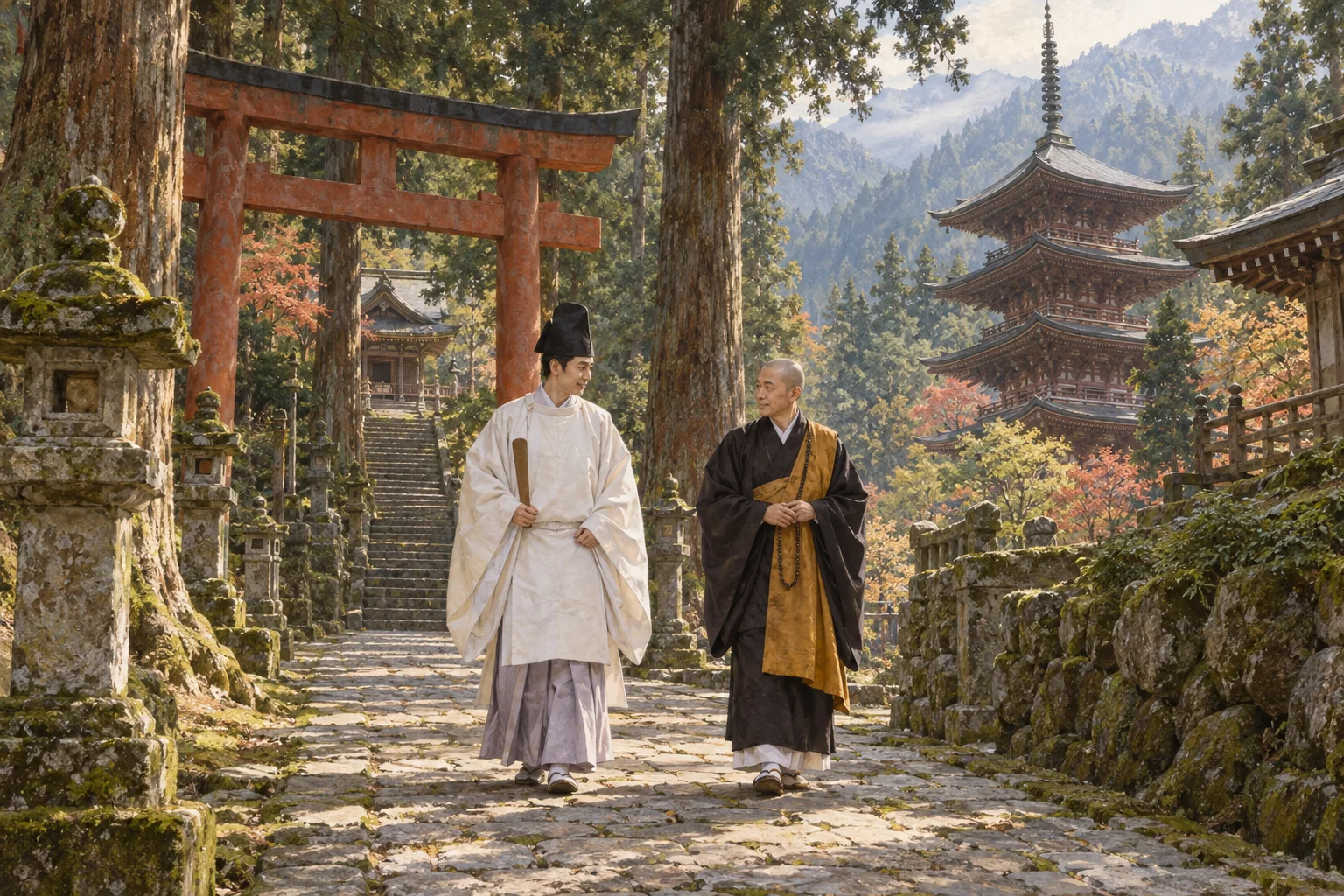
千年のあいだ、神社と寺は同じ敷地の中にあった。
一言で言うと
これだけ覚えれば最低限伝わる一文
Shinbutsu shugo, or the blending of Shinto and Buddhism, is over a thousand years of worshipping gods and Buddhas together.
神仏習合とは、千年以上のあいだ、日本の神と仏を同じ場所でともに祀ってきたことです。
30秒で説明する
外国人に説明するときの標準サイズ
Shinbutsu shugo is the long fusion of Shinto and Buddhism. From the eighth century, temples were built inside shrine grounds and shrine deities were treated as forms of Buddhas. The two were separated by government order in 1868, so the tidy modern distinction between shrine and temple dates from then rather than from antiquity.
神仏習合とは、神道と仏教が長いあいだ混ざり合っていたことを指します。八世紀以降、神社の境内に寺が建てられ、神は仏が姿を変えたものと考えられました。この二つが分けられたのは1868年の政府の命令によるもので、今のすっきりした区別は古代からのものではありません。
スピーチ・英作文
通訳案内士の二次口述・大学入試の自由英作文に
Visitors are told that shrines are Shinto and temples are Buddhist, which is true today but was not true for most of Japanese history. From the eighth century the two systems grew together.
Temples were built inside shrine precincts, monks read sutras before Shinto deities, and by the Heian period a theory held that the Japanese gods were local appearances of Buddhas. Ordinary people did not experience two religions; they experienced one landscape of sacred places.
This ended abruptly in 1868, when the new government ordered shrines and temples to be separated. In the disturbance that followed, Buddhist statues and buildings inside shrines were destroyed in many places. Traces are still visible: pagodas standing beside shrines, and families who use a shrine for a birth and a temple for a funeral.
神社は神道、寺は仏教、と案内されます。今はそのとおりですが、日本の歴史の大部分ではそうではありませんでした。八世紀以降、二つは一緒に育ちます。
神社の境内に寺が建てられ、僧が神の前で経を読み、平安時代には、日本の神は仏が姿を変えて現れたものだという考えが広まりました。当時の人にとって、二つの宗教があったのではなく、聖なる場所の風景が一つあっただけです。
これが急に終わったのが1868年で、新政府が神社と寺を分けるよう命じました。続く混乱の中で、神社にあった仏像や仏堂が各地で壊されました。今も痕跡は見られます。神社のそばに立つ塔、生まれたときは神社、葬式は寺という家の使い分けです。
こう聞かれたら
外国人から実際にされる質問と、その答え方。
So why are shrines and temples separate now?
では、なぜ今は神社と寺が分かれているのですか。
Because of an order issued in 1868. The new Meiji government wanted Shinto as a state institution and required Buddhist elements to be removed from shrines. Statues and buildings were destroyed in the years that followed.
1868年の命令によるものです。明治の新政府は神道を国の制度として立てようとし、神社から仏教のものを取り除かせました。続く数年で、仏像や建物が壊されました。
Is that why people use both?
だから日本人は両方を使うのですか。
Partly. Many families still visit a shrine at New Year and hold funerals at a temple without feeling any contradiction, which is closer to the older pattern than the official separation is.
その一面はあります。多くの家は今も、正月は神社、葬儀は寺という使い方をして、矛盾を感じていません。これは制度上の分離よりも、古い形に近いものです。
Can I still see the fusion anywhere?
その混ざった姿は今も見られますか。
Yes. Some sites kept their pagodas or their shrine buildings, and Buddhist temples with a small shrine in one corner are common. The Kumano area and parts of Shikoku show it especially clearly.
見られます。塔や社殿がそのまま残った場所がありますし、境内の一角に小さな社を持つ寺はよくあります。熊野のあたりや四国の一部では、その姿がよくわかります。
誤解されやすい
MYTHShinto and Buddhism have always been two separate religions in Japan.
神道と仏教は日本でずっと別々の宗教だった、と思われがちです。
FACTThey were closely intertwined for over a thousand years, and were separated only by a government order in 1868.
千年以上にわたって深く結びついており、分けられたのは1868年の政府の命令によってです。
そのまま使えるフレーズ
- Shrines and temples used to share a site.昔は神社と寺が同じ場所にありました。
- They were separated in 1868.1868年に分けられました。
- This pagoda stands inside a shrine.この塔は神社の中にあります。
- People use both without any conflict.どちらも使い分けていて、矛盾は感じていません。
- The distinction is newer than it looks.この区別は、見た目ほど古いものではありません。
説明に使う語句
- fusion of gods and Buddhas神仏習合
- the separation order神仏分離
- pagoda塔
- a deity seen as a Buddha権現
- temple or shrine grounds境内
動画で見る
YouTube より豆知識
奈良時代には神社の境内に神宮寺が建てられ、神の前で経が読まれました。平安時代には、日本の神は仏が姿を変えて現れたものだとする本地垂迹の考えが広まり、権現という呼び方が生まれます。1868年の神仏分離令のあと、各地で廃仏毀釈が起こり、仏像や経巻が失われました。奈良の興福寺では五重塔が売りに出されたという話が伝わります。神と仏の区別が今のように整ったのは、明治以降のことです。
