義理ぎり
giri
social obligation you cannot refuse
「義理チョコ」の義理。好意ではなく、返さなければならない借りのこと。
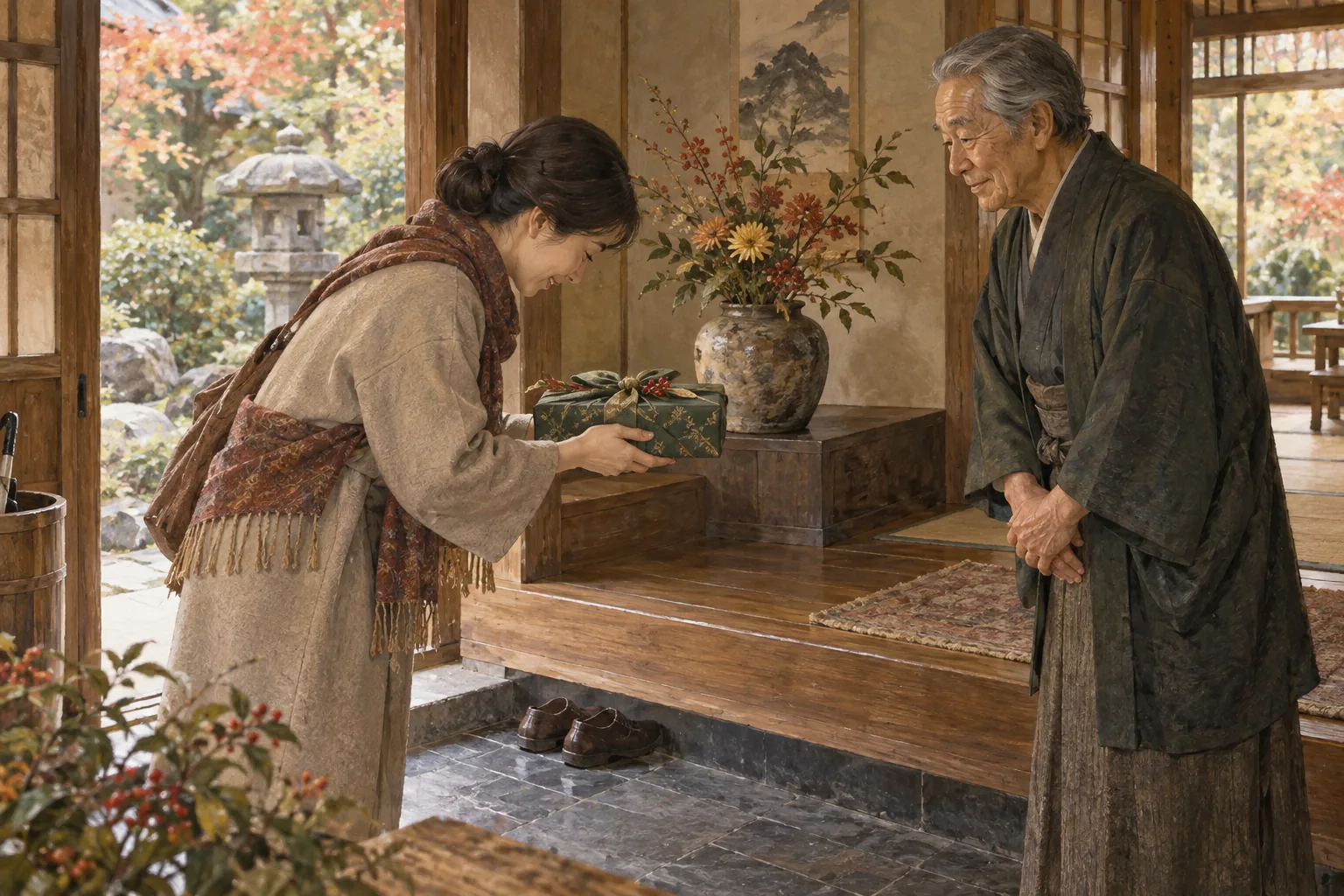
一言で言うと
これだけ覚えれば最低限伝わる一文
Giri is a social debt you are expected to repay, regardless of how you feel about it.
義理とは、気持ちにかかわらず返さなければならない、社会的な借りのことです。
30秒で説明する
外国人に説明するときの標準サイズ
Giri is obligation arising from a relationship: to a boss, a teacher, a neighbor, a relative by marriage. If someone has done something for you, giri says you must return it. It is explicitly contrasted with ninjo, personal feeling, and much of Japanese drama turns on the conflict between the two.
義理とは、関係から生じる負い目です。上司、恩師、近所の人、姻戚に対して。誰かが自分のために何かをしてくれたなら、義理はそれを返さねばならないと言います。個人的な感情である「人情」とはっきり対比され、日本の物語の多くは、この二つの板挟みを軸にしています。
スピーチ・英作文
通訳案内士の二次口述・大学入試の自由英作文に
Giri is obligation, but not the moral kind. It is the debt created by a relationship. If your boss came to your wedding, you go to their parent's funeral. If a neighbor helped when you moved in, you bring them something when you return from a trip.
None of this depends on whether you like the person. Japanese pairs giri with ninjo, which is personal feeling, and the tension between them is the engine of an enormous amount of Japanese theater, film and fiction: the character who must choose between what they owe and what they want.
In modern life the clearest surviving example is giri-choco, obligation chocolate, given at work on Valentine's Day to male colleagues you have no romantic interest in whatsoever. That custom has been shrinking fast, and some companies have banned it outright, which tells you something about how giri is faring.
義理とは義務ですが、道徳的な義務ではありません。関係が作り出した借りのことです。上司が自分の結婚式に来てくれたなら、その親の葬儀には行きます。引っ越しのとき近所の人が手を貸してくれたなら、旅行の土産を持っていきます。
その人を好きかどうかは関係ありません。日本語は義理を「人情」、つまり個人の感情と対にします。この二つの緊張が、日本の芝居・映画・小説の膨大な量を動かしてきました。負っているものと、望んでいるもののあいだで選ばされる人物。
現代の生活で最も分かりやすく残っているのが「義理チョコ」です。バレンタインデーに、まったく関心のない男性の同僚へ職場で配るチョコレート。この習慣は急速に縮小しており、はっきり禁止した企業もあります。それ自体が、義理の現状をよく表しています。
こう聞かれたら
外国人から実際にされる質問と、その答え方。
What is the difference from ninjo?
人情とはどう違うのですか。
Giri is what you owe; ninjo is what you feel. The classic dramatic situation is being forced to choose, and Japanese audiences read that conflict instantly without it being explained.
義理は負っているもの、人情は感じているものです。その二つから選ばされるのが物語の定型で、日本の観客は説明なしにその葛藤を読み取ります。
Is obligation chocolate still a thing?
義理チョコはいまもあるのですか。
Much less. Some workplaces have banned it as a form of pressure, and department stores now market Valentine's chocolate as something to buy for yourself or for friends instead.
ずいぶん減りました。圧力になるとして禁止する職場もあり、百貨店はバレンタインのチョコを自分用や友人向けとして売るようになっています。
Does giri still matter at all?
義理はいまも意味を持っていますか。
In weddings, funerals and seasonal gifts, yes. Whether you attend a colleague's wedding or send a gift to a client is still often decided by obligation rather than closeness.
冠婚葬祭と季節の贈答では今も生きています。同僚の結婚式に出るか、取引先に贈るかは、親しさより義理で決まることが今もあります。
誤解されやすい
MYTHGiri means Japanese people are warm and loyal to each other.
義理があるから日本人は互いに温かく忠実なのだと思われがちです。
FACTGiri is specifically obligation without requiring affection. The warm version is ninjo, and Japanese itself keeps the two words separate precisely because they are different things.
義理は愛情を必要としない義務そのものです。温かいほうは人情で、日本語がこの二語を分けているのは、まさに別のものだからです。
そのまま使えるフレーズ
- I have to go — it's an obligation.義理があるので、行かないといけません。
- It's not about liking them.好き嫌いの問題ではないんです。
- Obligation chocolate is dying out.義理チョコは廃れつつあります。
- Giri is what you owe; ninjo is what you feel.義理は負うもの、人情は感じるものです。
- It still shapes weddings and funerals.冠婚葬祭には今も義理が生きています。
説明に使う語句
- obligation義理、義務
- repay a favor恩を返す
- social debt負い目、借り
- reciprocate返礼する
- out of duty義理で
動画で見る
YouTube より豆知識
義理と人情の対立は、近松門左衛門の浄瑠璃や歌舞伎の心中物、後の任俠映画に至るまで、日本の物語の基本構造として繰り返されてきた。ルース・ベネディクトは『菊と刀』(1946年)でこの概念を論じたが、日本での現地調査に基づかない点が長く批判されてきた。「義理チョコ」は1980年代以降に職場で広まったが、2010年代後半からハラスメントの観点で見直され、禁止する企業も出てきた。ゴディバは2018年に新聞広告で「日本は、義理チョコをやめよう」と呼びかけ、大きな話題になった。なお「義理の母」「義理の兄」は姻戚関係を指す用法で、こちらは負い目の意味ではない。
