八百万の神やおよろずのかみ
yaoyorozu no kami
the eight million gods
「八百万」は数ではなく「数えきれない」。トイレにも台所にも神がいる、という世界観。
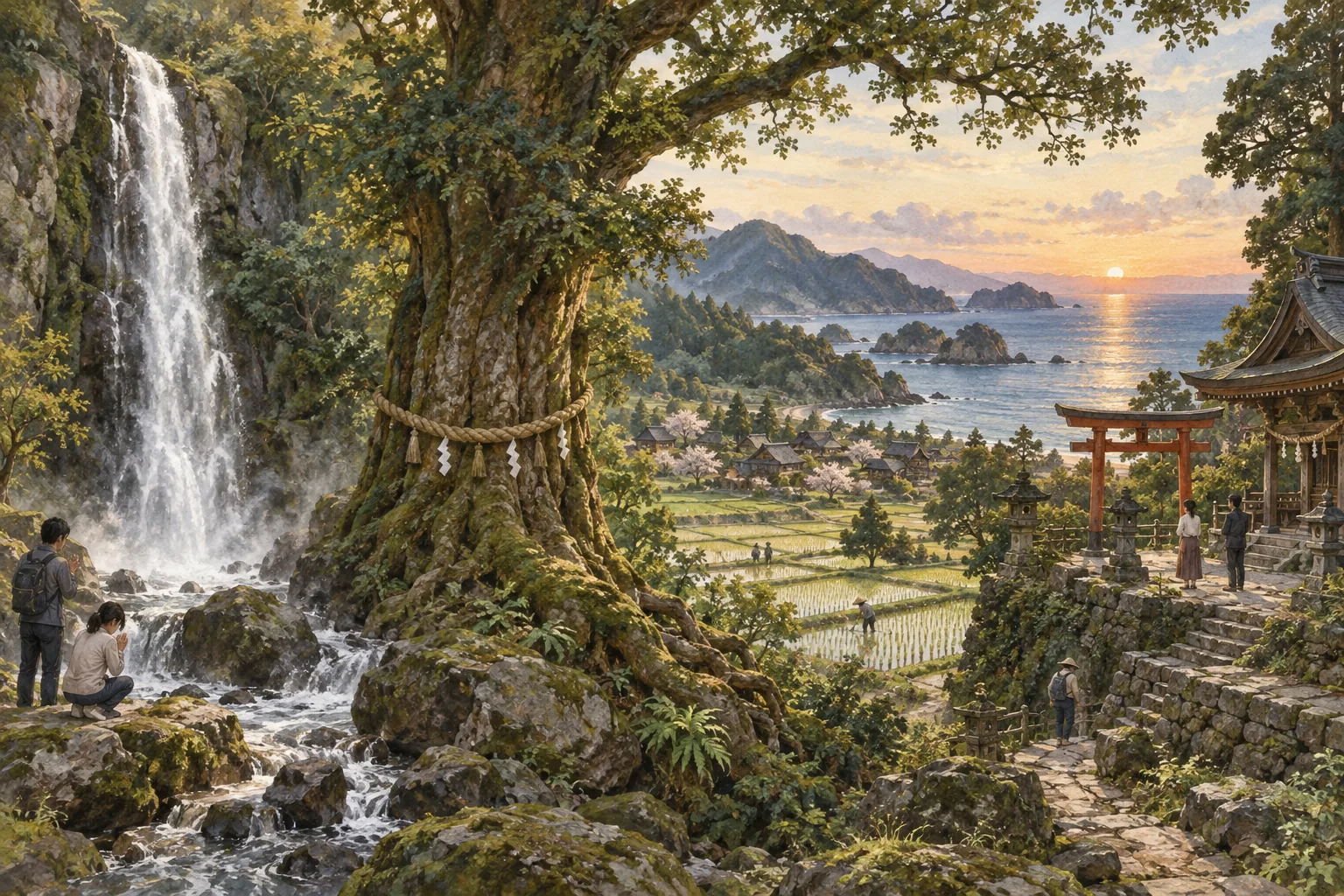
一言で言うと
これだけ覚えれば最低限伝わる一文
Yaoyorozu no kami means that countless gods exist in Shinto, in mountains, rivers, trees and even household objects.
八百万の神とは、神道では山にも川にも木にも、家の道具にまで数えきれない神がいる、という考え方です。
30秒で説明する
外国人に説明するときの標準サイズ
Shinto has no single creator god. Instead there are kami, an enormous number of them, present in mountains, waterfalls, old trees, rice, and specific places. The figure eight million is not literal; it is an old way of saying uncountably many. Some households still keep a small god of the kitchen and a god of the toilet.
神道には唯一の創造神がいません。かわりに膨大な数の神々がいて、山、滝、老木、稲、そして特定の場所に宿ります。八百万という数は文字どおりの数ではなく、数えきれないほど多い、という古い言い方です。台所の神、トイレの神を今も祀る家もあります。
スピーチ・英作文
通訳案内士の二次口述・大学入試の自由英作文に
Shinto does not have one god who made everything. It has kami, and there are said to be eight million of them, which is not a count but an old expression meaning more than anyone could number. A kami can be a mountain, a waterfall, a very old tree, the rice in the field, a founding ancestor, or the spirit of a specific place.
This is why you see a rope tied around a tree or a rock: it marks the presence of something worth respecting. It also reaches inside the house. There is a kami of the kitchen and, famously, a kami of the toilet, and there is a well-known modern song about the latter.
If you want one sentence for the difference from monotheism, it is this: the question in Shinto is not who created the world, but how to live respectfully alongside the things already in it. Shinto also has no founder, no single scripture and no fixed commandments.
神道には、すべてを作った唯一の神がいません。あるのは神(かみ)で、八百万いると言われます。これは数ではなく、誰にも数えきれないほど多い、という古い言い方です。神は山であり、滝であり、非常に古い木であり、田の稲であり、祖先であり、特定の場所の霊でもあります。
木や岩に注連縄が張られているのは、敬うべきものがそこにいる印だからです。それは家の中にも及びます。台所の神がいて、有名なところではトイレの神がいます。後者については、よく知られた現代の歌もあります。
一神教との違いを一文で言うなら、こうです。神道の問いは、誰が世界を作ったかではなく、すでにそこにあるものとどう敬意をもって共に生きるか、である。神道には開祖も、唯一の聖典も、決まった戒律もありません。
こう聞かれたら
外国人から実際にされる質問と、その答え方。
Are there really eight million?
本当に八百万もいるのですか。
The number is figurative. In classical Japanese, large round numbers were used to mean uncountable, and eight in particular carried the sense of very many rather than a count.
この数は比喩です。古い日本語では大きな概数が「数えきれない」の意味で使われ、とくに八は数ではなく「非常に多い」を表しました。
Can a person become a kami?
人が神になることはあるのですか。
Yes. Historical figures have been enshrined, including scholars, warriors and rulers. Sugawara no Michizane became the god of learning, and students pray to him before exams.
なれます。学者・武将・為政者など、歴史上の人物が神として祀られてきました。菅原道真は学問の神となり、受験生が合格を祈ります。
Is this the same as animism?
これはアニミズムと同じですか。
It overlaps with what scholars call animism, but Shinto also has organized shrines, a priesthood and imperial connections, so it is not only a folk belief in spirits.
学術的にアニミズムと呼ばれるものと重なりますが、神道には整えられた神社、神職、皇室との結びつきもあるため、精霊信仰だけではありません。
誤解されやすい
MYTHShinto worships eight million named gods.
神道は名前のついた八百万の神を崇拝していると思われがちです。
FACTThe number means countless, not a list. Many kami have no name at all and are simply the presence of a place, a tree or a natural force.
この数は一覧ではなく「数えきれない」の意味です。多くの神には名前すらなく、ある場所や木、自然の力そのものとして存在します。
そのまま使えるフレーズ
- The number means countless, not eight million exactly.八百万はぴったりの数ではなく、数えきれないという意味です。
- A mountain or an old tree can be a kami.山や老木も神になります。
- That rope marks something sacred.あの注連縄は、神聖なものの印です。
- There's even a god of the toilet.トイレの神様までいます。
- Shinto has no founder and no scripture.神道には開祖も聖典もありません。
説明に使う語句
- deity神
- countless数えきれない
- sacred神聖な
- enshrine祀る
- monotheism / polytheism一神教/多神教
動画で見る
YouTube より豆知識
「八百万」の「八」は古代日本語で「多い」を表す数で、八重桜・八岐大蛇・八百屋なども同じ用法。神が宿るとされる木や岩には注連縄が張られ、「依り代(よりしろ)」と呼ばれる。人が神として祀られた例には、学問の神・菅原道真(天満宮)、戦国武将を祀る豊国神社・東照宮などがある。台所の神は「かまど神」「荒神」と呼ばれ、地域により形が異なる。トイレの神については、2010年に発表された植村花菜の楽曲『トイレの神様』が大きなヒットとなり、この民間信仰を広く知らしめた。神道に開祖と教典がないことは、他の宗教と比較する際の重要な特徴とされる。
