十三夜じゅうさんや
jusanya
the second moon-viewing night, about a month after the harvest moon
十五夜だけ見るのは「片見月」。もう一度、翌月にも月を見る。
一言で言うと
これだけ覚えれば最低限伝わる一文
Jusanya is a second moon-viewing night about a month after the harvest moon, and the moon is not full.
十三夜は、中秋の名月のおよそ一か月後にもう一度月を見る晩で、月は満月ではありません。
30秒で説明する
外国人に説明するときの標準サイズ
About a month after the harvest moon comes jusanya, the thirteenth night of the following lunar month. The moon is slightly short of full, and that is the point: this night was valued for a moon that is not quite complete. Viewing only the first night and skipping this one is called katamizuki, a one-sided moon, and was traditionally avoided.
中秋の名月のおよそ一か月後に十三夜が来ます。次の月の十三日目の夜です。月は満ちる少し手前で、そこが肝心なところでした。この晩は、完全でない月を愛でる夜とされたのです。十五夜だけ見て十三夜を見ないことを「片見月」と呼び、避けるものとされてきました。
スピーチ・英作文
通訳案内士の二次口述・大学入試の自由英作文に
Most people outside Japan know about the harvest moon in September or early October, but there is a second moon-viewing night about a month later, called jusanya, the thirteenth night. The moon then is not full: it is two days short, slightly flattened on one side. That was not a compromise.
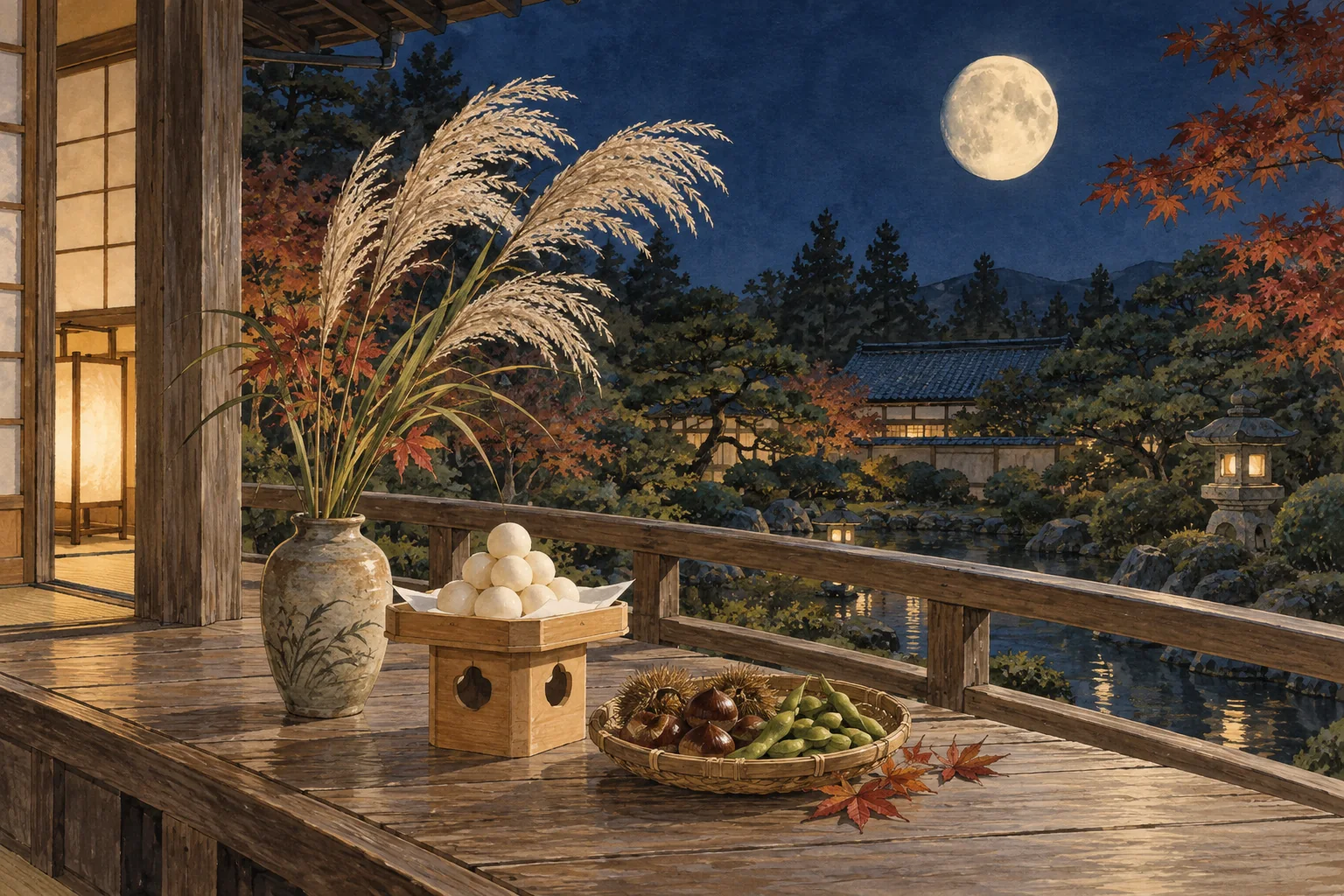
The taste of the period preferred it, in the same way that a cherry blossom just before full bloom was preferred to the peak, and this may be the clearest example in the calendar of that preference for the incomplete. The offerings differ too. The September night is associated with dumplings and pampas grass, while jusanya is called the chestnut moon or the bean moon, after what is harvested by then.
There is a piece of old etiquette attached: viewing only one of the two nights was called katamizuki, a one-sided viewing, and was thought to invite bad luck. Almost nobody observes that now, and almost nobody outside Japan has heard of the second night at all.
海外の人が知っているのは9月か10月初めの中秋の名月までですが、そのおよそ一か月後にもう一つ月を見る晩があります。十三夜、十三日目の夜です。このときの月は満月ではありません。二日ほど手前で、片側がわずかに欠けています。これは妥協ではありませんでした。
当時の美意識はそちらを好んだのです。満開の少し手前の桜を好むのと同じ理屈で、暦の中で「完全でないもの」への好みがいちばんはっきり出た例かもしれません。供えるものも違います。9月の晩は団子とすすきですが、十三夜は栗名月、豆名月と呼ばれます。
そのころ採れるものにちなんだ名です。付随する古い作法もあります。二つの晩の片方しか見ないことを「片見月」と呼び、縁起が悪いとされました。いま守っている人はほとんどいませんし、二つ目の晩があることを知る外国の人も、ほとんどいません。
こう聞かれたら
外国人から実際にされる質問と、その答え方。
Why celebrate a moon that isn't full?
満月でない月を、どうして祝うのですか。
Because the taste of the time preferred something just short of complete. The same preference appears in cherry blossoms before full bloom and in tea bowls that are deliberately uneven.
当時の美意識が、完全になる少し手前を好んだからです。同じ好みは、満開前の桜にも、わざと歪ませた茶碗にも表れています。
When is it?
いつですか。
The thirteenth night of the ninth month in the old lunar calendar, which falls in October or early November. The date moves every year, like the harvest moon itself.
旧暦九月十三日の夜で、いまの暦では10月から11月の初めにあたります。中秋の名月と同じく、日付は毎年動きます。
Is it still observed?
いまも行われていますか。
Much less than the September night. Some shrines and old inns hold viewings, and confectioners sell chestnut sweets for it, but most households do nothing. Many Japanese people have never heard the word.
9月の晩よりずっと少ないです。神社や古い宿で月見の会があり、菓子屋は栗の菓子を出しますが、家庭でやるところはほとんどありません。この言葉を知らない日本人も多いです。
誤解されやすい
MYTHJapanese moon viewing is one night in autumn.
日本の月見は秋の一晩だけだ、と思われがちです。
FACTThere are two: the harvest moon in September or early October, and jusanya about a month later. Viewing only one was called katamizuki and traditionally avoided.
二つあります。9月か10月初めの中秋の名月と、そのおよそ一か月後の十三夜です。片方しか見ないことを片見月と呼び、避けるものとされてきました。
そのまま使えるフレーズ
- There's a second moon-viewing night about a month later.一か月ほどあとに、もう一つ月見の晩があります。
- The moon isn't full — it's two days short.月は満月ではなく、二日ほど手前です。
- It's called the chestnut moon or the bean moon.栗名月、豆名月と呼ばれます。
- Seeing only one of the two was thought unlucky.片方だけ見るのは縁起が悪いとされました。
- Most Japanese people today don't observe it.いまの日本人で、これをする人はほとんどいません。
説明に使う語句
- waxing moon満ちてゆく月
- chestnut栗
- the old lunar calendar旧暦
- offering供え物
- incomplete, not quite full満たない・欠けた
動画で見る
YouTube より豆知識
十三夜は旧暦九月十三日の夜を指し、旧暦八月十五日の中秋の名月に対して「後の月」とも呼ばれる。収穫にちなみ、栗名月、豆名月の名がある。十五夜が中国から伝わった行事の流れをくむのに対し、十三夜は日本で生まれた習わしとされる。宇多法皇が九月十三夜の月を愛でたことに始まるという説があるが、確かな裏づけはない。どちらか一方しか見ないことを「片見月」「片月見」と呼んで忌む言い方は、江戸の遊里で二度目の登楼を促すために言われたとする説もある。
