花鳥風月かちょうふうげつ
kachofugetsu
flower, bird, wind and moon
花と鳥と風と月。四つの字で「自然を味わう心」をまとめた、日本の美のひな型。
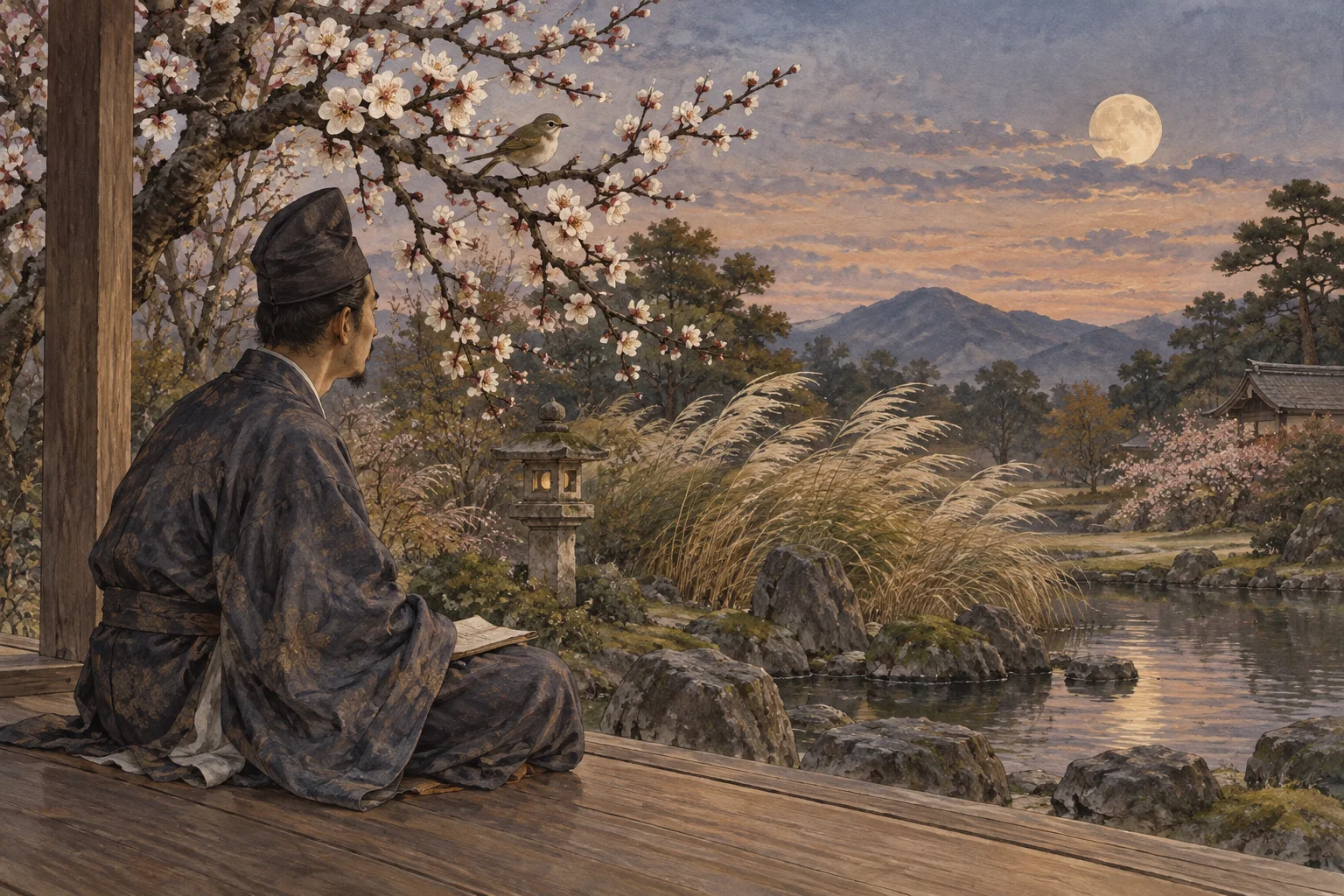
一言で言うと
これだけ覚えれば最低限伝わる一文
Kachofugetsu, flower bird wind moon, is a four-character phrase meaning the beauty of nature and the sense to enjoy it.
花鳥風月とは、花・鳥・風・月の四字で、自然の美しさとそれを味わう心を表す言葉です。
30秒で説明する
外国人に説明するときの標準サイズ
Kachofugetsu strings together four things, flower, bird, wind and moon, to stand for natural beauty as a whole and for the refined pleasure of noticing it. It names what classical poetry, painting and garden design take as their subject. Used of a person, it suggests someone with a taste for such things. It can also be used wryly, for beauty that is pleasant but detached from the real world.
花鳥風月は、花、鳥、風、月という四つのものを並べて、自然の美しさ全体と、それに気づいて楽しむ洗練された心を表します。古典の詩歌、絵画、作庭が主題としてきたものを指す言葉です。人について使えば、そうしたものを解する趣味のある人という含みになります。現実から離れた美しさを指して、皮肉まじりに使うこともあります。
スピーチ・英作文
通訳案内士の二次口述・大学入試の自由英作文に
Kachofugetsu is a four-character phrase made of flower, bird, wind and moon, and it is one of the tidiest summaries of a Japanese way of looking at the world. Each element stands for a season and a mood: blossoms for spring, birdsong, wind through pines, the autumn moon.
Put together they mean natural beauty in general, and also the cultivated sensibility that notices it and turns it into poetry or painting. Classical verse is largely built from this vocabulary, painters worked in a genre called flower and bird painting, and a garden is designed so that these things appear in sequence through the year.
The phrase is still used in ordinary Japanese. Someone who enjoys such things is said to have a taste for kachofugetsu. But it carries a small edge too. To call a discussion kachofugetsu can imply that it is elegant and beside the point, as if you were admiring the moon while the roof leaked. I find that double use quite honest about the limits of an aesthetic.
花鳥風月は、花と鳥と風と月の四字からなる言葉で、日本的なものの見方を最も手際よくまとめたものの一つです。それぞれが季節と気分を担っています。春の花、鳥の声、松を渡る風、秋の月です。合わせれば自然の美しさ全般を指し、同時に、それに気づいて詩や絵に変える磨かれた感性も意味します。
古典の歌はおおむねこの語彙で組み立てられ、画家は花鳥画という分野で描き、庭はこれらが一年を通じて順に現れるように造られます。この言葉は今のふつうの日本語でも使われます。そうしたものを楽しむ人は、花鳥風月を解する人と言われます。
ただ小さな棘もあります。議論を花鳥風月と呼べば、上品だが的外れだ、屋根が漏っているのに月を愛でている、という含みになりえます。美意識の限界について、この二重の使い方はかなり正直だと私は思います。
こう聞かれたら
外国人から実際にされる質問と、その答え方。
Is it a proverb or just a set phrase?
ことわざですか、それとも決まり文句ですか。
A four-character compound, of the kind Japanese has many of. It is not advice, so it is not a proverb. It functions as a noun meaning natural beauty, and by extension the taste for it, and it turns up in titles, shop names and everyday speech.
四字熟語の一つで、日本語にはこの形が多くあります。教訓ではないのでことわざではありません。自然の美しさ、転じてそれを解する趣味を表す名詞として働き、作品名や店名、日常の会話にも出てきます。
Why these four things in particular?
どうしてこの四つなのですか。
They cover the year and the senses between them, and each already carried a load of poetic association from Chinese and Japanese verse. Flower usually means cherry blossom, moon usually means the autumn moon, and wind and bird supply sound. Together they give a complete seasonal palette in four characters.
四つで一年と感覚を覆い、それぞれが漢詩と和歌の中で蓄えた連想を背負っているからです。花はふつう桜、月はふつう秋の月を指し、風と鳥が音を受け持ちます。四文字で季節の一そろいの色合いが出せるのです。
そのまま使えるフレーズ
- The phrase means flower, bird, wind and moon.花と鳥と風と月、という意味の言葉です。
- It stands for the beauty of nature as a whole.自然の美しさ全体を指します。
- He has a real taste for these things.彼は花鳥風月を解する人です。
- Classical poetry is built out of this vocabulary.古典の歌はこの語彙でできています。
- It can also mean elegant but beside the point.上品だが的外れ、という意味にもなります。
説明に使う語句
- four-character compound四字熟語
- natural beauty自然の美
- refined taste風流・趣味のよさ
- seasonal季節の
- association連想・縁のある言葉
動画で見る
YouTube より豆知識
花鳥風月は自然の美しい景物を並べた四字熟語で、そこから自然を愛で、詩歌や絵にする風流の心そのものを指すようになりました。同じ趣旨の言い方に「雪月花」があり、こちらは白居易の詩に由来するとされます。絵画では花と鳥を主題とする花鳥画が中国から伝わり、日本でも屏風や襖絵の主要な分野になりました。和歌では、花は桜、月は秋の月を指すのが慣例で、季語の体系もこの感覚の上に組み立てられています。現代では、風流を解することを褒める意味で使う一方、「花鳥風月を詠んでいる場合ではない」のように、現実から離れた優雅さを皮肉る使い方もあります。
