聖地巡礼せいちじゅんれい
seichi junrei
visiting places from anime
アニメに出た町に人が来る。町のほうが先に気づいて、受け入れ始めた。
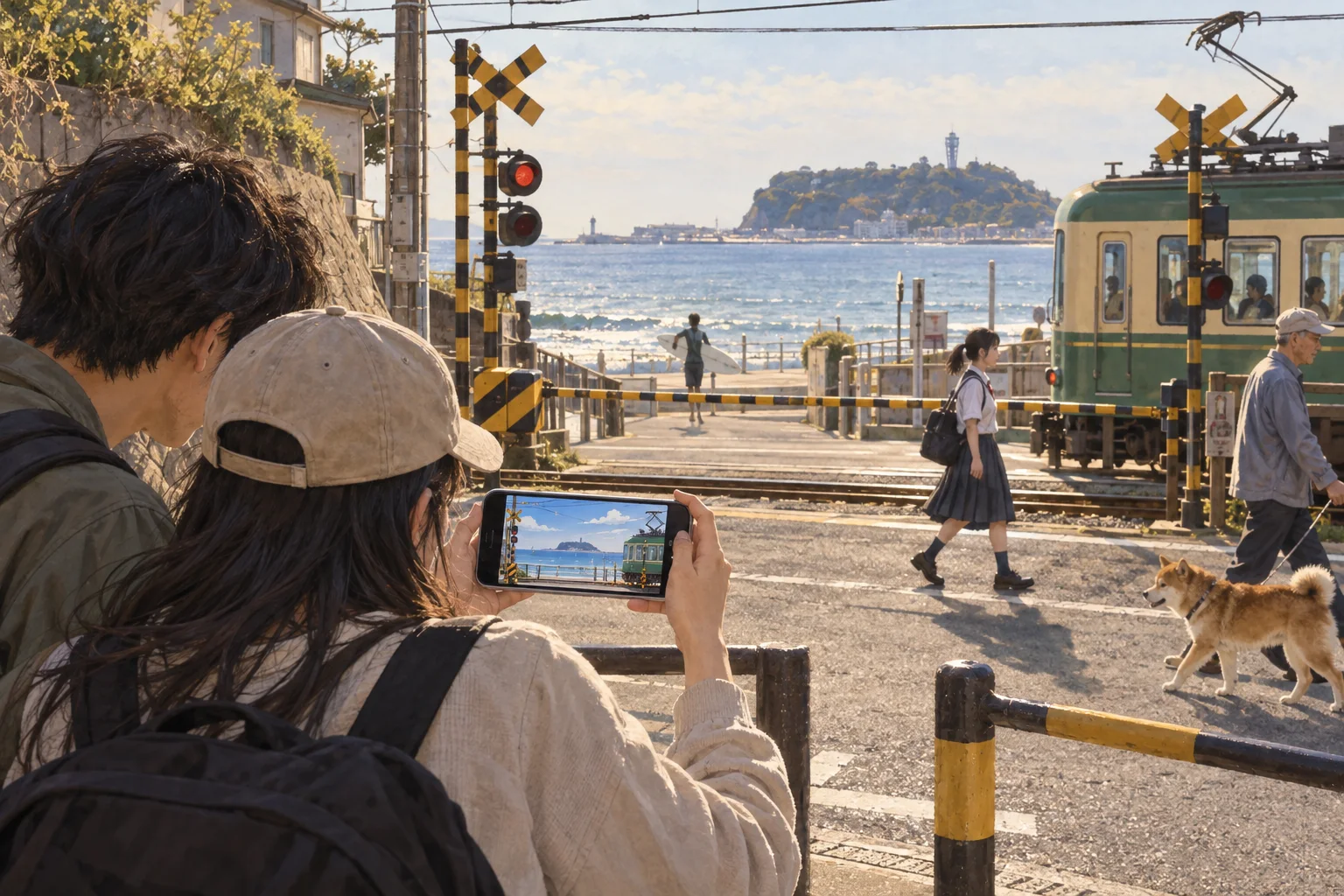
一言で言うと
これだけ覚えれば最低限伝わる一文
Seichi junrei means visiting the real places that appear in an anime or film.
聖地巡礼とは、アニメや映画に出てきた実在の場所を訪ねることです。
30秒で説明する
外国人に説明するときの標準サイズ
Seichi junrei literally means pilgrimage to a holy site, but it is now used for visiting the real locations drawn in an anime, game or film. Japanese animation often copies real streets, stations and shrines in detail, so fans can stand exactly where a scene happened. Some towns have gained real tourism from this, and local shops and temples now cooperate with it.
聖地巡礼は本来、宗教上の聖地を訪ねることですが、今ではアニメやゲーム、映画に描かれた実在の場所を訪ねる意味で使われます。日本のアニメは実在の街路や駅、神社を細かく写し取ることが多いので、ファンはその場面のあった場所に立つことができます。これで本当に観光客が増えた町もあり、地元の商店や寺社が協力する例も出ています。
スピーチ・英作文
通訳案内士の二次口述・大学入試の自由英作文に
Seichi junrei borrows a religious word, pilgrimage, for something quite modern: going to the real places that appear in an anime. Japanese animators often work from photographs, so a station platform, a slope, a convenience store or a shrine can appear on screen almost exactly as it is.
Fans go there, take the same framing as the scene, and often sign a notebook left in a local shop. What is interesting is what happened next. Towns that appeared by chance, such as the shrine in Saitama used in one series or the town in Gifu used in a 2016 film, found themselves with visitors, and instead of resisting they printed maps, made goods and held events.
For a rural town with no other draw, an anime that is set there can matter economically. There is friction too, mostly over noise, parking and photographs of private homes.
聖地巡礼は、巡礼という宗教の言葉を借りて、かなり現代的なことを指します。アニメに出てきた実在の場所へ行くことです。日本のアニメの背景は写真をもとに描かれることが多いので、駅のホーム、坂道、コンビニ、神社が、ほとんどそのままの姿で画面に出ます。
ファンはそこへ行き、場面と同じ構図で写真を撮り、地元の店に置かれたノートに書き込んだりします。面白いのはそのあとです。たまたま舞台になった町、たとえば埼玉のある神社や、2016年の映画に使われた岐阜の町は、来訪者が増えたときにそれを拒まず、地図を作り、商品をつくり、催しを開きました。
ほかに呼び物のない地方の町にとって、そこが舞台になることは経済の問題になりえます。一方で摩擦もあり、多くは騒音、駐車、民家の撮影をめぐるものです。
こう聞かれたら
外国人から実際にされる質問と、その答え方。
Why are anime backgrounds based on real places?
どうしてアニメの背景は実在の場所をもとにするのですか。
Because it saves time and looks right. Studios send staff to photograph locations, then paint from those photographs, which gives believable light and proportions faster than inventing a town. Fans then recognize the place, which the studios now expect.
時間が節約でき、しかも自然に見えるからです。制作会社は取材班を送って場所を撮影し、その写真をもとに描きます。町を一から考えるより早く、光や比率も信じられるものになります。ファンはその場所に気づき、制作側も今ではそれを見込んでいます。
Are local people annoyed by the visitors?
地元の人は、訪れる人を迷惑に思っていませんか。
It depends how visitors behave. Towns generally welcome the money, but problems come from crowds blocking narrow roads, people photographing private houses, and visitors treating a working shrine as a film set. Follow posted requests and the welcome stays.
来る人の振る舞い次第です。町は一般に収入を歓迎しますが、狭い道をふさぐ人だかり、民家の撮影、実際に使われている神社を撮影所のように扱うことが問題になります。掲示された頼みごとを守れば、歓迎は続きます。
How do I find out where a scene was filmed?
場面の舞台がどこかは、どうやって調べるのですか。
Fans publish detailed maps online, and many towns now produce their own guide with permission from the studio. Tourist information offices in these towns often keep a printed map at the counter.
ファンが詳しい地図をネットに公開していますし、制作会社の許諾を得て町が独自の案内をつくっている例も多くあります。そうした町の観光案内所には、印刷された地図が置かれていることがよくあります。
そのまま使えるフレーズ
- This is the shrine from the anime.ここがアニメに出てくる神社です。
- The background is drawn from a photo of this spot.背景はこの場所の写真をもとに描かれています。
- The town has an official map of the locations.町が公式の舞台の地図を作っています。
- Please don't photograph private houses.民家は撮影しないでください。
- People still come here years after it aired.放送から何年たっても人が来ます。
説明に使う語句
- location舞台となった場所
- background art背景美術
- to be based onもとにしている
- local economy地域経済
- signboard / notice掲示
動画で見る
YouTube より豆知識
「聖地巡礼」という言い方がアニメの文脈で広まったのは2000年代とされます。埼玉県久喜市の鷲宮神社は、作品に登場したことで初詣の参拝者が大きく増え、地元の商工会が関わった早い例としてよく挙げられます。2016年の映画『君の名は。』の公開後には、岐阜県飛騨市などで同様の動きが起きました。一方、作品の人気が落ちると来訪も減るため、これだけに頼る観光は続かないという指摘もあります。
