榊と玉串さかきとたまぐし
sakaki and tamagushi
the evergreen branch offered in Shinto rites
儀式で手渡される枝。受け取ったら回して、根元を神前に向けて置く。
一言で言うと
これだけ覚えれば最低限伝わる一文
Sakaki and tamagushi are an evergreen tree and the branch of it offered by participants at Shinto ceremonies.
榊と玉串とは、常緑の木である榊と、神道の儀式で参列者が捧げるその枝のことです。
30秒で説明する
外国人に説明するときの標準サイズ
Sakaki is an evergreen used in Shinto because it stays green all year. A branch with paper streamers attached becomes a tamagushi, which participants receive from the priest and place on the altar. There is a set way to do it: you turn the branch clockwise so the cut end points toward the deity, place it down, then bow twice, clap twice and bow once.
榊は一年じゅう緑を保つため、神道で用いられる常緑の木です。紙垂を付けた枝が玉串で、参列者が神職から受け取って案の上に置きます。作法は決まっています。枝を時計回りに回し、切り口を神前に向けて置き、二礼二拍手一礼をします。
スピーチ・英作文
通訳案内士の二次口述・大学入試の自由英作文に
If you attend a Shinto ceremony in Japan, whether a wedding, a ground-breaking or a company's new year rite, there is often a moment when a priest hands you a small branch, and knowing what to do with it saves a lot of anxiety. The branch is sakaki, an evergreen used in Shinto because it does not lose its leaves, which has been read as a sign of enduring life.
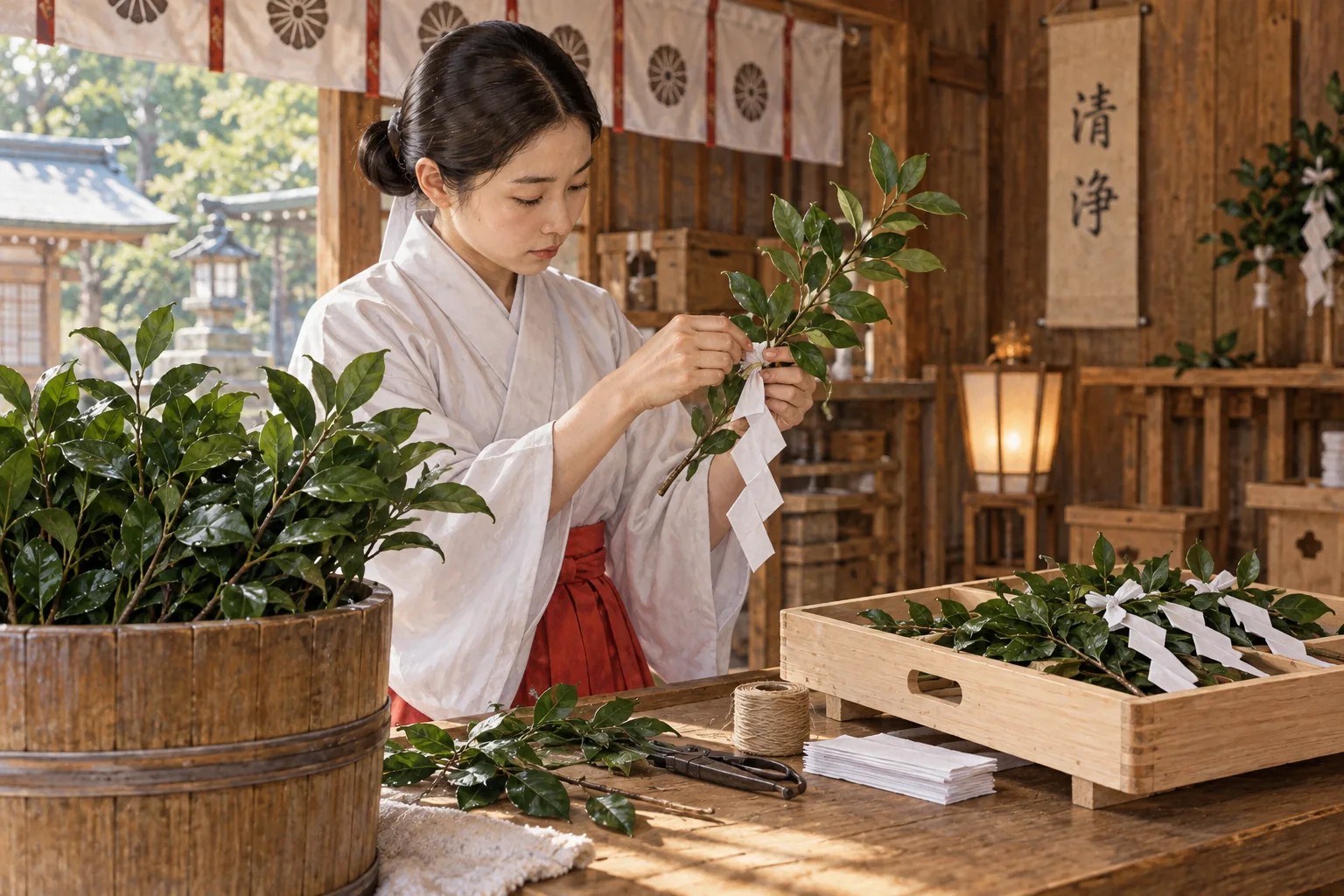
With white paper streamers attached it becomes a tamagushi, an offering that carries your prayer. You take it with the leaves to your left and the cut end to your right, hold it at chest height, step forward, then turn it clockwise so the cut end points away from you and toward the altar, and place it on the stand.
Then you bow twice, clap twice and bow once, and step back. That is the whole thing. Nobody expects a visitor to know this in advance, and the person before you in the line is the best guide, but doing it deliberately rather than hesitantly is noticed and appreciated.
日本で神道の儀式に参列すると、結婚式でも地鎮祭でも会社の新年の祭でも、神職から小さな枝を手渡される場面がよくあります。どうすればよいかを知っていると、緊張がかなり減ります。この枝は榊で、葉を落とさないことから絶えることのない命の印と読まれ、神道で用いられてきました。
白い紙垂を付けると玉串になり、自分の祈りを託して捧げる供え物になります。受け取るときは、葉を左、切り口を右にして胸の高さで持ちます。前へ進み、時計回りに回して、切り口が自分から離れて案のほうを向くようにし、台の上へ置きます。
それから二礼二拍手一礼をして、下がります。これで全部です。旅行で来た方が前もって知っていることは誰も期待していません。列の前の人がいちばんよい手本になります。ためらわずに行うと、それは気づかれ、よい印象になります。
こう聞かれたら
外国人から実際にされる質問と、その答え方。
Which way do I turn it?
どちらへ回すのですか。
Clockwise, so that the cut end ends up pointing toward the altar and the leaves toward you. The exact form varies slightly between shrines, and following the person ahead of you is safe.
時計回りです。切り口が案のほうを向き、葉が自分のほうを向く形になります。細かい所作は神社によって少し違うので、前の人にならえば間違いありません。
What is the white paper on it?
そこに下げてある白い紙は何ですか。
Folded paper streamers called shide, the same zigzag shapes you see hanging from the rope at a shrine entrance. They mark the branch as set apart for the rite.
紙垂と呼ばれる折った紙で、神社の入口の注連縄から下がっているのと同じ形です。その枝が儀式のために特別なものであることを示します。
Why sakaki and not another plant?
どうしてほかの植物ではなく榊なのですか。
Because it is evergreen and keeps its leaves through the year, which has long been read as a sign of lasting life. In regions where sakaki does not grow well, other evergreens are used instead.
常緑で、一年を通して葉を保つからです。絶えることのない命の印として古くから読まれてきました。榊の育ちにくい地域では、別の常緑の木が使われます。
そのまま使えるフレーズ
- Take it with both hands.両手でお受け取りください。
- Turn it so the stem faces the altar.根元が神前を向くように回してください。
- Then bow twice, clap twice and bow once.そのあと、二礼二拍手一礼をします。
- Just follow the person in front of you.前の方と同じようにすれば大丈夫です。
- The branch is an evergreen called sakaki.この枝は榊という常緑の木です。
説明に使う語句
- an evergreen常緑の木
- a paper streamer紙垂
- an offering供え物
- an altar stand案・台
- to bow礼をする
動画で見る
YouTube より豆知識
榊は一年を通して葉の落ちない木で、神事に用いられてきました。家庭の神棚にも、榊立てに挿して供えます。玉串を捧げる作法は神社によって細部が異なりますが、根元を神前に向けて置き、二礼二拍手一礼をする形が広く行われています。葬儀を神式で行う場合は、拍手の音を立てない忍手にします。榊の育ちにくい寒い地域では、別の常緑の木を用いることがあります。花屋や食料品店で榊の枝が束にして売られているのは、神棚に供えるためのものです。
