お祓いおはらい
oharai
ritual purification
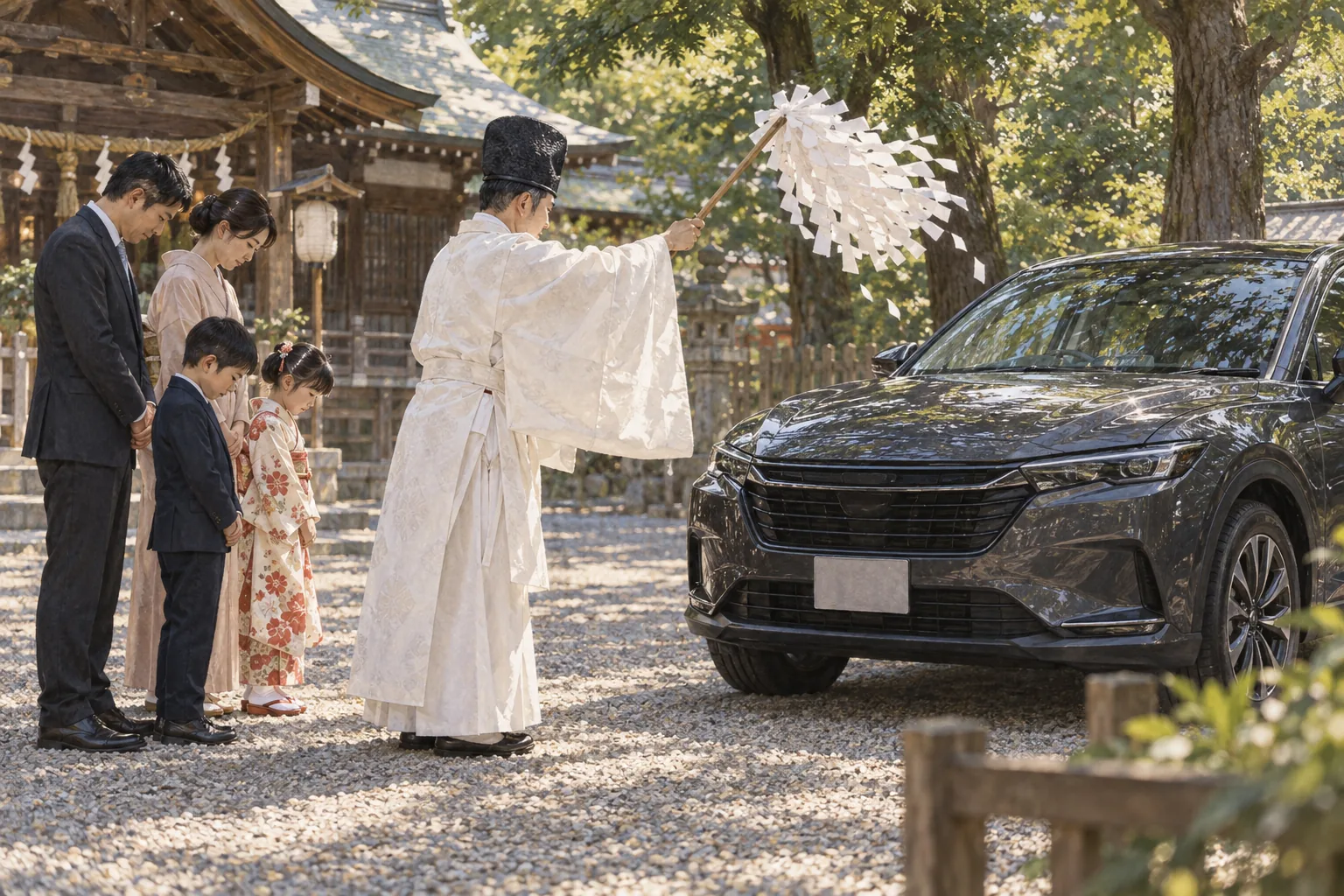
厄年にも、新しい車にも、工事の前にもする。清めるという発想が広い。
一言で言うと
これだけ覚えれば最低限伝わる一文
Oharai is a Shinto rite of purification, performed for people, buildings, cars and new ventures.
お祓いとは神道の清めの儀式で、人にも建物にも車にも、新しい事業にも行われます。
30秒で説明する
外国人に説明するときの標準サイズ
Oharai is a purification rite in which a priest waves a wand of paper streamers and recites a formula to remove impurity and misfortune. People have it done in an unlucky year, before building on a site, when buying a car, at the start of a business, and after certain kinds of trouble.
お祓いとは、神職が紙垂のついた大麻を振り、祝詞を唱えて穢れや災いを取り除く儀式です。厄年に、土地に建てる前に、車を買ったときに、商いを始めるときに、そして何かよくないことがあったあとに受けます。
スピーチ・英作文
通訳案内士の二次口述・大学入試の自由英作文に
Oharai is the Shinto rite of purification, and the range of things it is applied to tells you a lot about how the religion works. A priest waves a wand hung with white paper streamers over the person or object and recites a formula, and impurity and misfortune are understood to be swept away.
People have it done in their unlucky years, which fall at set ages. Construction companies have it done on a site before building, in a ceremony where the ground itself is purified and the corners marked with bamboo. New cars are driven to a shrine for it, and many shrines have a bay where a car can park with the hood open.
Companies do it at the start of a project. None of this requires strong belief; a lot of it is done because a client or a family member expects it, in the same way that a formal event is done properly. The underlying idea is not sin but impurity, something that accumulates and can be removed.
お祓いは神道の清めの儀式で、それが何に対して行われるかを見ると、この宗教の働き方がよく分かります。神職が白い紙垂を下げた大麻を人や物の上で振り、祝詞を唱えると、穢れや災いが払われたと理解されます。人は厄年に受けます。
厄年は決まった年齢に来ます。建設会社は工事の前に土地で行い、地面そのものを清め、四隅を竹で印します。新車は神社へ乗りつけて受けます。多くの神社にはボンネットを開けて車を止められる場所があります。会社は事業の始まりに行います。
強い信仰は必要ありません。多くは、取引先や家族がそうすることを当然としているからで、改まった場を正しく整えるのと同じことです。根にあるのは罪ではなく穢れという考えで、それは積もるものであり、取り除けるものなのです。
こう聞かれたら
外国人から実際にされる質問と、その答え方。
Can a foreign visitor have it done?
外国から来た人も受けられますか。
Yes. Go to the shrine office, say what it is for, pay the offering, and you will be taken into the hall. It takes ten to twenty minutes, you sit or stand where told, bow when others bow, and no belief is required.
受けられます。社務所で目的を伝え、初穂料を納めれば、拝殿へ案内されます。十分から二十分ほどで、言われた場所に座るか立ち、周りに合わせて礼をします。信仰は求められません。
What is the ground-breaking ceremony?
地鎮祭とは何ですか。
Jichinsai, held before construction begins. The site is marked with bamboo and rope, a small altar is set up, offerings are made, and the landowner and builder turn the first earth. It is a common practice on building sites in Japan.
地鎮祭といい、工事の前に行います。敷地を竹と縄で囲み、祭壇を設け、供え物をして、施主と施工者が最初の土を鍬入れします。日本の多くの建設現場で行われている慣行です。
そのまま使えるフレーズ
- You can have it done for a car.車のお祓いも受けられます。
- There's a ceremony before building starts.工事の前に地鎮祭をします。
- No belief is required to take part.信仰がなくても受けられます。
- Ask at the shrine office.社務所で申し込んでください。
説明に使う語句
- purification祓い
- priest神職
- offering (money)初穂料
- ground-breaking rite地鎮祭
動画で見る
YouTube より豆知識
神職が振る道具は大麻と呼ばれ、白い紙垂を束ねたものです。祓いの考え方は、伊邪那岐が黄泉から戻って身を清めたという神話にさかのぼるとされ、参拝前の手水もその延長にあります。厄年は数え年で、男性は42歳、女性は33歳が大厄とされ、その前後が前厄・後厄です。地鎮祭は建築の慣行として広く行われ、上棟式とあわせて工程に組み込まれています。車のお祓いは交通安全祈願と呼ばれ、専用の駐車の区画を設けた神社もあります。
