盛り塩もりしお
morishio
the small cone of salt placed at an entrance
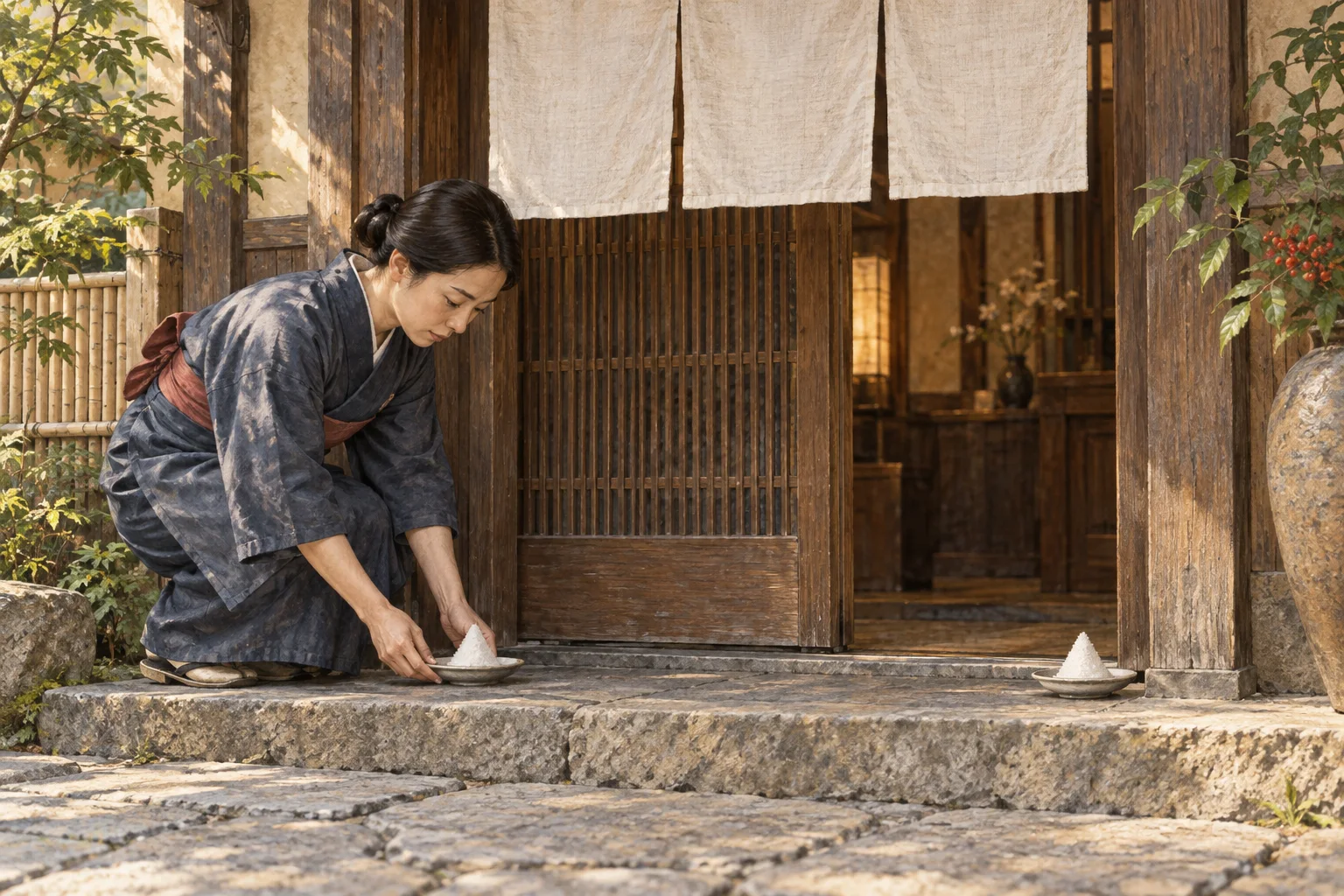
店の入口にある小さな塩の山。落とし物でも飾りでもなく、置いてある。
一言で言うと
これだけ覚えれば最低限伝わる一文
Morishio is a small cone of salt placed by a doorway to keep bad things out.
盛り塩とは、入口のわきに置く小さな塩の山で、悪いものを寄せつけないためのものです。
30秒で説明する
外国人に説明するときの標準サイズ
Outside the door of restaurants, bars and some offices you will sometimes see a neat little cone of white salt on a small dish. It is morishio. Salt is treated in Japan as something that purifies, so putting it at the entrance is meant to keep bad things out and, in the case of a shop, to draw customers in. It is replaced regularly. Do not touch it, and do not assume it is decoration.
飲食店や店、事務所の入口のわきに、小皿にのせた白い塩の小さな山を見かけることがあります。盛り塩です。日本では塩は清めるものとされ、入口に置くのは悪いものを入れないため、そして店なら客を招くためとされます。定期的に取り替えます。触らないでください。飾りではありません。
スピーチ・英作文
通訳案内士の二次口述・大学入試の自由英作文に
Walk past restaurants in Japan in the evening and you will start noticing small white cones of salt on saucers beside the doors. This is morishio. In Japanese tradition salt purifies, which is why sumo wrestlers throw it into the ring and why, in many areas, people sprinkle it on themselves at the door after returning from a funeral.
Placed at an entrance, it is meant to stop bad things from coming in and, for a business, to bring customers. There is an old story, said to come from China, about an emperor whose cart, pulled by sheep, stopped at a door where salt had been put out, which is given as the reason it attracts guests, though that is a legend rather than a documented origin.
The salt is changed every few days because it absorbs moisture and collapses. The practical thing to know is simply not to disturb it. It is not litter, it is not a decoration, and a tidy-minded visitor brushing it away would be an awkward moment for everyone.
夕方に日本の飲食店の前を歩いていると、扉のわきの小皿に白い塩の山がのっているのに気づきます。盛り塩です。日本では塩は清めるものとされ、力士が土俵にまくのも、多くの地域で葬儀から帰ったときに戸口で体に塩をかけるのも同じ考え方です。
入口に置くのは、悪いものを入れないため、商売なら客を招くためとされます。中国の故事に由来するという話もあり、皇帝の乗る羊の車が塩を置いた戸口で止まったので客が来る、と説明されますが、これは伝説であって確かな起源ではありません。
塩は湿気を吸って崩れるので、数日ごとに取り替えます。実用として知っておきたいのは、ただ触らないことです。ごみでも飾りでもないので、きれい好きな方が払ってしまうと、その場が気まずくなります。
こう聞かれたら
外国人から実際にされる質問と、その答え方。
Is it religious?
宗教的なものなのですか。
It draws on the Shinto idea that salt purifies, but most shops that put it out would not describe it as a religious act. It is closer to the lucky cat by the register than to an act of worship.
塩が清めるという神道の考え方から来ていますが、置いている店の多くは宗教的な行為とは考えていません。信仰の行為というより、レジの招き猫に近い位置づけです。
Do people do this at home?
家庭でもやるものですか。
Some do, at the entrance or in corners of a room, and you can buy small dishes made for it. It is less common than at shops, and plenty of households never do it.
する家もあります。玄関や部屋の隅に置き、専用の小皿も売っています。店ほど一般的ではなく、まったくしない家庭もたくさんあります。
Why is salt used for purifying at all?
そもそもどうして塩で清めるのですか。
Salt preserves food and does not spoil, and in Shinto it is used to cleanse a space before a ritual. Priests use it, sumo uses it, and it is handed out at funerals in some regions to sprinkle before entering the house.
塩は食べ物を保たせ、自分は腐りません。神道では、儀式の前に場を清めるのに使います。神職も使い、相撲でも使い、地域によっては葬儀で家に入る前にまくための塩が配られます。
誤解されやすい
MYTHThe salt outside a shop is left over from cleaning or has been spilled.
店の外の塩は掃除の名残やこぼれたものだと思われがちです。
FACTIt is placed there deliberately, shaped into a cone, and replaced every few days. Brushing it away would be like knocking over someone's lucky charm.
わざと円錐に整えて置き、数日ごとに取り替えているものです。払ってしまうのは、人の縁起物を倒すようなものです。
そのまま使えるフレーズ
- That little cone of salt is put there on purpose.あの小さな塩の山は、わざと置いてあるものです。
- Salt is thought to purify, so it keeps bad things out.塩は清めるものとされるので、悪いものを入れないためです。
- Shops also put it out to draw customers in.店は客を招くためにも置きます。
- Please don't touch it.触らないでください。
- They change it every few days.数日ごとに取り替えています。
説明に使う語句
- purify清める
- cone, mound円錐、盛り
- entrance入口、玄関
- ward offはらう、寄せつけない
- saucer, small dish小皿
動画で見る
YouTube より豆知識
塩で場を清める考え方は神道にさかのぼり、神事の前や相撲の土俵で使われる。盛り塩そのものの由来としては、中国の故事に結びつける説が広く語られるが、史料で確かめられるものではない。実務的には、湿気で崩れるため数日ごとに取り替え、使った塩は流すか捨てる。八角錐や円錐に固める型も市販されている。なお葬儀の帰りに塩をまく習慣は地域と宗派によって差があり、浄土真宗のように死を穢れと考えないため清めの塩を用いない立場もある。
