てるてる坊主てるてるぼうず
teru teru bozu
a little white doll hung by the window to wish for sunny weather
遠足の前の晩に吊るす白い人形。童謡の3番は、実はかなり怖い。
一言で言うと
これだけ覚えれば最低限伝わる一文
A teru teru bozu is a white cloth doll that children hang up to wish for sunny weather.
てるてる坊主は、晴れを願って子どもが吊るす白い布の人形です。
30秒で説明する
外国人に説明するときの標準サイズ
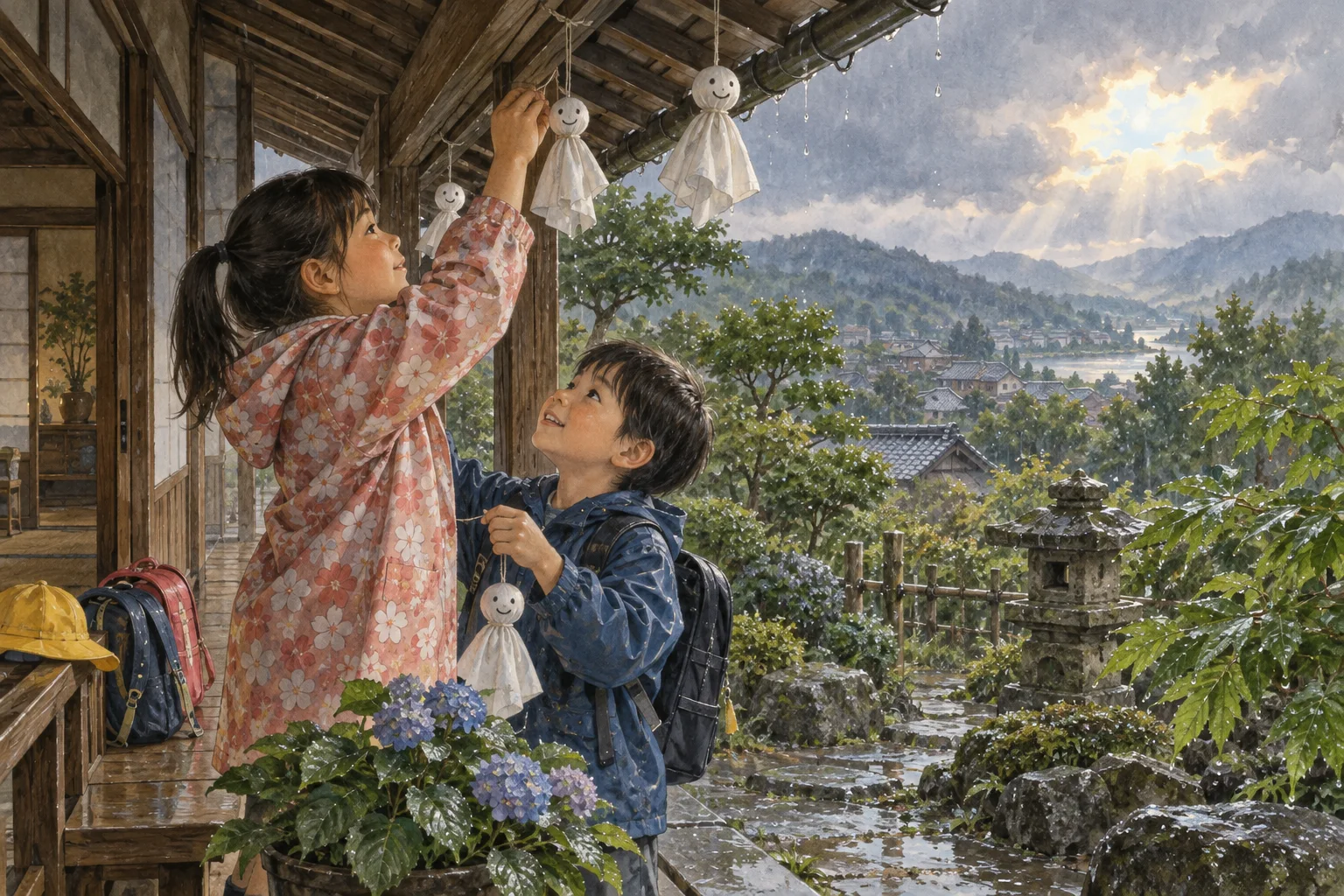
A teru teru bozu is a simple doll made by wrapping a ball of tissue in a white cloth or paper and tying it at the neck. Children hang it by a window or under the eaves the night before a school outing or sports day to wish for good weather. "Teru" means "to shine," and "bozu" means "a monk" or "a little boy." It is a playful custom, not a religious one.
てるてる坊主は、丸めたティッシュを白い布や紙で包み、首のところを縛って作る簡単な人形です。子どもは遠足や運動会の前の晩に、窓辺や軒下にこれを吊るして晴れを願います。「てる」は「照る」、「坊主」は「お坊さん」や「男の子」という意味です。宗教的な行事ではなく、遊び心のある習慣です。
スピーチ・英作文
通訳案内士の二次口述・大学入試の自由英作文に
Teru teru bozu is one of the first Japanese customs many children learn. You roll up some tissue, cover it with a white cloth or paper, tie it at the neck, and draw a face.
Then you hang it by the window the night before an event you care about, like a school outing or sports day, and hope for sunshine. The name means something like "shine, shine, little monk." Many Japanese people know the children's song about it, written in 1921.
What surprises many people is its third verse. It warns the doll that if it rains tomorrow, its head will be cut off. The custom is often said to have come from China, where a paper girl holding a broom was hung to sweep the clouds away. I still smile whenever I see one by a window.
てるてる坊主は、多くの子どもが最初に覚える日本の習慣の一つです。ティッシュを丸め、白い布や紙で包み、首を縛って顔を描きます。そして、遠足や運動会など大事な行事の前の晩に窓辺に吊るし、晴れを願います。
名前は、英語にすると「照って、照って、小さなお坊さん」といった意味です。てるてる坊主を歌った1921年の童謡は、多くの日本人が知っています。多くの人が驚くのは、その3番の歌詞です。
もし明日雨が降ったら首を切るぞ、と人形に言い聞かせているのです。この習慣は中国から来たとよく言われ、中国ではほうきを持った紙の女の子を吊るして、雲を掃き払うよう願ったそうです。私は今でも、窓辺に吊るされているのを見ると、つい笑顔になります。
こう聞かれたら
外国人から実際にされる質問と、その答え方。
Is it a kind of religious charm?
宗教的なお守りの一種なのですか。
Not really. It comes from old folk beliefs, but today it's a children's custom, like crossing your fingers. Few people expect it to really change the weather.
そういうわけではありません。古い民間の風習から来ていますが、今は子どもの習慣で、英語圏で指を交差させて幸運を願うのと似たようなものです。本当に天気が変わると思っている人はほとんどいません。
What happens if you hang it upside down?
逆さに吊るすとどうなるのですか。
Some people say an upside-down one asks for rain instead. That's a playful idea, and not everyone knows it.
逆さに吊るすと、反対に雨を願うことになると言う人もいます。遊び心のある言い伝えで、誰もが知っているわけではありません。
誤解されやすい
MYTHTeru teru bozu is a ghost or a creepy figure from a horror story.
てるてる坊主は幽霊や、怪談に出てくる不気味なものだ。
FACTIt is a friendly children's custom for wishing for good weather. Its white, hanging shape can look spooky to people who don't know it, and the song's third verse is darker than most expect, but it isn't meant to be scary.
晴れを願う、親しみやすい子どもの習慣です。知らない人には白くて吊るされた姿が不気味に見えることがあり、童謡の3番も思ったより物騒ですが、怖いものではありません。
そのまま使えるフレーズ
- Let's make a teru teru bozu so it won't rain tomorrow.明日雨が降らないように、てるてる坊主を作ろう。
- We hang it by the window the night before.前の晩に窓辺に吊るします。
- It's just a fun way to wish for good weather.晴れを願う、ちょっとした遊びです。
- Did you draw a face on it?顔は描いた?
- It worked! It's sunny today.効いた!今日は晴れたね。
説明に使う語句
- to wish for good weather晴れを願う
- under the eaves軒下に
- school outing遠足
- sports day運動会
- verse(歌の)番
動画で見る
YouTube より豆知識
童謡「てるてる坊主」は1921年に発表され、作詞は浅原鏡村、作曲は中山晋平。3番の歌詞には、それでも雨が降ったら首を切るぞという一節がある。起源には諸説あり、中国で、ほうきを持った女の子の切り紙を吊るして晴れを願った「掃晴娘」の風習が伝わったものという説がよく知られる。江戸時代後期の随筆『嬉遊笑覧』には、晴れたら瞳を描き入れ、神酒を供えて川に流すと書かれている。逆さに吊るすと雨を願うとも言うが、地域や家庭によって知られ方は違う。
