縁起えんぎ
engi
whether something is considered lucky or unlucky
信じてはいないが、わざわざ悪いほうは選ばない。日本人の縁起はその距離感にある。
一言で言うと
これだけ覚えれば最低限伝わる一文
Engi is whether something is seen as lucky or unlucky, and it quietly shapes many everyday choices in Japan.
縁起とは、物事が吉と見られるか凶と見られるかのことで、日本の暮らしの多くの場面でさりげなく気にされています。
30秒で説明する
外国人に説明するときの標準サイズ
Engi is the sense that certain things bring good or bad fortune. Some hospitals and hotels skip room number four because four sounds like death. Many couples avoid holding a wedding on butsumetsu, an unlucky day on the traditional calendar. People avoid giving a set of four cups as a gift. Most will tell you they do not believe any of it, and then arrange the wedding on a different day anyway.
縁起とは、あるものが吉を呼ぶか凶を呼ぶかという感覚です。病院やホテルには4号室を飛ばすところがあります。四が死と同じ音だからです。結婚式は、暦で縁起が悪いとされる仏滅を避けることが多いです。贈り物に4つ組の器は選びません。たいていの人は信じていないと言いますが、それでも結婚式の日はずらします。
スピーチ・英作文
通訳案内士の二次口述・大学入試の自由英作文に
If you spend time in Japan you will notice small decisions that seem to follow a hidden rule. Some hotels have no room 4. Wedding halls are cheaper on certain days. People avoid giving four of anything as a gift. This is engi, the reading of things as lucky or unlucky.
Some of it is wordplay: four is shi, which is also the word for death, and nine is ku, which sounds like suffering. Some of it comes from an old calendar system that marks each day as favorable or not. What is interesting is the attitude. If you ask a Japanese person whether they believe in it, most will say no, and mean it.
But many will still avoid holding a funeral on the day called tomobiki, because the word contains the sense of pulling a friend along. The logic is not belief. It is that if something costs you nothing to avoid, and avoiding it spares other people worry, you avoid it.
日本で過ごしていると、見えない決まりに沿っているような小さな判断に気づきます。4号室のないホテルがある。結婚式場は日によって値段が違う。贈り物に4つ組を選ばない。これが縁起、つまり物事を吉凶で読む感覚です。
一部は言葉遊びです。四は「し」で死と同じ音、九は「く」で苦に通じます。一部は、日ごとに吉凶を割りふる古い暦の考え方から来ています。面白いのは態度のほうです。信じているかと聞けば、多くの人は本心から「いいえ」と答えます。
それでも、葬儀を友引に入れるのは避ける人が多いのです。友を引く、という語感があるからです。信仰ではないのです。避けるのに手間がかからず、避ければ人を不安にさせずに済むなら、避けておく、という考え方です。
こう聞かれたら
外国人から実際にされる質問と、その答え方。
So do people actually believe it?
では実際に信じている人はいるのですか。
Most say no. But engi is often about other people rather than yourself. Choosing an unlucky day for a wedding makes older relatives uncomfortable, so you pick another day. The cost of avoiding it is low, and that is the whole calculation.
多くの人は信じていないと言います。ただ縁起は、自分のためというより人のためであることが多いです。結婚式に悪い日を選ぶと年配の親族が落ち着かないので、別の日にします。避ける手間が小さい、それだけの計算です。
Which numbers should I avoid as a visitor?
旅行者として避けたほうがいい数字はありますか。
Four and nine, mostly in gifts and in amounts of money. Giving four of something, or an amount like 40,000 yen at a wedding, reads badly. Odd numbers are generally safer for celebration gifts.
四と九です。主に贈り物と金額で気にされます。4つ組のものや、結婚式で4万円といった額は具合が悪いです。お祝いの贈り物は、奇数のほうが無難です。
Is there anything that is considered lucky?
逆に縁起がいいとされるものはありますか。
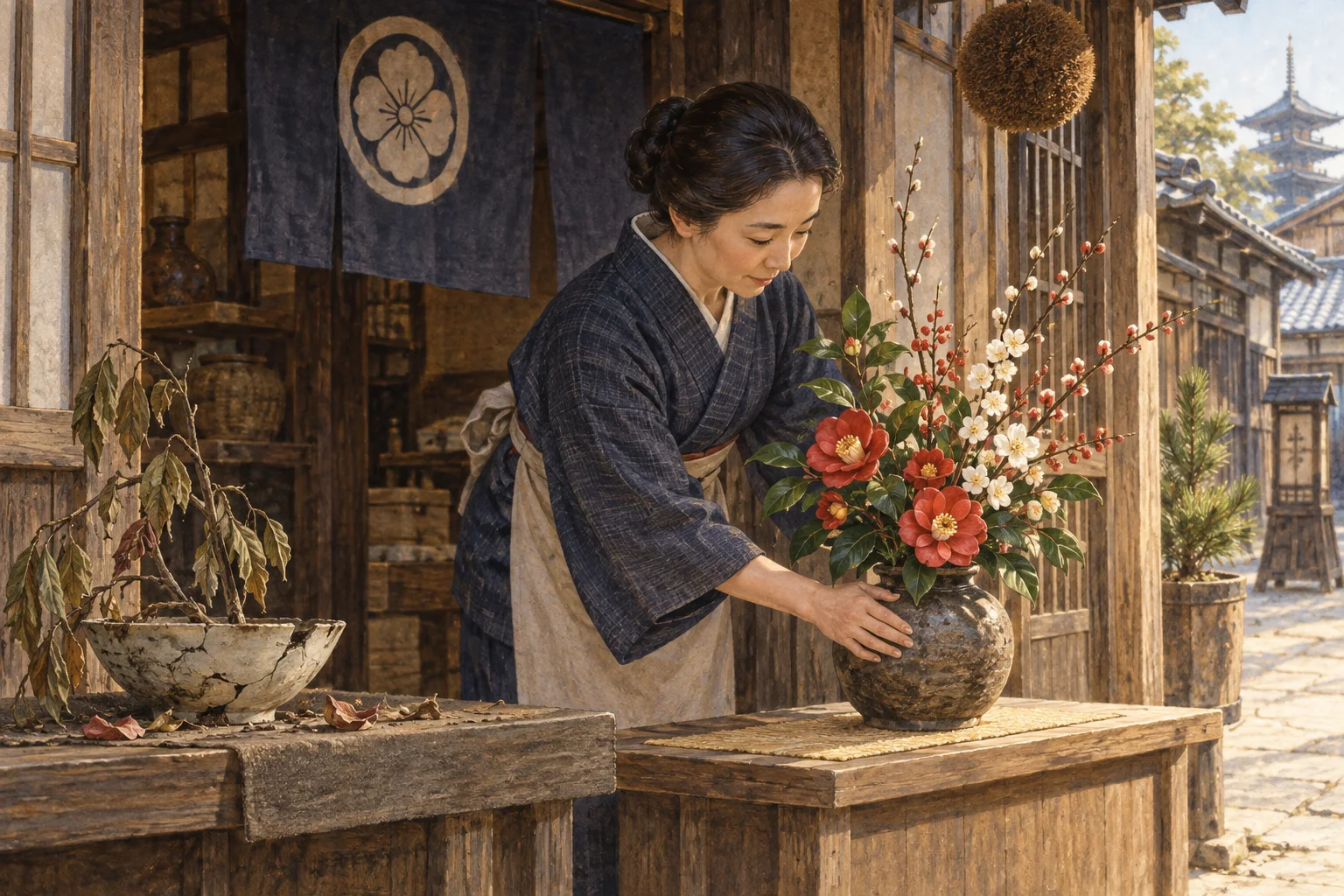
Plenty. Cranes and turtles for long life, the combination of pine, bamboo and plum, a tea stalk standing upright in your cup, seeing Mount Fuji in your first dream of the year. These show up constantly in decoration and packaging.
たくさんあります。長寿の鶴と亀、松竹梅の組み合わせ、湯呑みに茶柱が立つこと、初夢に富士山を見ること。飾りや包装に絶えず出てきます。
誤解されやすい
MYTHJapanese people are superstitious and take these omens seriously.
日本人は迷信深くて、こうした言い伝えを真に受けていると思われがちです。
FACTMost treat them as conventions rather than beliefs. They are followed because they cost nothing and because ignoring them would unsettle someone else, not because people expect real consequences.
多くの人は信仰ではなく慣習として扱っています。守るのは、手間がかからず、無視すると誰かを落ち着かなくさせるからで、実際に何か起きると思っているからではありません。
そのまま使えるフレーズ
- That's considered bad luck here.それは日本では縁起が悪いとされています。
- Four sounds like the word for death, so it's skipped.四は死と同じ音なので、避けられます。
- Nobody really believes it, but we avoid it anyway.誰も本気では信じていませんが、それでも避けます。
- Odd numbers are safer for celebration gifts.お祝いの品は、奇数のほうが無難です。
- It's not superstition so much as not wanting to unsettle anyone.迷信というより、人を落ち着かなくさせたくない、ということです。
説明に使う語句
- lucky, auspicious縁起がよい
- bad luck, ill-omened縁起が悪い
- omen兆し、前兆
- wordplay語呂合わせ
- convention, custom慣習
動画で見る
YouTube より豆知識
縁起という語はもともと仏教語で、あらゆるものは原因と条件によって生じるという「縁起」の教えを指した。それが日本では、物事のきざしや吉凶を意味する言葉として使われるようになった。語呂合わせによる吉凶は多く、四と九を避ける一方、八は末広がりの形から好まれる。昆布は「よろこぶ」、鯛は「めでたい」に通じるとして祝いの席に用いられる。なお六曜(大安・仏滅など)は暦注のひとつで、明治政府が迷信として排除しようとした経緯があるが、民間では今も結婚式や葬儀の日取りに使われている。
