松竹梅しょうちくばい
shochikubai
pine, bamboo and plum
めでたい三点セット。でも店の品書きでは、ただの松が一番高い。
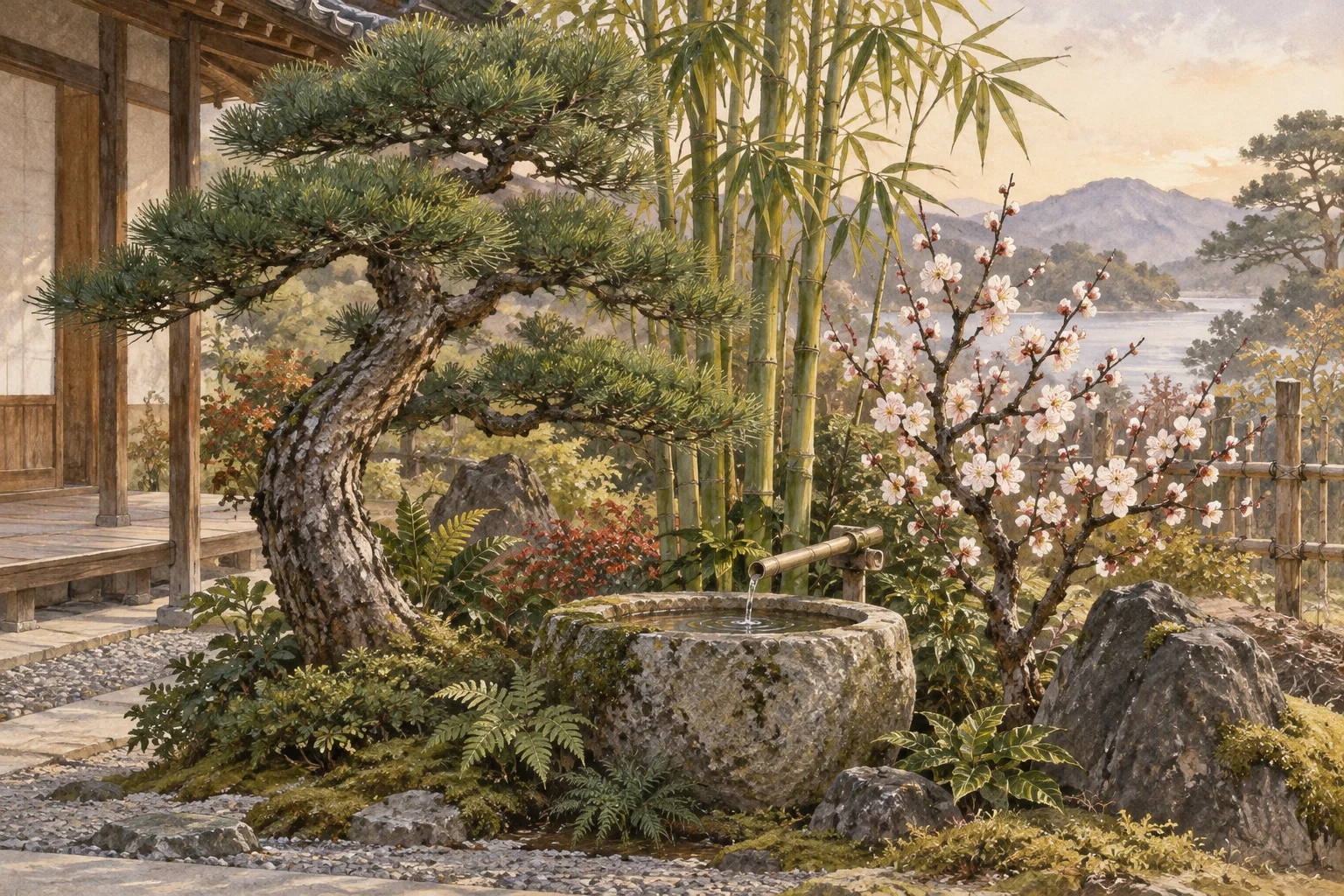
一言で言うと
これだけ覚えれば最低限伝わる一文
Shochikubai means pine, bamboo and plum, an auspicious set that is also used to rank prices.
松竹梅とは松と竹と梅の三つで、めでたい組み合わせであると同時に、値段の等級にも使われます。
30秒で説明する
外国人に説明するときの標準サイズ
Shochikubai is the set of pine, bamboo and plum. All three survive the winter, so together they stand for endurance and good fortune, and they appear on New Year decorations, wedding items and kimono. Restaurants also borrow the three names as price grades, with pine the most expensive, which catches out visitors reading a menu.
松竹梅とは、松と竹と梅の三つの組み合わせです。いずれも冬を越すことから、耐えることと吉事を表し、正月飾りや婚礼の品、着物の文様に使われます。飲食店はこの三つを値段の等級にも借りていて、松が最も高くなるため、品書きを読む訪日客を戸惑わせます。
スピーチ・英作文
通訳案内士の二次口述・大学入試の自由英作文に
Shochikubai means pine, bamboo and plum, and it is one of the most common decorative sets in Japan. The idea came from China, where the three were called the friends of winter: the pine stays green, the bamboo bends without breaking, and the plum flowers while it is still cold.
In Japan they became a general symbol of good fortune, so you see them on New Year decorations, on wedding invitations, on sake bottles and woven into formal kimono. There is a practical use too. Restaurants, sushi counters and gift catalogues use the three words as grades, and the order is pine, bamboo, plum from most expensive to least.
It is often said this lets people avoid saying they want the cheap one. Foreign visitors sometimes assume plum is the best because it is the prettiest word, and order the smallest set by accident.
松竹梅は松と竹と梅のことで、日本で最もよく使われる意匠の組み合わせのひとつです。もとは中国の考えで、この三つは「歳寒の三友」と呼ばれました。松は緑を保ち、竹はしなっても折れず、梅は寒いうちに花を咲かせます。
日本ではこれが広く吉事の象徴になり、正月飾り、婚礼の招待状、酒の銘柄、礼装の着物の文様に現れます。実用の使い方もあります。飲食店や鮨屋、贈答品の目録は、この三つを等級に使い、高いほうから松、竹、梅の順です。
誰も「安いのをください」と言わずに済む仕組みだ、とよく説明されます。外国から来た人は、梅がいちばん美しい響きだからいちばん上だろうと思い、うっかり一番小さいものを頼んでしまうことがあります。
こう聞かれたら
外国人から実際にされる質問と、その答え方。
So if I order the plum set, I get the cheapest one?
では「梅」の定食を頼むと、いちばん安いものが来るのですか。
Usually yes. The standard order is pine, bamboo, plum from most to least expensive. It is not a rule of law, so a few shops reverse it or use different names, but if you see those three words as options, assume pine is the top grade.
たいていそうです。標準は高いほうから松、竹、梅の順です。法律の決まりではないので、順を逆にしたり別の呼び方をする店もありますが、この三つが選択肢として並んでいたら、松が最上級だと考えてください。
Why these three plants?
どうしてこの三つの植物なのですか。
Because all three deal with winter. The pine keeps its needles, the bamboo bends under snow and springs back, and the plum blooms in the cold. As a set they say survival and renewal, which is why they belong to New Year.
三つとも冬に耐えるからです。松は葉を落とさず、竹は雪の下でしなって戻り、梅は寒さの中で咲きます。まとめると、生き延びることと新しく始まることを表すので、正月にふさわしいのです。
誤解されやすい
MYTHPlum is the highest grade because it sounds the most elegant.
響きが優雅なので、梅が最も上等だと思われがちです。
FACTPine is normally the highest and plum the lowest. The set is a polite way of saying large, medium and small without using those words.
ふつう松が最上で梅が最下です。大・中・小と言わずに済ませるための、ていねいな言い換えです。
そのまま使えるフレーズ
- Pine is the most expensive of the three.三つの中では松がいちばん高いです。
- It's a polite way of saying large, medium and small.大中小をていねいに言い換えたものです。
- All three plants survive the winter.三つとも冬を越します。
- You'll see this pattern on New Year decorations.この文様は正月飾りでよく見かけます。
説明に使う語句
- auspiciousめでたい
- grade / tier等級
- evergreen常緑の
- motif / pattern文様
動画で見る
YouTube より豆知識
松竹梅のもとは中国の「歳寒三友」で、寒さに耐える三つの植物をたたえた文人の画題でした。日本では室町時代ごろから吉祥の意匠として定着し、江戸時代に等級の呼び名としても使われるようになったとされます。三段階にするのは、真ん中が選ばれやすいという商売の知恵とも言われ、実際、松竹梅の並びでは竹が最もよく売れると説明されることがあります。正月の門松は松と竹を組み合わせたもので、この考え方がそのまま形になっています。
