神道と自然しんとうとしぜん
shinto to shizen
the animism at the heart of Shinto belief
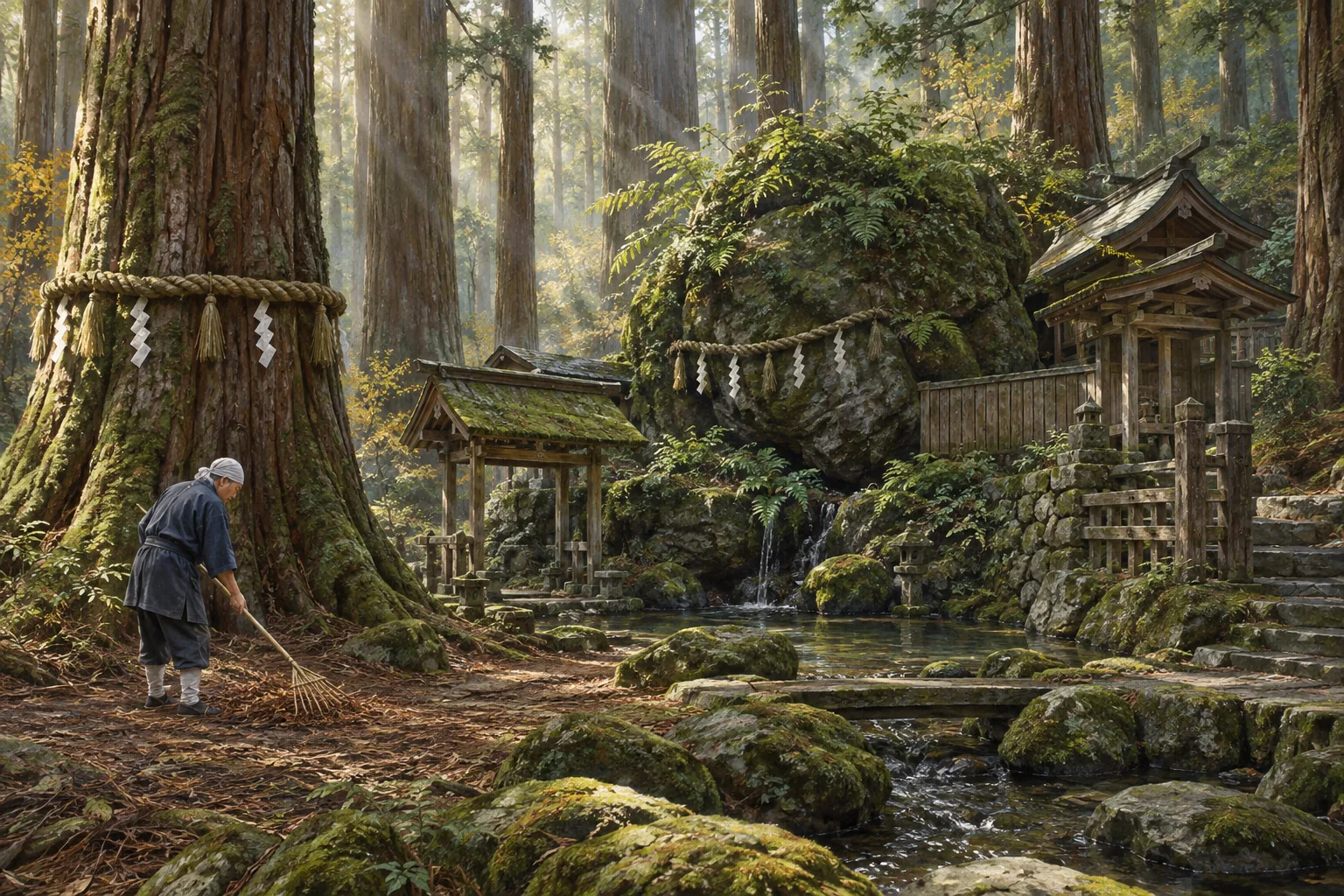
神様は像の中にいない。木や岩、山そのものが祀られていることがある。
一言で言うと
これだけ覚えれば最低限伝わる一文
Shinto to shizen, or Shinto and nature, is the belief that kami, spirits, live in mountains, rocks, trees and rivers.
神道と自然とは、山や岩、木、川に神様(カミ)が宿るという、神道の土台にある考えです。
30秒で説明する
外国人に説明するときの標準サイズ
Shinto grew out of the belief that kami exist in striking parts of nature — an old cedar, a boulder, a waterfall, a mountain peak — rather than in human-shaped images. A shrine often marks a place already thought sacred before any building stood there; Nara's Omiwa Shrine has no inner sanctuary at all because the mountain itself is the kami. This sits closer to animism than to fixed doctrine, and it coexisted easily with Buddhism for over a thousand years.
神道は、木や岩、滝、山そのものといった自然の際立った場所に神(カミ)が宿るという考えから生まれました。人の形をした像ではありません。神社は、建物が建つ前からすでに神聖とされていた場所に置かれることが多く、奈良の大神神社には本殿がなく、山そのものが神とされています。これは決まった教義というよりアニミズムに近く、千年以上にわたり仏教とも無理なく共存してきました。
スピーチ・英作文
通訳案内士の二次口述・大学入試の自由英作文に
Ask what Shinto teaches and you find no creed, no founder, no single sacred text — that is not how it works. At its root is the sense that kami, a word closer to "spirit" than to "god," inhabit striking parts of nature: an ancient tree wrapped in a rope called shimenawa, an odd rock, a waterfall, a whole mountain.
A shrine is often built to mark a place already felt sacred, not the other way around, which is why Nara's Omiwa Shrine has no main hall behind its offering hall — the mountain itself is the kami, so there is nothing to put a building in front of. This nature-centered outlook let Shinto and Buddhism, doctrines that differ enormously, share the same landscape for over a thousand years without much friction.
神道が何を教えているのか尋ねても、教義も、創始者も、一冊の経典も見つかりません。それが神道のあり方だからです。土台にあるのは、カミ(「神様」というより「霊」や「気配」に近い言葉です)が、自然の際立った場所に宿るという感覚です。
しめ縄を巻かれた古木、形の変わった岩、滝、山そのもの。神社は、すでに神聖と感じられていた場所を示すために建てられることが多く、逆ではありません。
だからこそ奈良の大神神社には拝殿の奥に本殿がなく、山そのものが神であるため、建物を置く必要がないのです。この自然を中心に置く見方があったからこそ、教義がまったく異なる神道と仏教は、千年以上にわたって同じ土地でさほどの摩擦もなく共存できました。
こう聞かれたら
外国人から実際にされる質問と、その答え方。
Do Japanese people worship trees and rocks?
日本人は木や岩を拝んでいるのですか。
Not the object itself, but what is felt to reside there. The tree or rock is treated as a yorishiro, a marker for a kami's presence, which is why you see a shimenawa rope rather than an idol.
対象そのものを拝んでいるわけではなく、そこに宿ると感じられているものを拝んでいます。木や岩は依代、つまり神が宿る目印として扱われ、だから像ではなくしめ縄が巻かれています。
Is this the same as worshipping nature, like paganism?
これは自然崇拝、いわゆる異教の信仰と同じものですか。
It is often grouped with animist traditions found worldwide, though Shinto practitioners rarely use that label themselves. There is no single doctrine binding all shrines, and practice varies a great deal by region and by shrine.
世界各地に見られるアニミズム的な伝統とまとめて語られることが多いですが、神道の実践者自身がその呼び方を使うことはあまりありません。すべての神社を縛る単一の教義はなく、実際のやり方は地域や神社によってかなり違います。
Why do some shrines have no main building at all?
本殿がまったくない神社があるのはなぜですか。
Because the kami is understood to be the mountain, rock or forest itself, so there is nothing to enclose. Omiwa Shrine in Nara is a well-known example of this mountain-worship type.
山や岩、森そのものが神とされているため、囲うべきものがないからです。奈良の大神神社は、この山を神とする形の代表としてよく知られています。
誤解されやすい
MYTHShinto worships many separate gods the way Greek or Roman mythology does.
神道は、ギリシャ神話やローマ神話のように、たくさんの別々の神々を崇めるものだと思われがちです。
FACTKami is a much broader category that includes forces and qualities, not only named deities — a mountain, a waterfall or an ancestor can all be kami. Whether a place "has" a kami or is simply sacred is often left deliberately unclear.
カミはもっと幅広い概念で、名のある神格だけでなく、力や性質そのものも含みます。山も滝も先祖も、みなカミになりえます。ある場所にカミが宿っているのか、ただ神聖な場所なのか、その境目はあえてはっきりさせないことが多くあります。
そのまま使えるフレーズ
- The mountain itself is worshipped as the kami.山そのものが神として祀られています。
- That rope marks the tree as sacred.あの縄は、木が神聖であることを示しています。
- This shrine has no main hall behind it.この神社には奥に本殿がありません。
- Shinto doesn't have a single sacred text.神道には一冊の経典というものがありません。
- Kami can be a place, not just a being.カミは、存在だけでなく場所そのものであることもあります。
説明に使う語句
- kami, spiritカミ(神)
- sacred ropeしめ縄
- vessel for a kami依代
- animismアニミズム
- sacred mountain神体山
動画で見る
YouTube より豆知識
神道には創始者や開祖にあたる人物がおらず、教えをまとめた一冊の経典もない。山や巨岩、滝、老木など、自然の際立った場所に神が宿るとする考えが土台にあり、こうした対象は依代と呼ばれる。奈良の大神神社のように、山そのものを神体とするため本殿を持たない神社もある。この自然中心の考え方は、教義の異なる仏教とも千年以上にわたって大きな摩擦なく共存できた理由の一つとされる。ただし神道の実践は地域や神社によって差が大きく、一つの体系として語りきれない面もある。
