無宗教むしゅうきょう
mushukyo
saying you have no religion while keeping its customs
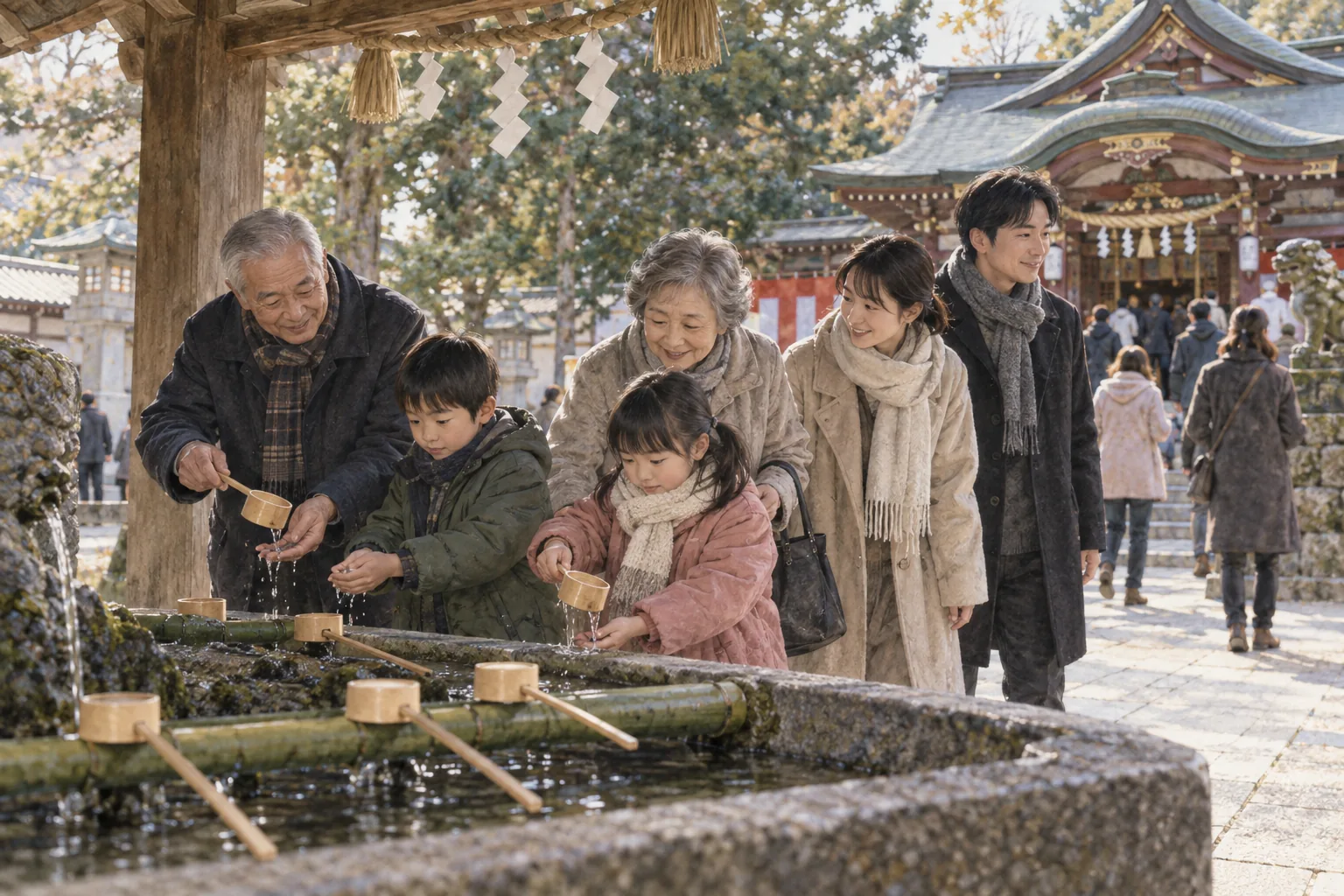
無宗教と答える人が、初詣には行く。矛盾ではない。
一言で言うと
これだけ覚えれば最低限伝わる一文
Mushukyo, or no religion, is how most Japanese describe themselves, though they keep religious customs all year.
無宗教とは、多くの日本人が自分をそう言い表す言葉で、それでも一年を通して宗教的な習慣に加わっています。
30秒で説明する
外国人に説明するときの標準サイズ
Asked their religion, most Japanese answer that they have none. The same people visit a shrine at New Year, hold a Buddhist funeral, and may marry in a chapel. What they are rejecting is belonging to an organized faith, not the customs themselves, which are treated as culture rather than belief.
宗教をたずねられると、多くの日本人は特にないと答えます。その同じ人が、正月には神社に行き、葬儀は仏式で行い、結婚式は教会風にすることもあります。断っているのは教団に属することであって、習慣そのものではありません。習慣は信仰ではなく文化として受け取られています。
スピーチ・英作文
通訳案内士の二次口述・大学入試の自由英作文に
If you ask a Japanese friend about their religion, the usual answer is that they have none. Then in January they go to a shrine, in August they clean the family grave, and when they marry they may do it in a chapel with a hired officiant.
Foreign visitors read this as a contradiction; Japanese people do not, because the word religion here carries the sense of joining an organization and holding a doctrine. Rituals are experienced as things you do, not as things you believe.
There is background to it as well: the state promoted Shinto before 1945, and an attack on the Tokyo subway by a religious group in 1995 is often given as the reason the word carries a bad association. So people keep their distance from the label while keeping every custom attached to it.
日本人に宗教をたずねると、たいてい特にないという答えが返ってきます。それでも一月には神社へ行き、八月には墓を掃除し、結婚するときは司式者を頼んで教会風の式を挙げることもあります。
外国からの人はこれを矛盾と受け取りますが、日本人はそうは思いません。宗教という語が、教団に属し教義を信じることとして受け取られているからです。儀礼は、信じるものではなく、行うものとして経験されています。背景もあります。
1945年まで国が神道を立てたこと、1995年に宗教団体が地下鉄で事件を起こしたことが、この語の印象を悪くしたとよく言われます。そのため人々は、宗教という呼び名から距離を取りながら、それに結びついた習慣はすべて続けています。
こう聞かれたら
外国人から実際にされる質問と、その答え方。
So is Japan an atheist country?
日本は無神論の国ということですか。
Not really. Few people actively deny that anything exists beyond the visible world; they simply do not belong to a faith or follow a doctrine. Surveys asking about ancestors or spirits get far higher numbers than surveys asking about religion.
無神論の国というのとは違います。目に見えない世界を積極的に否定する人は多くありません。教団に属さず、教義を持たないというだけです。先祖や霊についてたずねる調査では、宗教についてたずねる調査よりずっと高い数字が出ます。
Is it disrespectful to pray without believing?
信じていないのに参拝するのは失礼ではありませんか。
Nobody here sees it that way. Shrine and temple staff do not ask about your beliefs, and the etiquette matters more than the conviction. Visitors of any faith are welcome to bow and clap, or simply to watch.
そう受け取る人はいません。神社や寺の人があなたの信仰をたずねることはなく、大事なのは信念より作法です。どの宗教の方でも、礼をして手を打っても、見ているだけでもかまいません。
How should I answer if I am asked my religion?
宗教を聞かれたら、どう答えればよいですか。
Answer honestly; Japanese people are curious rather than judgmental about it. Christian, Muslim or nothing in particular are all fine, though dietary needs are worth mentioning separately, since they are less well understood here.
正直に答えて差し支えありません。日本人は興味から聞いているだけで、評価する意図はありません。キリスト教、イスラム教、特になし、どれでも構いません。ただ、食べられないものについては別に伝えたほうがよいでしょう。そこはまだ理解が進んでいません。
誤解されやすい
MYTHJapanese people are not religious.
日本人は宗教に関心がない、と思われがちです。
FACTThey are not affiliated, which is a different thing. Household altars, grave visits, charms and seasonal rites are ordinary parts of life, and religious organizations report membership figures that together far exceed the population.
宗教団体に属していないというだけで、関心がないわけではありません。仏壇も墓参りもお守りも年中行事も生活の一部です。宗教団体が申告した信者数を合計すると、日本の人口をはるかに超えます。
そのまま使えるフレーズ
- I do not belong to any religion.特定の宗教は信じていません。
- It is more of a custom than a belief.信仰というより習慣です。
- We go to a shrine at New Year anyway.それでも初詣には行きます。
- Funerals here are usually Buddhist.葬儀はたいてい仏式です。
- Anyone is welcome to visit.どなたでもお参りできます。
説明に使う語句
- having no religion無宗教
- faith信仰
- ritual儀礼
- to belong to a group所属する
- ancestors先祖
動画で見る
YouTube より豆知識
文化庁の宗教年鑑では、宗教団体が報告した信者数の合計が日本の人口を大きく上回ります。神社が氏子を、寺が檀家をそれぞれ信者として数えるため、同じ人が二重にも三重にも数えられるからです。多くの日本人は、神社で参拝し、葬儀は仏式で行い、結婚式は教会風という組み合わせを不自然に思いません。宗教という語が、教団に属し教義を信じることを指すものとして受け取られているためです。
