餃子ぎょうざ
gyoza
pan-fried dumplings
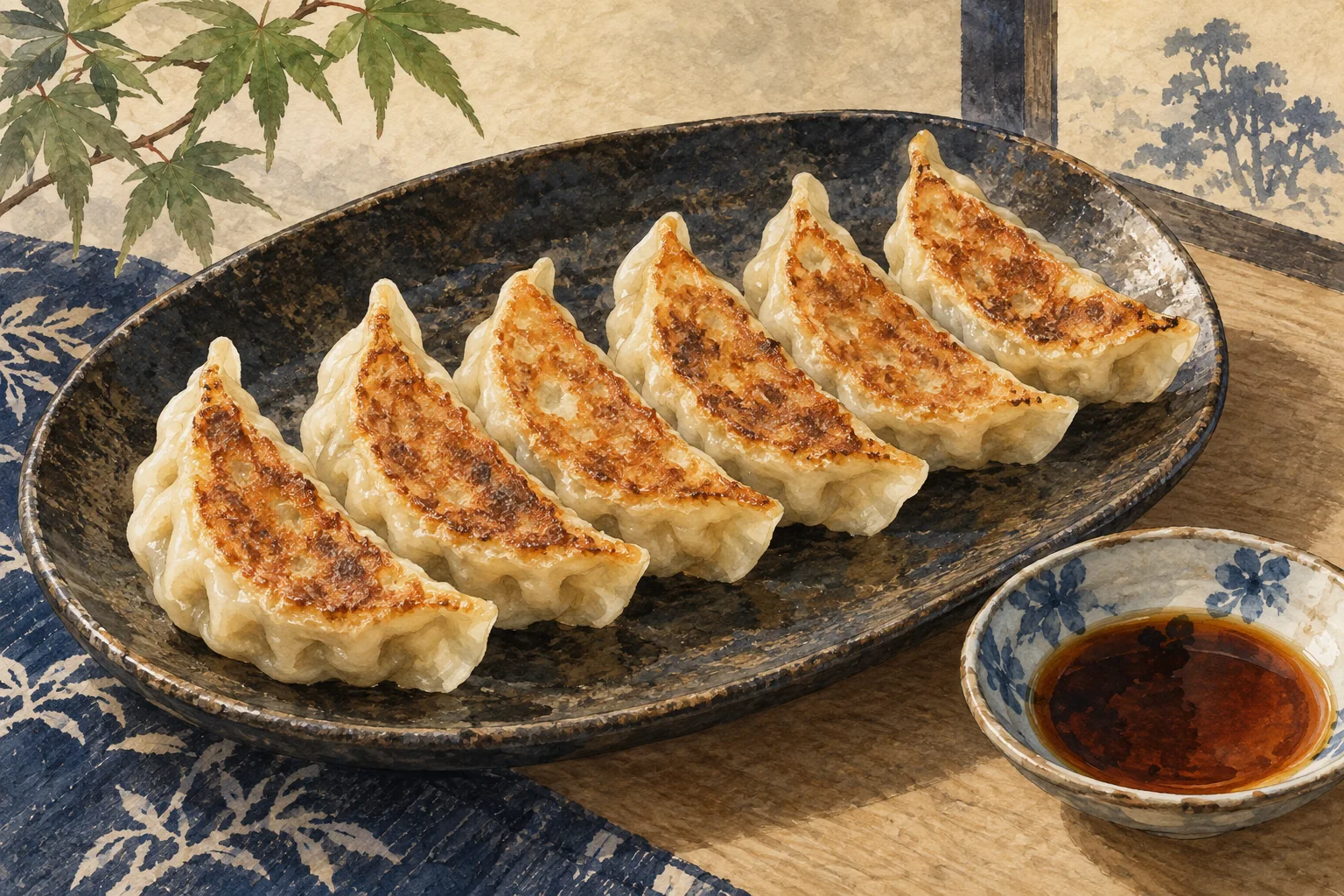
中国の餃子とは別物になった。焼いてにんにくを効かせ、ご飯とビールで食べる日本の餃子。
一言で言うと
これだけ覚えれば最低限伝わる一文
Gyoza are Japanese pan-fried dumplings, crisp on the bottom and filled with pork, cabbage and garlic.
餃子とは、底をぱりっと焼いた日本の焼き餃子で、豚肉、キャベツ、にんにくを包んであります。
30秒で説明する
外国人に説明するときの標準サイズ
Gyoza are crescent-shaped dumplings with a thin wheat wrapper around minced pork, cabbage, chives and garlic. In Japan they are usually pan-fried and then steamed in the same pan, so the bottom is brown and crisp and the top is soft. You dip them in soy sauce with vinegar and chili oil. They are a side dish for ramen, a snack with beer, and a standard home-cooked dinner that the whole family folds together.
餃子とは、薄い小麦の皮で豚ひき肉、キャベツ、にら、にんにくを包んだ三日月形の点心です。日本ではたいてい同じフライパンで焼いてから蒸すので、底は茶色くぱりっと、上はやわらかくなります。醤油と酢とラー油をつけて食べます。ラーメンの付け合わせ、ビールのつまみ、そして家族みんなで包む定番の家庭料理です。
スピーチ・英作文
通訳案内士の二次口述・大学入試の自由英作文に
Gyoza came to Japan from China, but the Japanese version has become a dish of its own. The wrapper is thinner, the filling is mostly cabbage and pork with a strong hit of garlic, and the cooking method is almost always the same: fry the dumplings in a hot pan until the bottoms brown, add water, cover, and let them steam until the wrapper turns translucent.
The result is crisp underneath and tender on top. Chinese families more often boil their dumplings and eat them as a main dish; in Japan gyoza are a side to ramen or rice, or a companion to cold beer.
They are also one of the most common things Japanese families cook together, with children pressing the pleats at the kitchen table. Cities even compete over which spends the most on them per household. Garlic is a big part of the appeal, which is also why people avoid ordering them before a meeting.
餃子は中国から日本に来ましたが、日本版は独自の料理になりました。皮は薄く、具はキャベツと豚肉が中心でにんにくが強く効き、調理法はほぼ決まっています。熱したフライパンで底が茶色くなるまで焼き、水を加えてふたをし、皮が透き通るまで蒸すのです。
できあがりは底がぱりっと、上はやわらかです。中国の家庭では茹でて主食として食べることが多いのに対し、日本では餃子はラーメンやご飯の脇役か、冷たいビールの相棒です。
また日本の家族が一緒に作る最もよくある料理の一つで、子どもが台所のテーブルでひだを押さえます。一世帯あたりの購入額を競う都市まであります。にんにくこそが魅力の大きな部分で、だからこそ会議の前には頼まない人が多いのです。
こう聞かれたら
外国人から実際にされる質問と、その答え方。
How is Japanese gyoza different from Chinese jiaozi?
日本の餃子は中国の餃子とどう違うのですか。
Mainly in cooking and role. Jiaozi are often boiled and served as a meal with thicker skins and varied fillings; gyoza are pan-fried with thin skins, garlic-heavy pork and cabbage, and eaten as a side. Japanese gyoza are also smaller and served in rows of five or six.
主に調理法と役割です。餃子は中国では茹でて厚めの皮と多様な具で主食として出ることが多く、日本の餃子は薄い皮でにんにくの効いた豚肉とキャベツを包んで焼き、脇役として食べます。日本の餃子は小ぶりで、五、六個ずつ並べて出されます。
What do I dip them in?
何をつけて食べるのですか。
Mix soy sauce and vinegar in the little dish on the table, roughly half and half, and add a few drops of chili oil. Some regions dip in vinegar and pepper only, and some restaurants provide a miso sauce. There is no wrong answer.
テーブルの小皿に醤油と酢をおよそ半々で混ぜ、ラー油を数滴たらします。酢とこしょうだけで食べる地域や、味噌だれを出す店もあります。間違いはありません。
Which city is the gyoza capital?
餃子の町と言われるのはどこですか。
Utsunomiya, north of Tokyo, and Hamamatsu, in Shizuoka, have competed for years over which spends the most per household on gyoza in the national survey, and Miyazaki has recently joined the race. Each has its own style and a tourist trail of gyoza shops.
東京の北の宇都宮と静岡の浜松が、国の家計調査で一世帯あたりの餃子の購入額が最も多いのはどちらかを長年競い、近年は宮崎も加わりました。それぞれに独自の流儀があり、餃子店をめぐる観光コースがあります。
そのまま使えるフレーズ
- A plate of gyoza and a beer, please.餃子一皿とビールをください。
- They're crispy on the bottom and soft on top.底はぱりっと、上はやわらかいんです。
- Mix soy sauce and vinegar, then add chili oil.醤油と酢を混ぜて、ラー油を足します。
- We make them at home; the kids fold them.家で作ります。子どもが包むんです。
- Fair warning: they're heavy on the garlic.念のため言うと、にんにくが強いですよ。
説明に使う語句
- dumpling餃子・団子状の包み物
- wrapper皮
- filling具・あん
- pan-fry焼く(フライパンで)
- chili oilラー油
- pleatひだ
動画で見る
YouTube より豆知識
日本で焼き餃子が広まったのは戦後で、中国東北部からの引き揚げ者が現地の食べ方を持ち帰ったことがきっかけとされますが、詳しい経緯には諸説あります。中国では水餃子が主流で、焼くのは残り物の温め直しという地域もあり、日本のように最初から焼くのは独自の発展です。宇都宮と浜松は総務省の家計調査における餃子の購入額で首位を争い、近年は宮崎が加わって「餃子日本一」の話題が毎年報じられます。冷凍餃子は家庭の定番で、油も水も要らずに焼ける製品が普及しています。羽根つき餃子、しそ餃子、揚げ餃子、スープ餃子など変種も多く、ラーメン店の定番セットとして「ラーメン・餃子・ライス」の組み合わせは日本の外食の象徴の一つです。
