焼肉やきにく
yakiniku
grill-it-yourself barbecue
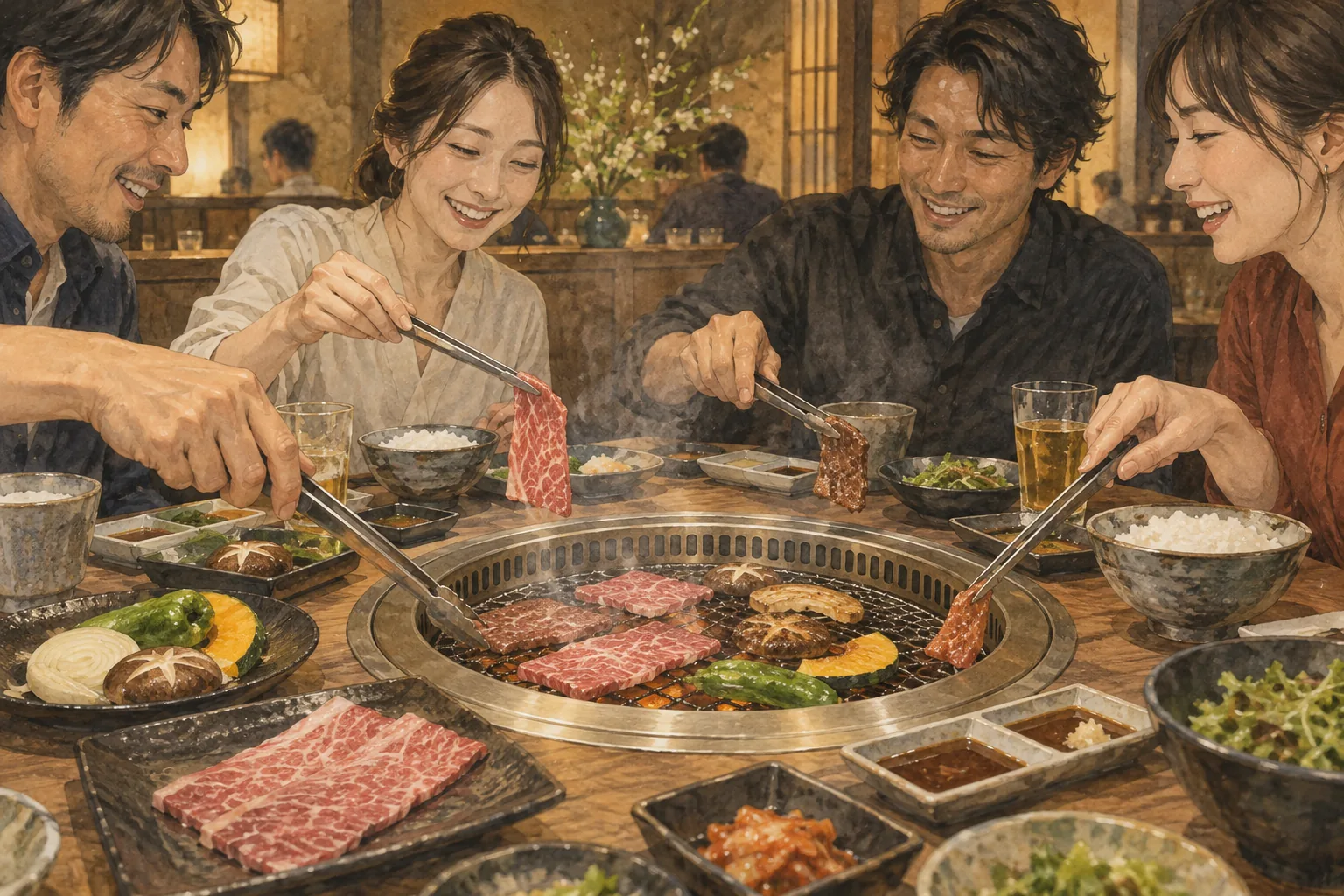
客が自分で焼く肉料理。朝鮮半島の料理をもとに、戦後の日本で独自に発展した。
一言で言うと
これだけ覚えれば最低限伝わる一文
Yakiniku is Japanese barbecue: you grill small pieces of meat yourself at the table and dip them in sauce.
焼肉とは日本式のバーベキューで、卓上で小さく切った肉を自分で焼き、たれにつけて食べます。
30秒で説明する
外国人に説明するときの標準サイズ
At a yakiniku restaurant each table has its own grill, and you order plates of thinly sliced beef, pork, chicken and offal, cook them piece by piece and dip them in a sweet soy-based sauce. Rice, kimchi and a salad usually come alongside. It is a lively, smoky, sociable meal, popular for celebrations and company outings, and one of the most common ways Japanese people eat beef.
焼肉店では各テーブルに専用の焼き台があり、薄切りの牛肉、豚肉、鶏肉、内臓を皿で注文して、一切れずつ焼き、甘い醤油ベースのたれにつけて食べます。ご飯、キムチ、サラダがたいてい一緒に出ます。にぎやかで煙たく、みんなで楽しむ食事で、祝い事や会社の集まりに人気があり、日本人が牛肉を食べる最も一般的な方法の一つです。
スピーチ・英作文
通訳案内士の二次口述・大学入試の自由英作文に
Yakiniku literally means grilled meat, and it is the Japanese form of tabletop barbecue. You sit around a gas or charcoal grill built into the table, order plates of bite-sized meat, mostly beef, and cook each piece yourself for a minute or two before dipping it in a sweet, garlicky soy sauce and eating it with rice.
The cuts have their own names, short rib, tongue, skirt, and offal lovers can order hearts, intestines and more. The style grew out of Korean grilled meat and is generally said to have been developed largely by Korean residents of Japan after the Second World War, then spread nationwide and took on a Japanese character of its own, with thinner slices, lighter marinades and a strong focus on beef quality.
Today it is a favorite for birthdays, for teams celebrating a deal, and for families on a Sunday. My advice is to let the person who knows the grill manage the meat and not to burn the tongue.
焼肉は文字どおり「焼いた肉」で、卓上バーベキューの日本版です。テーブルに組み込まれたガスか炭火の焼き台を囲んで座り、一口大に切った肉、主に牛肉を皿で注文し、一切れずつ自分で一、二分焼いて、にんにくのきいた甘い醤油だれにつけ、ご飯と一緒に食べます。
部位にはそれぞれ名前があり、カルビ、タン、ハラミなどで、内臓好きはハツやホルモンも頼めます。この形式は朝鮮半島の焼肉から生まれ、第二次世界大戦後に在日コリアンの人々が大きく育てたとされ、全国に広まり、薄い切り方、あっさりした下味、牛肉の質へのこだわりなど日本独自の性格を持つようになりました。
今では誕生日、契約を祝うチーム、日曜の家族の定番です。私の助言は、焼き台に慣れた人に肉を任せて、タンを焦がさないことです。
こう聞かれたら
外国人から実際にされる質問と、その答え方。
What's the difference between yakiniku and Korean barbecue?
焼肉と韓国のバーベキューはどう違うのですか。
They are close relatives. Japanese yakiniku uses thinner slices, often lightly marinated or just salted, dips them in sauce after cooking, and eats them with rice rather than wrapped in lettuce. Side dishes are fewer. Korean barbecue in Japan is treated as a slightly different cuisine and labeled as such.
近い親戚です。日本の焼肉は薄切りで、下味が軽いか塩だけのことが多く、焼いた後にたれにつけ、サンチュで包まずご飯と食べます。付け合わせは少なめです。日本での韓国式焼肉は少し違う料理として扱われ、そう表示されます。
Who is supposed to do the grilling?
焼くのは誰の役目ですか。
In a group, often the youngest member or the most junior colleague ends up managing the grill, and doing it well is a small social skill. Among friends and family everyone grabs what they like. Do not put all the meat on at once; grill a few pieces at a time.
集団では、いちばん若い人や下の同僚が焼き台を担当することが多く、うまく焼けることはちょっとした社交の技です。友人や家族ならみんなが好きに取ります。一度に全部載せず、数切れずつ焼いてください。
Why does everyone smell of smoke afterward?
どうして帰りにみんな煙のにおいがするのですか。
Because the meat is grilled at your table. Many restaurants have hoods over each grill and some offer a spray for your coat, but the smell is part of the experience. People joke that they can tell who had yakiniku on the train home.
肉を自分の席で焼くからです。多くの店は焼き台ごとに排気のフードがあり、上着用の消臭スプレーを置く店もありますが、匂いはこの体験の一部です。帰りの電車で誰が焼肉を食べたか分かる、と冗談を言います。
そのまま使えるフレーズ
- You grill it yourself at the table.テーブルで自分で焼くんです。
- Flip it once and take it off quickly.一回ひっくり返して、すぐ取ってください。
- Dip it in the sauce, then eat it with rice.たれにつけて、ご飯と一緒に食べます。
- Let's start with the tongue with salt.まずはタン塩からいきましょう。
- The all-you-can-eat course here is ninety minutes.ここの食べ放題のコースは90分です。
- Your clothes will smell of smoke afterward.後で服が煙くさくなりますよ。
説明に使う語句
- grill (noun)焼き台・網
- tongsトング
- dipping sauceたれ
- short ribカルビ
- offal内臓・ホルモン
- all-you-can-eat食べ放題
動画で見る
YouTube より豆知識
焼肉は朝鮮半島の肉料理を源流とし、戦後の日本で在日コリアンの人々が開いた店から広まったとされますが、細かな成立の経緯には諸説あります。無煙ロースターの普及で煙が抑えられ、家族連れが入りやすくなったことが1980年代以降の大衆化を後押ししました。タン、カルビ、ハラミ、ロースなど部位の名前は日本語と朝鮮語が混ざっていて、ホルモンの語源には「放るもん」説がありますが定説ではありません。8月29日は語呂合わせで「焼肉の日」とされています。家庭では焼肉のたれをかけてフライパンで炒める「焼肉」も一般的で、市販のたれは家庭料理の定番調味料です。食べ放題の店、一人焼肉の店、高級な和牛の店まで幅が広く、外食としての人気は長く安定しています。
