ちゃんぽんちゃんぽん
champon
the Nagasaki noodle dish invented for Chinese students
中国人留学生に安く栄養を取らせるために、長崎の中華料理店が作った。
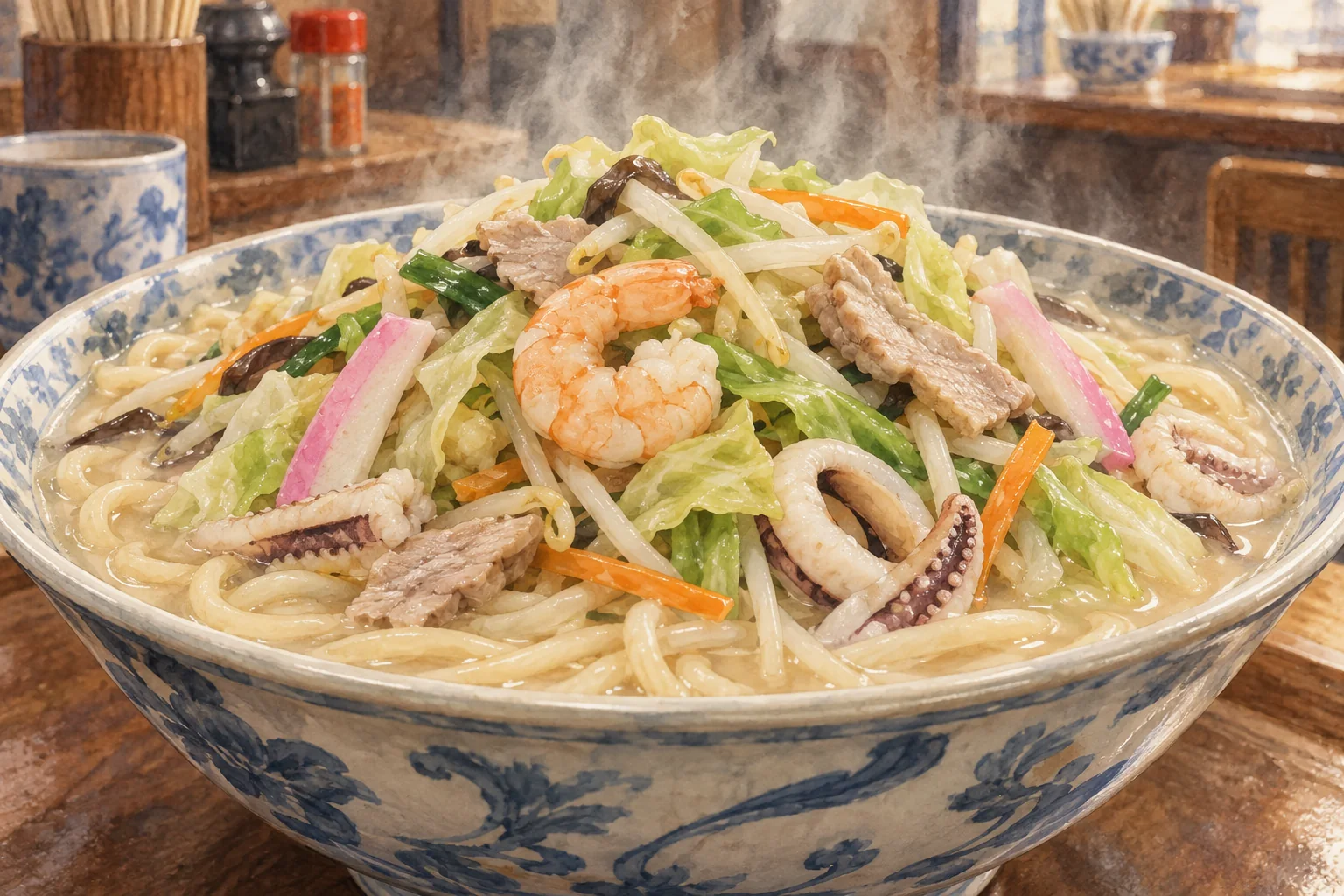
一言で言うと
これだけ覚えれば最低限伝わる一文
Champon is a Nagasaki noodle soup of pork, seafood and vegetables stir-fried, then boiled with the noodles in one pot.
ちゃんぽんとは、豚肉、魚介、野菜を炒めてから麺と一緒に一つの鍋で煮る、長崎の麺料理です。
30秒で説明する
外国人に説明するときの標準サイズ
Champon was created in Nagasaki around the end of the nineteenth century by the owner of a Chinese restaurant, who wanted to feed Chinese students in the city cheaply and well. Pork, seafood, cabbage and bean sprouts are stir-fried, then stock and thick noodles go into the same pot and everything is boiled together. That one-pot method is what makes it different from ramen, where the soup and noodles are cooked separately.
ちゃんぽんは十九世紀の終わりごろ、長崎の中華料理店の主人が考えたものです。町にいた中国人留学生に、安く栄養のあるものを食べさせたいという動機でした。豚肉、魚介、キャベツ、もやしを炒め、そこにスープと太めの麺を入れて一緒に煮ます。この一つの鍋で仕上げる作り方が、スープと麺を別に作るラーメンとの違いです。
スピーチ・英作文
通訳案内士の二次口述・大学入試の自由英作文に
Champon is a Nagasaki dish with a clear origin story, which is rare. Around the end of the nineteenth century the owner of a Chinese restaurant in Nagasaki, himself from Fujian, noticed that the Chinese students studying in the city were eating badly and could not afford much.
He built a dish out of cheap offcuts and vegetables: pork, whatever seafood was around, cabbage, bean sprouts and fish cake, stir-fried in a wok, then stock poured in and thick noodles boiled in the same pot until done. That is the technical difference from ramen, where the broth is made separately and the noodles are cooked in water and drained.
Here everything shares one pot, so the noodles take up the flavor of what was fried before them and the soup thickens slightly. The word champon has also entered general Japanese, meaning to mix things that should not be mixed — you will hear it used about drinking beer and then sake, which is a useful thing to know at a drinking party.
ちゃんぽんは長崎の料理で、はっきりした由来が伝わっている珍しいものです。十九世紀の終わりごろ、長崎にあった中華料理店の主人は、自身も福建の出でしたが、町の中国人留学生がろくなものを食べていないことに気づきます。
そこで安い端材と野菜で一品を組み立てました。豚肉、その時ある魚介、キャベツ、もやし、かまぼこを中華鍋で炒め、そこへスープを注ぎ、太めの麺を同じ鍋で茹で上げる。これがラーメンとの技術的な違いです。ラーメンはスープを別に作り、麺は湯で茹でて湯を切ります。
ちゃんぽんは一つの鍋を共有するので、麺が先に炒めたものの味を吸い、スープは少しとろみを帯びます。ちゃんぽんという語は日本語そのものにも入っていて、混ぜてはいけないものを混ぜることを指します。ビールのあとに日本酒を飲むことを言うときに使われるので、飲み会で覚えておくと役に立ちます。
こう聞かれたら
外国人から実際にされる質問と、その答え方。
How is it different from ramen?
ラーメンとはどう違うのですか。
The noodles are boiled in the soup itself rather than separately, and the ingredients are stir-fried first. The result is thicker and more vegetable-heavy.
麺を別に茹でず、スープの中で煮ます。具は先に炒めます。そのぶん、とろみがあり、野菜が多くなります。
What is sara udon?
皿うどんとは何ですか。
The same toppings served over fried crisp noodles or pan-fried soft noodles, without soup. It is champon's partner on almost every Nagasaki menu.
同じ具を、揚げた細い麺か炒めた太い麺にかけたもので、スープはありません。長崎の店では、ちゃんぽんと対になる定番です。
Why is champon also a word for mixing?
どうして混ぜることを「ちゃんぽん」と言うのですか。
Because the dish mixes everything in one pot. It is now used mostly for mixing different alcohols in one night, which is blamed for hangovers.
一つの鍋に何でも混ぜるからです。いまは主に、一晩で種類の違う酒を混ぜることを指し、二日酔いの原因にされます。
誤解されやすい
MYTHChampon is a Chinese dish brought to Japan.
ちゃんぽんは中国から入ってきた料理だ、と思われがちです。
FACTIt was created in Nagasaki, by a Chinese restaurateur living there, for Chinese students in Japan. It is a Japanese dish with Chinese roots.
長崎で生まれました。長崎に住んでいた中国出身の店主が、日本にいた中国人留学生のために作ったものです。中国にルーツを持つ日本の料理です。
そのまま使えるフレーズ
- The noodles are boiled in the soup, not separately.麺は別に茹でず、スープの中で煮ます。
- It was invented in Nagasaki, not in China.中国ではなく長崎で生まれました。
- It was made to feed poor students cheaply.貧しい学生に安く食べさせるために作られました。
- It has far more vegetables than ramen.ラーメンよりずっと野菜が多いです。
- Champon also means mixing your drinks.ちゃんぽんは、酒を混ぜるという意味でも使います。
説明に使う語句
- stir-fry炒める
- one pot一つの鍋
- fish cakeかまぼこ
- crisp fried noodles皿うどん
- to mix drinksちゃんぽんする
動画で見る
YouTube より豆知識
長崎ちゃんぽんは、明治期に長崎の中華料理店「四海樓」の初代店主・陳平順が、中国人留学生のために考案したとされる。名の由来には、福建語の挨拶「吃飯(シャポン)」からとする説など諸説ある。皿うどんは同じ店で生まれた姉妹の料理とされる。
