駄菓子だがし
dagashi
the cheap sweets children buy with their own money
十円、二十円。子どもが自分の小遣いで買える菓子。
一言で言うと
これだけ覚えれば最低限伝わる一文
Dagashi are the very cheap sweets and snacks that Japanese children buy with their own pocket money.
駄菓子とは、子どもが自分の小遣いで買える、とても安い菓子のことです。
30秒で説明する
外国人に説明するときの標準サイズ
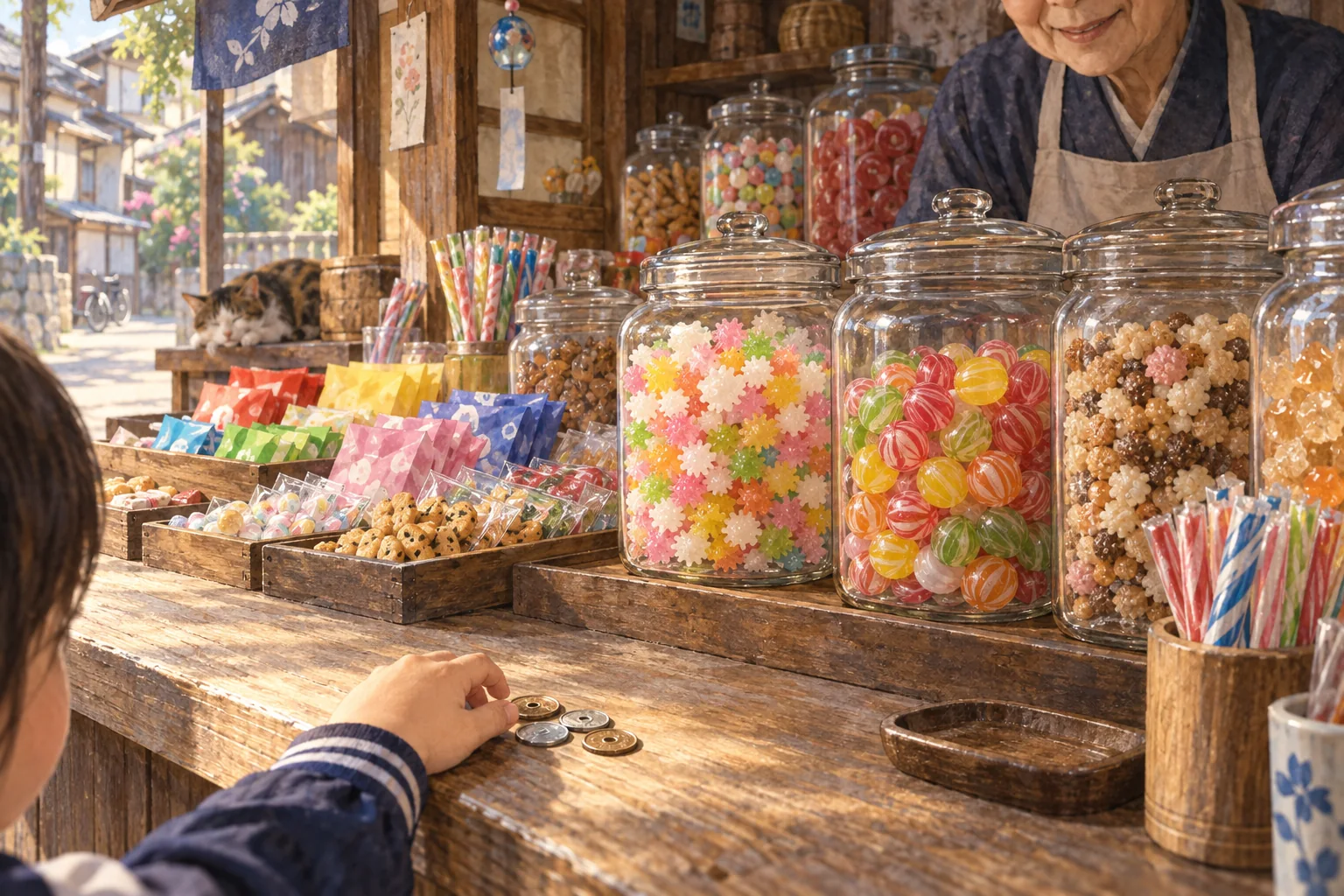
Dagashi are sweets priced so that a child with a hundred yen can make real choices. They come in small packets with bright printing, and many carry a lottery element: a marked stick or a winning ticket gets you another one free. The shops that sold them were often run by elderly neighborhood shopkeepers and have largely gone, but the sweets themselves are still made.
駄菓子は、百円を持った子どもが本気で悩める値段に作られた菓子です。小さな袋に派手な印刷で、当たりの仕組みを持つものが多くあります。棒に印があれば、券が入っていれば、もう一つもらえるという具合です。それを売っていた店は、近所のおばあさんが開いていることが多く、今はほとんど残っていません。菓子のほうは今も作られています。
スピーチ・英作文
通訳案内士の二次口述・大学入試の自由英作文に
The word dagashi is worth unpacking. The first character means ordinary or inferior, and the term was coined to distinguish these from the refined sweets served with tea. They are made with cheap sugar, starch and flavoring, and priced in tens of yen.
What made them matter was not the taste but the economics: a child given a hundred yen could walk into a dagashi shop and conduct a genuine negotiation with themselves for twenty minutes. Many products build a gamble into the packet, a marked stick or a winning slip that earns a free one, which is a child's first experience of a lottery.
The most famous is a puffed corn stick that has been sold since 1979 in a dozen flavors; it held its price at ten yen for over forty years before rising to twelve in 2022 and fifteen in 2024, and Japanese newspapers reported the increases as economic news. The old shops have mostly closed with their owners, and convenience stores and supermarkets now carry the sweets instead.
駄菓子という語は、分けて見るとよくわかります。頭の字は、ふつうの、劣る、という意味で、茶に添える上等な菓子と区別するために作られた呼び方です。安い砂糖と澱粉と香料でできており、値段は十円単位です。
大事だったのは味ではなく、そこにある算段でした。百円を持たされた子どもは駄菓子屋に入り、二十分かけて自分と真剣に交渉できたのです。当たりの仕組みを袋に組み込んだ商品も多くあります。棒に印、袋に券。もう一本もらえる。子どもが初めて出会うくじです。
もっとも知られているのは1979年から売られている、十種類以上の味を持つ棒状の菓子で、四十年以上も十円を守り、2022年に十二円、2024年に十五円になりました。新聞はこれを経済の記事として報じています。昔ながらの店は、店主とともにほとんど閉じ、今は菓子のほうがコンビニやスーパーの棚に移りました。
こう聞かれたら
外国人から実際にされる質問と、その答え方。
Where can I buy them now?
今はどこで買えますか。
Supermarkets keep a dagashi corner, big discount chains carry them by the box, and tourist areas have revival shops that recreate the old one. A few genuine neighborhood shops remain, mostly near primary schools.
スーパーには駄菓子のコーナーがあり、大きな安売りの店なら箱で置いています。観光地には昔の店を再現した店もあります。本物の駄菓子屋も少数残っており、たいていは小学校の近くです。
Are they any good?
おいしいものなのですか。
Honestly, mixed. Some are genuinely good, especially the dried squid, the roasted soy flour sticks and the fizzy tablets. Others are sugar and coloring, and Japanese adults buy them for the memory rather than the flavor.
正直に言えば、ものによります。よくできたものもあります。するめ、きなこ棒、ラムネの粒などです。砂糖と着色料だけのようなものもあり、大人が買うのは味よりも記憶のためです。
What is the winning ticket about?
当たりというのは何ですか。
Some packets or sticks carry a mark meaning you get one more free from the shop. It is a small legal lottery aimed at children, and it is a large part of why the shops were exciting places.
袋や棒に当たりの印が入っていて、店でもう一つもらえる仕組みです。子ども向けのささやかなくじで、駄菓子屋がわくわくする場所だった理由の多くはここにあります。
そのまま使えるフレーズ
- Everything here is under a hundred yen.ここにあるのは全部百円以下です。
- I got a winning stick.当たりが出ました。
- This one has not changed since I was small.これは子どものころから変わっていません。
- Children come here after school.子どもは学校の帰りに寄ります。
- The price finally went up.とうとう値上がりしました。
説明に使う語句
- cheap sweets駄菓子
- sweet shop駄菓子屋
- pocket money小遣い
- a winning ticket当たり
- roasted soy flourきなこ
動画で見る
YouTube より豆知識
駄菓子の駄は、ふつうの、劣るという意味で、茶席に出す上菓子と区別する語として生まれました。安価な原料を使い、十円から数十円の値段が基本です。袋や棒に当たりを仕込む商品が多く、子どもが初めて触れるくじの形でもありました。1979年に発売された棒状の菓子は、四十年以上にわたって一本十円を保ち、2022年に十二円、2024年に十五円へ改定されたことがニュースになりました。駄菓子屋は高齢の店主とともに減り続けており、今はスーパーや量販店の棚が主な売り場になっています。
